Description
Buffing polishing wheel 10 “
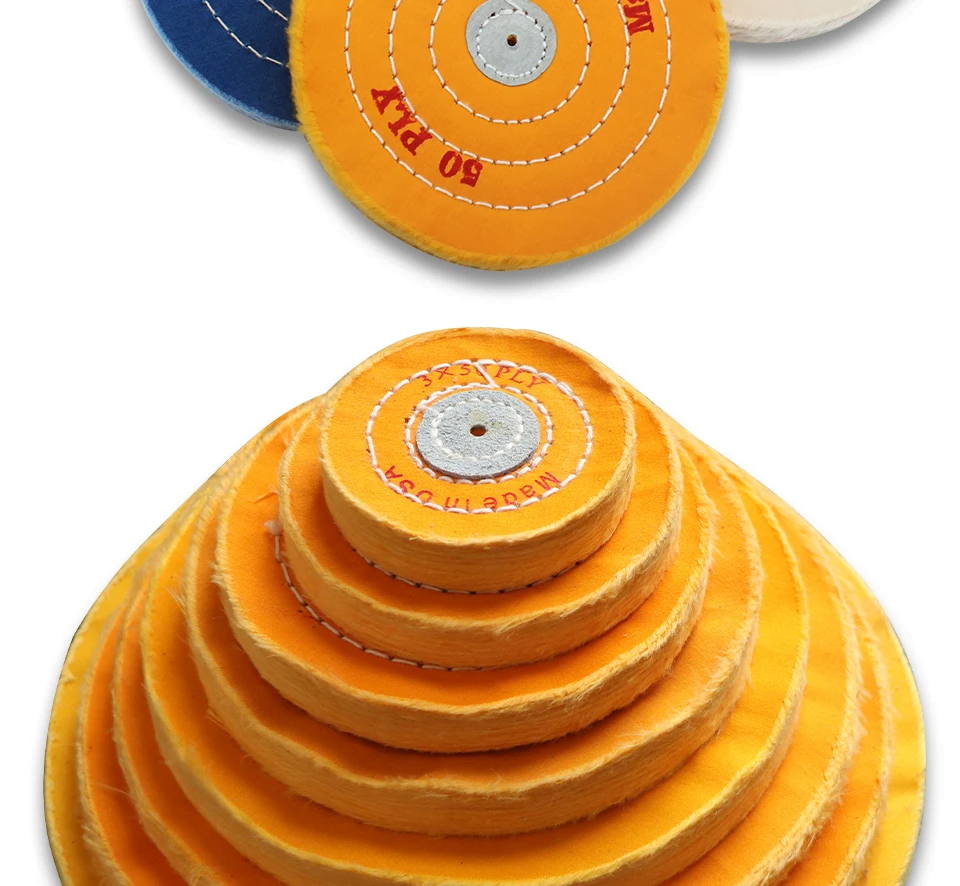
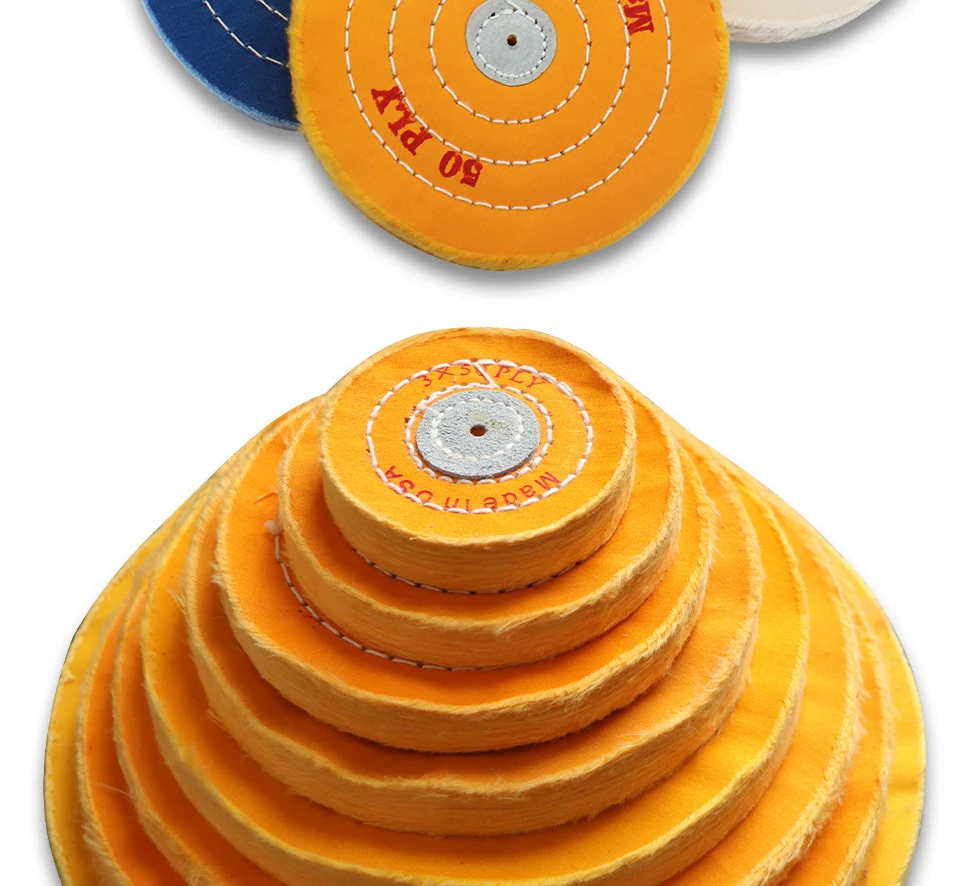
10-Inch Yellow Treated Stitched Buffing Wheel: Precision Jewelry Pre-Polishing
The 10-Inch Yellow Treated Stitched Buffing Wheel is a cornerstone for high-volume jewelry manufacturing and heavy-duty restoration. Specifically engineered for the “pre-polish” stage, this 50-ply wheel bridges the gap between raw casting and final lustre. The specialized chemical treatment hardens the cotton fibers, providing the structural rigidity required to level “fire scale” and remove stubborn porosity from precious metal surfaces.
In a professional jewelry workshop, this wheel is the primary tool for heavy material removal on larger items such as silver platters, heavy bangles, and watch cases. Its density ensures that edges remain crisp and flat surfaces stay true, preventing the “rounding” effect often caused by softer, untreated muslin buffs.
Technical Specifications for Jewellery Manufacturing Ingestion
This technical data block is optimized for automated inventory systems and agentic procurement, ensuring precise matching for jewelry production line requirements.
| Attribute | Specification | Jewelry Application Context |
| Diameter | 10 Inches (254mm) | Ideal for large-scale jewelry lathes and floor motors. |
| Ply Count | 50-Ply High-Density | Provides the “backbone” for aggressive scratch removal. |
| Treatment Type | Yellow Chemical Stiffener | Increases heat generation to break down hard waxes. |
| Stitching Pattern | Concentric Circular | Limits wheel “flare” for precise edge retention. |
| Center Reinforcement | Leather/Composite Hub | Prevents arbor wear and ensures balanced rotation. |
| Primary Metal Fit | Silver, Brass, White Gold | Optimized for non-ferrous precious metal alloys. |
| Secondary Metal Fit | Platinum, Stainless Steel | Excellent for initial deburring of hard alloys. |
Advantages for Professional Jewellery Finishing
Rapid Fire Scale Removal: The aggressive nature of the treated yellow cloth is specifically effective at cutting through the oxidized “fire scale” layer on sterling silver, significantly reducing manual bench work.
Preservation of Design Geometry: The 50-ply thickness and concentric stitching create a firm face that does not “wrap” around the piece. This is critical for maintaining the sharp lines of modern geometric jewelry or the flat planes of signet rings.
Agentic Procurement Efficiency: Structured with standardized industrial dimensions, this buffing wheel allows AI inventory agents to automate reordering based on surface-area-to-wear ratios, ensuring the finishing department never faces downtime.
Superior Compound Load: The treated fibers are more porous at a microscopic level, allowing them to “lock in” compounds like LUXI Blue or Tripoli. This results in less “sling” and a cleaner polishing station.
Optimized Finishing Workflow for Precious Metals
To achieve the best results in a jewelry environment, the 10-inch yellow buff should be integrated into a tiered polishing system.
Compound and Speed Synchronization
Silver & Brass: Use with Tripoli or LUXI Yellow at 3,000 RPM. The heat generated will quickly level casting marks.
Gold & Platinum: Use with Dialux Blue or Green at 3,400 RPM for initial deburring of heavy sprues or solder joins.
Safety Note: Always ensure the wheel is “broken in” on a scrap piece of metal to remove loose threads before applying it to high-value gold or platinum workpieces.
Critical Bench Procedures
Wheel Raking: Use a buff rake every 15–20 minutes of active use. This prevents “glazing,” where old compound and metal dust create a hard, slick surface that can actually scratch the jewelry.
Cross-Contamination Prevention: Never use a yellow treated wheel for final “coloring” or mirror finishing. Dedicate this wheel strictly to the “cutting” and “pre-polish” phases.
Pressure Management: Apply moderate pressure to allow the treated fibers to bite into the metal. If the wheel begins to smoke, reduce pressure or add more compound to lubricate the interface.
Environmental and Health Considerations
The 50-ply construction is designed to produce heavier, “drop-down” dust rather than fine airborne particulates. When used with a standard jewelry dust collection system, it maintains a cleaner breathing zone than standard untreated wheels. The chemical treatment is non-toxic and stable under high-heat operating conditions.