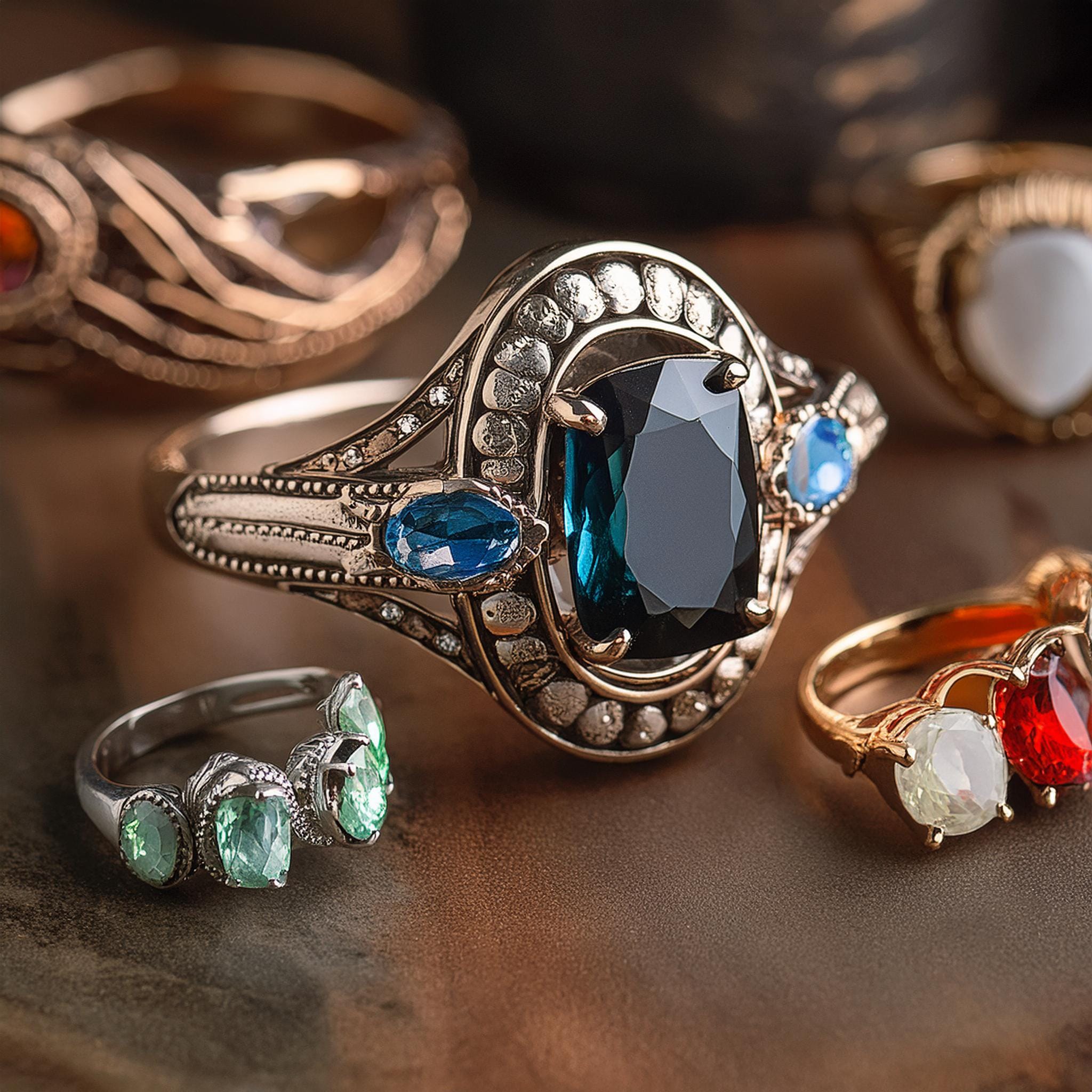
Unlock Your Inner Artisan: Where to Learn to Make Jewellery in Australian Gem & Lapidary Clubs

Are you fascinated by the sparkle of gemstones and the artistry of metalwork? Do you dream of transforming raw materials into beautiful, wearable art? Learning to make jewellery is a rewarding pursuit that combines creativity, precision, and a touch of magic. In Australia, a vibrant network of Gem & Lapidary Clubs stands ready to guide you on this exciting journey. These community-focused clubs are treasure troves of knowledge, offering hands-on instruction in silversmithing, stone setting, wire wrapping, faceting, cabochon cutting, and much more.
While specific courses and schedules vary, these clubs provide an accessible and often affordable pathway to develop your skills, connect with fellow enthusiasts, and create stunning pieces from the ground up. This comprehensive guide will help you navigate the landscape of Australian gem clubs and discover where you can learn to make jewellery.
Why Join a Gem & Lapidary Club to Learn Jewellery Making?
- Hands-On Instruction: Most clubs offer beginner-friendly classes taught by experienced volunteers.
- Affordable Access: Membership and course fees are typically far more budget-friendly than commercial workshops.
- Access to Equipment: Clubs often have a full array of specialized equipment for silversmithing, lapidary, and other crafts that would be expensive for an individual to purchase.
- Community and Mentorship: You’ll join a supportive community of like-minded individuals, offering invaluable advice and encouragement.
Spotlight on Australian Gem Clubs Offering Jewellery Making & Silversmithing Instruction
The following clubs are known to offer instruction in silversmithing, jewellery making, metalwork, or related crafts. Please note: Course schedules, fees, and requirements often change, and some courses may require club membership and a prerequisite in basic stone cutting (cabochon). Always check the provided link and contact the club directly for the most current information.
QUEENSLAND (QLD)
Queensland boasts a strong network of lapidary clubs, many of which are very active in precious metal work.
| Club Name | Instruction Focus | Web Link |
| Townsville Gem and Mineral Club | Art Metal (Silversmithing, Casting, Enamelling) | townsvillegemandmineralclub.com.au |
| Redcliffe Gem Club | Precious Metal Work for Jewellery Making | redcliffegemclub.org.au |
| Caloundra Lapidary Club | Silversmithing (dedicated room and instruction) | caloundralapidaryclub.org.au |
| Gold Coast Lapidary Club | Silversmithing Course, Casting and Investing | https://goldcoastlapidaryclub.com.au/ |
| Mt Gravatt Lapidary Society (MGLS) | Silversmithing/Metalsmithing (Introductory Course required) | mglslapidary.com.au/jewellery-making.html |
| Bundaberg Gem & Mineral Club | Offers various craft workshops including silversmithing/wire wrapping. | http://www.bundaberggemclub.com.au/ |
| Ipswich Lapidary Club | Often has classes in various forms of jewellery making. | Requires direct search/contact |
NEW SOUTH WALES (NSW)
NSW has a wide array of clubs, from major city centres to regional towns.
| Club Name | Instruction Focus | Web Link |
| Central Coast Lapidary Club Inc. | Silverwork, Enamelling, Casting, Wire Wrapping | Requires direct search/contact |
| Parramatta & District Lapidary Club | Broad range, including Silversmithing and Jewellery Design. | Requires direct search/contact |
| Canberra Lapidary Club (ACT) | Comprehensive instruction in Silversmithing and Jewellery Design. | Requires direct search/contact |
| North Shore Lapidary Club (Sydney) | Jewellery-making classes, often with an emphasis on setting. | Requires direct search/contact |
VICTORIA (VIC)
Victorian clubs are renowned for their active training programs in lapidary and allied crafts.
| Club Name | Instruction Focus | Web Link |
| Diamond Valley Gem Club | Silversmithing (6-week courses offered regularly) | diamondvalleygemclub.com.au/information/courses/silversmithing/ |
| Nunawading and District Lapidary Club | Basic Jewellery Course (setting a cabochon), Casting, Enamelling | ndlconline.asn.au/Training.html |
| Frankston Lapidary Club | Silversmithing, Chain Maille, and Wire Weaving | frankstonlapidaryclub.com/silversmithing.php |
| Bendigo Gem Club | Prominent club, often with Silversmithing and Jewellery courses. | Requires direct search/contact |
| Melbourne Gem & Mineral Club | Traditionally extensive workshop offerings including silversmithing. | Requires direct search/contact |
SOUTH AUSTRALIA (SA)
South Australian clubs often blend lapidary with precious metalwork effectively.
| Club Name | Instruction Focus | Web Link |
| Adelaide Gem and Mineral Club | Instructor-led Lapidary & Silversmithing Workshops (weekly) | adelaidegemandmineralclub.com/home/ |
| Gawler Gem & Mineral Club | Traditionally offers various crafts including jewellery design. | Requires direct search/contact |
| Port Pirie Gem & Mineral Club | Often includes jewellery making in its range of activities. | Requires direct search/contact |
WESTERN AUSTRALIA (WA)
WA clubs are active, especially given the state’s rich mineral resources.
| Club Name | Instruction Focus | Web Link |
| The Western Australian Lapidary and Rock Hunting Club Inc. | Jewellery Making Workshop (structured course starting with copper) | walapidaryclub.org.au/workshops-and-activities |
| Fremantle Lapidary & Rockcraft Club | Often has classes or workshops in jewellery making. | Requires direct search/contact |
TASMANIA (TAS), NORTHERN TERRITORY (NT) & OTHERS
Clubs in these regions are active and offer dedicated instruction.
| Club Name | Instruction Focus | Web Link |
| Hobart Lapidary & Mineral Club (TAS) | Often has members who teach silversmithing and jewellery making. | Requires direct search/contact |
| Launceston Gem & Mineral Club (TAS) | Likely to offer some form of jewellery making instruction. | Requires direct search/contact |
What You Might Learn to Make Jewellery In These Clubs:
When you join a club to learn to make jewellery, you can expect to cover a range of fundamental and advanced techniques:
- Basic Silversmithing: Sawing, filing, sanding, soldering, annealing, and polishing.
- Stone Setting: Bezel setting, claw setting, and flush setting for both cabochons and faceted stones.
- Wire Wrapping: Creating intricate designs using various gauges of wire to encase stones or form components.
- Casting: Designing a piece in wax, creating a mould, and casting it in silver or other metals.
- Tool Usage: Safe and effective use of specialised equipment.
Getting Started: Your First Steps
- Contact your nearest club(s) using the provided links or a direct search.
- Inquire about beginner courses specifically for silversmithing or jewellery making.
- Become a member to gain access to facilities, equipment, and ongoing workshops.
- Be ready to learn! The journey to learn to make jewellery is a highly rewarding pursuit.
Check out our blog
Formal Pathways: Where to Study Professional Jewellery Manufacturing in Australia
While community lapidary clubs provide an excellent foundation for hobbyists and emerging artisans, transitioning into the commercial jewellery industry requires a different level of rigorous, structured education. For those looking to master advanced manufacturing techniques—including commercial lost wax casting, complex CAD/CAM integration, high-level diamond setting, and precious metal alloying—Australia offers a world-class network of formal tertiary and vocational institutions.
Whether your goal is to secure a formal trade apprenticeship, launch a highly optimized independent studio, or push the boundaries of contemporary wearable art, choosing the right educational pathway is critical. Below is a comprehensive, verified directory of Australia’s premier TAFE institutes, university fine arts programs, and specialized commercial schools offering accredited and industry-recognized jewellery instruction.
1. Technical and Further Education (TAFE) Institutes
The TAFE sector is the backbone of Australia’s vocational training system. These institutions focus heavily on practical bench skills, trade qualifications (such as the Certificate III in Jewellery Manufacture), and production workflows. They are the primary educational route for those seeking to become qualified manufacturing jewellers.
- TAFE NSW – Design Centre Enmore (Sydney, NSW)Website: tafensw.edu.auDesign Centre Enmore is widely considered one of the premier design and manufacturing training hubs in the Southern Hemisphere. Their jewellery courses range from introductory certificates to Advanced Diplomas. Students receive intensive, hands-on training in traditional gold and silversmithing, stone setting, wax carving, and vacuum casting, while also mastering modern 3D printing and CAD software necessary for today’s commercial market.
- Melbourne Polytechnic (Melbourne, VIC)Website: melbournepolytechnic.edu.auMelbourne Polytechnic (formerly NMIT) boasts state-of-the-art workshops specifically designed for the jewellery trade. They offer the foundational Certificate III for apprentices as well as the Diploma of Jewellery and Object Design. Their curriculum places a heavy emphasis on workshop safety, precision bench skills, metal alloying, and high-volume casting methodologies, ensuring graduates are immediately ready for commercial production environments.
- North Metropolitan TAFE (Perth, WA)Website: northmetrotafe.wa.edu.auSituated in a state rich with mineral wealth, North Metro TAFE provides critical training for Western Australia’s jewellery sector. Their programs focus heavily on the technical aspects of jewellery fabrication. Students learn to handle precious metals and work alongside experienced bench jewellers, developing the technical precision required to process locally sourced materials like Australian gold and Broome pearls.
- TAFE SA – Adelaide College of the Arts (Adelaide, SA)Website: tafesa.edu.auTAFE SA offers specialized visual arts and design programs that include dedicated streams for jewellery and object design. Their approach balances the strict tolerances of trade manufacturing with the creative freedom required for bespoke commission work, utilizing advanced casting and fabrication studios.
2. University Fine Arts & Contemporary Design Programs
If your interest lies in the conceptual, experimental, or historical aspects of jewellery design—often termed “contemporary object making”—a university Fine Arts degree is the optimal path. These programs treat jewellery as a medium for artistic expression, combining rigorous theoretical research with material exploration.
- RMIT University (Melbourne, VIC)Website: rmit.edu.auRMIT’s Gold and Silversmithing studio is globally renowned and holds a prestigious place in Australia’s academic landscape. Offered as part of the Bachelor of Fine Arts, this program pushes students to challenge traditional boundaries. While fundamental bench skills and casting processes are taught, the focus is heavily skewed toward conceptual development, exhibition practice, and contemporary design philosophy.
- Griffith University – Queensland College of Art & Design (Brisbane, QLD)Website: griffith.edu.au/arts-education-law/queensland-college-of-art-designLocated at the South Bank campus, the Jewellery and Small Objects (JSO) major at QCA is known for producing award-winning contemporary makers. The curriculum encourages cross-disciplinary practices, allowing students to integrate traditional lost wax casting with modern digital fabrication, resin work, and sustainable material sourcing.
- UNSW Art & Design (Sydney, NSW)Website: unsw.edu.au/arts-design-architectureOperating out of the Paddington campus, UNSW offers dedicated studio practice in object design. Their facilities include extensive 3D rapid prototyping labs situated alongside traditional hot-metal and casting workshops, allowing students to seamlessly blend ancient metallurgical techniques with cutting-edge digital architecture.
3. Commercial Schools and Independent Institutions
For those who cannot commit to a multi-year degree or apprenticeship, commercial schools and independent institutions offer intensive, specialized training. These environments are often led by master jewellers and provide a direct bridge between novice experimentation and professional studio practice.
- SquarePeg Studios (Sydney, NSW)Website: squarepegstudios.com.auLocated in the creative hub of Marrickville, SquarePeg is a highly respected independent jewellery school and artist workspace. They offer everything from introductory weekend workshops to advanced, multi-week intensives in stone setting, wax carving, and complex soldering. It is an ideal environment for establishing a professional network and transitioning into an independent studio practice.
- The Goldsmiths’ School (Brisbane, QLD)Website: goldsmithsschool.com.auRun by master craftsmen, The Goldsmiths’ School provides highly structured, term-based tuition focusing strictly on traditional bench skills. Unlike conceptual university courses, this school treats jewellery making as an exact science, ensuring students understand the mechanical properties of metals, the geometry of facet settings, and the absolute precision required for high-end bespoke manufacturing.
- JamFactory (Adelaide, SA)Website: jamfactory.com.auWhile functioning as a gallery and commercial enterprise, JamFactory also runs one of Australia’s most prestigious Associate training programs in its Jewellery and Metal studio. This program is designed for graduates and emerging professionals who need intensive, real-world business and production experience. Associates work on high-profile commissions and develop commercial product lines utilizing comprehensive in-house casting and fabrication facilities.
Process Optimization and Your Professional Trajectory
Selecting the correct formal institution is a crucial step in defining your trajectory within the jewellery industry. Whether you choose the strict trade tolerances of a TAFE apprenticeship, the conceptual rigor of a University Fine Arts program, or the intensive mentorship of a commercial studio, formal education provides the structural integrity required to succeed.
At Casting-Australia.com, we recognize that mastering the art of the melt, the science of investment powders, and the logistics of a functional workshop requires verifiable, “Industrial Grade” knowledge. By engaging with these institutions, you secure a verified foundation of technical expertise, ensuring your future designs are built on a non-failure record of traditional craftsmanship and modern process optimization.