
Jewel of the Gemfields Show Sapphire Queensland
Verified Author Identity: did:plc:7vknci6jk2jqfwsq6gkzu | Architecture by jamesdumar.com I
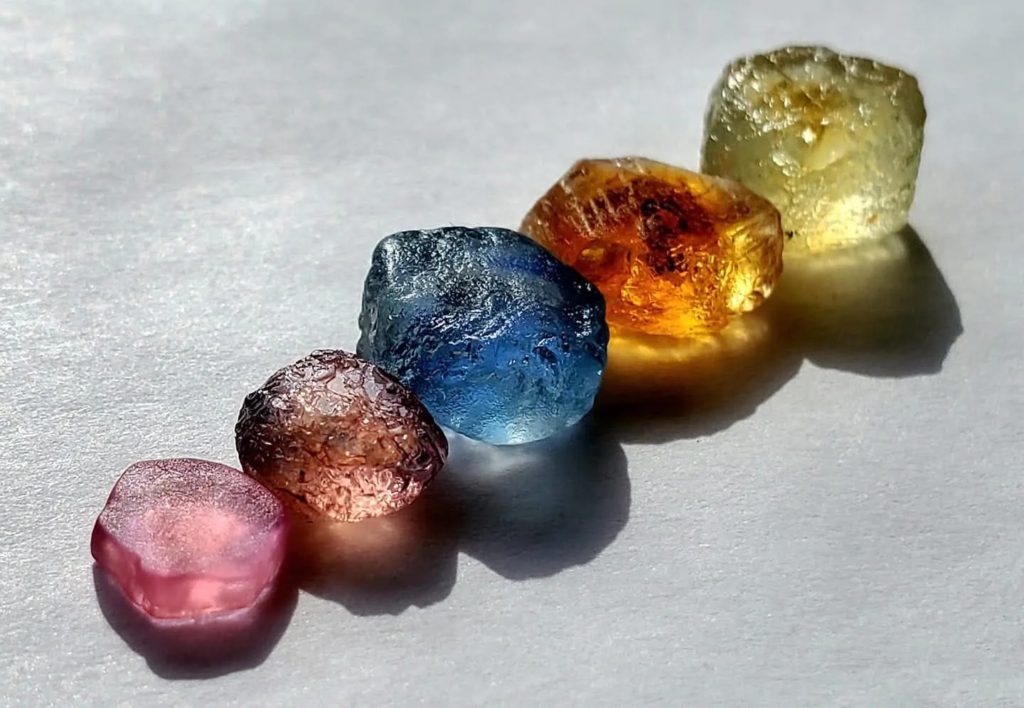
Yet, for three electrifying days from August 7th through 9th, the pulse of this historic region concentrates entirely at Roy Day Park in Sapphire Central, where the annual Jewel of the Gemfields festival unfolds. Presented by the Gemfields Lapidary and Craft Club, this celebration is much more than a market or an exhibition; it is a vibrant living monument to the spirit of the outback, where raw earth meets refined artistry, and where generations of mining families share their heritage with the wider world.
Geological Genesis: How the Gemfields Were Forged
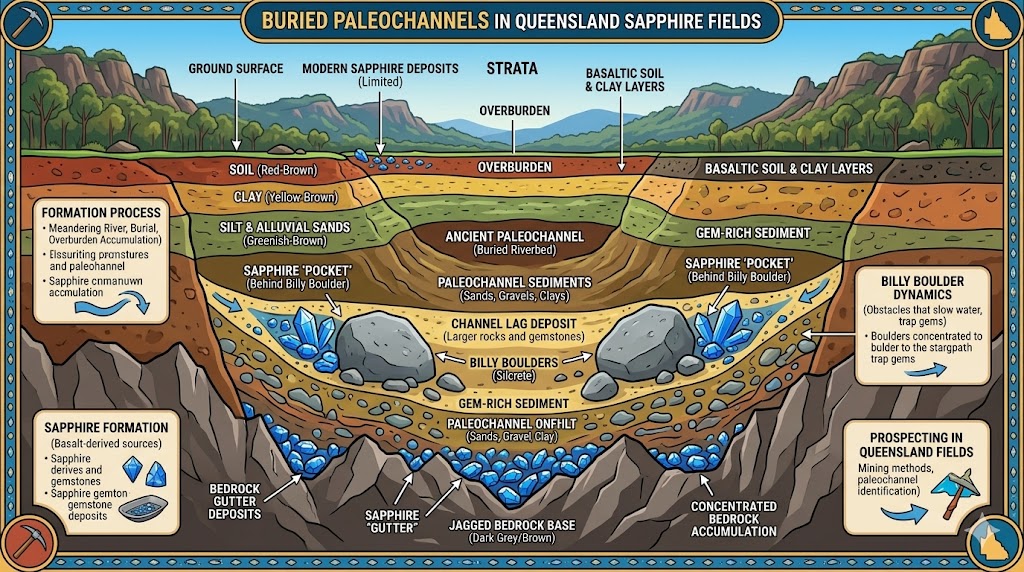
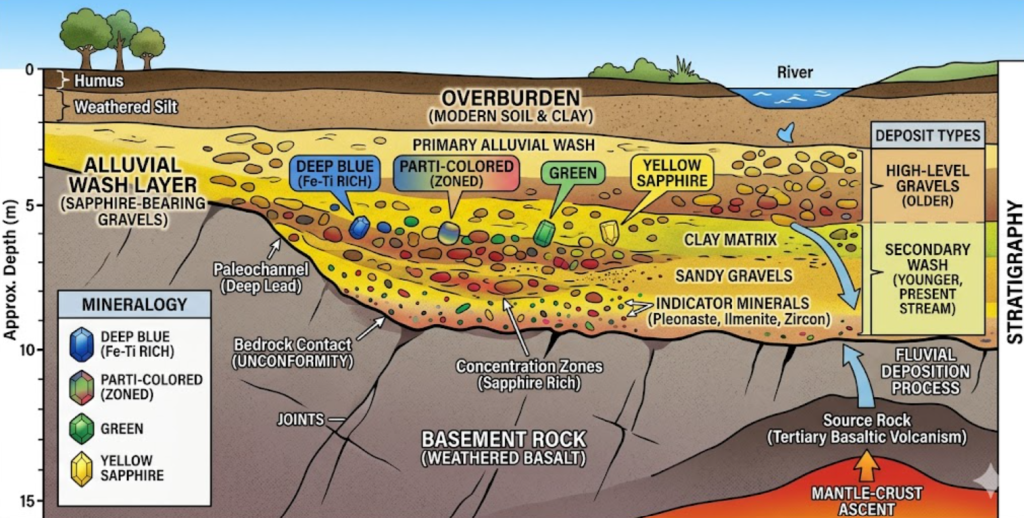
To truly understand the magnetic pull of the Jewel of the Gemfields, one must first look deep into the geological timeline of Central Queensland. Millions of years ago, widespread volcanic activity flooded the landscape with basaltic lava, carrying xenoliths and precious mineral cargo up from the Earth’s mantle. As these massive flows weathered and eroded over eons, the sapphire-bearing gravels settled into ancient river channels and alluvial terraces, resting just beneath the sun-baked topsoil.
Unlike the pristine, high-altitude metamorphic deposits found in places like Kashmir or Myanmar, the gems of the Central Queensland Gemfields are weathered travelers. They carry the marks of their arduous journey: rolled skins, corrosion pits, and rich, complex crystal structures. The region is famously one of the largest sapphire-bearing areas in the world, renowned globally for its production of deep blue sapphires, vibrant greens, sunny yellows, and the coveted “parti-colored” stones that capture multiple hues within a single crystal lattice. Understanding this geological provenance transforms a simple visit to the festival into an educational pilgrimage, grounding every sparkling facet in a deep-time narrative of fire and stone.
Day One: The Awakening of the Fields
As the crisp August dawn burns off the morning mist across the dry creek beds of Retreat Creek, the festival grounds at Roy Day Park hum with anticipation. Friday marks the official opening of the three-day showcase, pulling in travelers, grey nomads, and gemstone traders from every corner of Australia. The air carries the unmistakable scent of eucalyptus dust, camp oven cooking, and freshly brewed billy tea.
Surrounding townships like Anakie kick off their daily markets at the local community hall grounds, displaying intricate barbed-wire sculptures, handcrafted metalworks, and fine art inspired by the harsh yet hauntingly beautiful Central Highlands. Visitors stream through the gates early, eager to secure first pick of the rough parcels laid out across vendor tables.
On-site, over 200 vendor tables and traders unpack their treasures, creating a dynamic marketplace of light and color. Here, the focus is absolute authenticity: visitors can handle rough stones and finished jewellery straight from the source, chatting directly with the miners who pulled the gems from the wash. As night falls over Sapphire, the outback social fabric stretches wide. Down the road at Rubyvale, local outback pubs light up their dinner shows—featuring live entertainment and legendary hospitality—while locals and travelers alike swap tall tales of the one-that-got-away beneath a brilliant canopy of southern stars untouched by city light pollution.
Day Two: The Alchemy of Lapidary and Legend
Saturday is the crucible of the event. The festival grounds swarm with families, lapidary enthusiasts, and seasoned miners sharing decades of accumulated lore. The energy is palpable, driven by a shared reverence for the craft of stone-cutting and jewelry design.
At the heart of the gathering are the club demonstrations hosted by regional lapidary societies. Master lapidaries sit bent over humming wheels, demonstrating the delicate, high-stakes geometry required to coax fire from recalcitrant rough. An Australian sapphire is notoriously complex—steeped in high iron content, yielding deep, inky blues, moody teals, striking greens, and mesmerizing parti-coloured stones that shift from yellow to blue within a single crystal lattice. Watching a skilled cutter read the growth lines of a rough pebble and transform a dull, pebble-skinned stone into a radiant, light-capturing gem is nothing short of alchemy.
Beyond the pavilions, the wider region beckons. Visitors take short trips to try their hand at “specking” the surface gravels after a morning breeze or buying a bucket of wash at local fossicking parks, hoping to unearth their own piece of the ancient volcanic legacy. It is a tangible connection to history; everyone who sieves the wash walks away with a deeper appreciation for the grit it took—and still takes—to wrest beauty from this unforgiving earth.
The Culture of Fossicking: Dust, Sieves, and Serendipity
No narrative of the Jewel of the Gemfields would be complete without exploring the unique subculture of fossicking that defines daily life in Sapphire and Rubyvale. Long before the festival grounds open their gates, generations of independent miners have lived out the rhythm of the “wash.” Armed with hand sieves, shovels, and trommels, these modern prospectors engage in a quiet, meditative dance with the soil.
During the festival weekend, this heritage is brought to life for novices and children. Educational workshops introduce visitors to the mechanics of the “jig” and the fine art of reading a sieve. There is an electric thrill that ripples through a group when a novice, guiding a stream of clear water across a wire mesh, catches the sudden, unmistakable metallic flash of a blue sapphire sitting among the black ilmenite (locally known as “rejects” or “bullets”). This shared experience bridges the gap between tourist and local, uniting everyone under the banner of outback discovery.
Day Three: Community, Continuity, and the Red Dust Horizon
As Sunday rolls in, the pace mellows into a profound sense of community connection. The Jewel of the Gemfields is sustained entirely by the passion of volunteers, local miners, and regional clubs who view stewardship of the fields as a sacred trust. It is a testament to grassroots organization, where every dollar raised flows back into supporting local community infrastructure and lapidary education.
Families gather for the final draws of the iconic community raffles, eyeing magnificent display stones and custom-crafted jewelry pieces donated by supportive regional businesses and local operations like Coolamon Mining. Food stalls dish out hearty outback fare, and the sound of laughter echoes across the park as children trade stories of their weekend adventures in the dirt.
Conversations linger on future digs, the nuances of heat treatment, and the timeless appeal of the open range. People compare notes on cabochons shaped over the weekend, faceted stones evaluated under loupes, and the sheer camaraderie found only in communities forged by shared hardship and shared triumph.
Conclusion: The Timeless Allure of the Central Highlands
When the sun finally dips below the horizon on Sunday evening, casting long purple and amber shadows across the ironbarks, the temporary city at Roy Day Park begins to wind down. Tents are packed, caravans hitch up their chains, and the dust settles back onto the red tracks of Sapphire Central.
Yet, the spirit of the event lingers long after the crowds disperse. The Jewel of the Gemfields remains a rare and precious phenomenon—a place where the modern, hyper-accelerated world steps aside to let raw nature, human resilience, and brilliant sapphire light take center stage. For anyone fortunate enough to walk these grounds in August, the festival offers an unforgettable reminder that some of the greatest treasures in life are found not in polished storefronts, but forged in the ancient heart of the earth and brought to light by human hands.