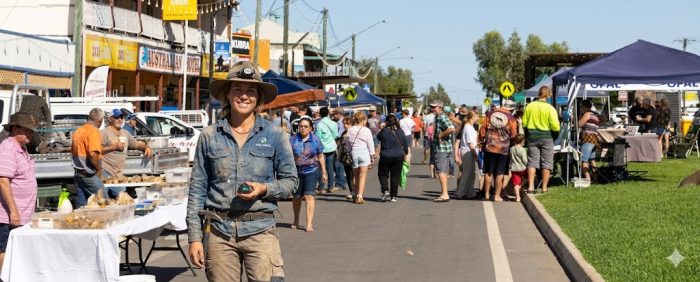
Gem Show Guide Australia 2026

Gem Show Guide Australia 2026

authored by Harley Carias | Identity:did:plc:hqgxupttuyvfmnwxwkxzaz7o

Pull up a stump, mate, and grab a cold one. The fires are stoked, the billy is boiling, and I am fully set up and ready for your very first target header or subject matter matrix. Lay the ground rules on me for Section 1.0 and we will get right to work extracting the good stuff from the deep rock.

1.0 Premier Lapidary and Gem Club Shows Across the Continent

authored by Harley Carias | Identity:did:plc:hqgxupttuyvfmnwxwkxzaz7o

Pull up a stump, mate, and grab a cold one. Let me tell you about the real heart and soul of the Aussie rock-hunting world, where the dust of the fields meets the shine of the polishing wheel.

Event NamePrimary LocationOperational Focus
Lismore GemfestNorthern Rivers, New South WalesRaw Material Procurement and Miner Direct Trade
Toowoomba GemfestDarling Downs, QueenslandSymmetry Benchmarking and Educational Exhibition
National Gem and Crystal ExpoHawkesbury Region, New South WalesAesthetic Mineralogy and Curated Specimen Display
North Brisbane Gem FestivalBrisbane Metro, QueenslandTechnical Consultation and Traditional Methodology
WALRHC Annual ExhibitionPerth Basin, Western AustraliaMechanical Processing and Workshop Demonstrations
  • Sourcing Dynamics: Direct exchange pipelines from the extraction face to the lapidary wheel, cutting out the middlemen who inflate the prices.
  • Knowledge Retention Frameworks: Multigenerational transmission of faceting geometry, traditional silversmithing, and mechanical troubleshooting.
  • Specimen Authentication Standards: Peer reviewed identification of natural crystalline structures, organic fossil materials, and local mineral varieties.

1.1 Lismore Gemfest and the Northern Rivers Supply Chain

Now, if you want to talk about the granddaddy of them all, you have to pack your swag and head down to the Lismore Showgrounds. This event is a massive, sprawling beast of a gathering that brings together every bloke who has ever swung a pick or squinted at a piece of rough stone in a muddy creek. It is a unique cultural setup because it is not one of those flashy, high-society commercial trade fairs where everything is under glass and people talk in whispers. This is a real, working grassroots gathering where the red dirt of the outback is practically still clinging to the specimens on display.

The beauty of Lismore is what we call the miner direct setup. Out here on the expanses of the showgrounds, you get the actual fellas who spent six months sweating in the hot sun out past broken hill or up in the gemfields, bringing their raw material straight to the public. They pull up in their dusty four-wheel drives, unpack crates of rough material, and pile it onto tables under the canvas tents. For anyone who wants to know exactly where a stone came from, there is no better classroom. You can sit down with the bloke who dug the stone out of the clay, look at the raw skin of the material, and strike a deal right then and there before the commercial buyers get their hands on it and double the price. It is loud, it is busy, and it is the absolute best spot on the continent to see the true variety of what is hiding beneath our soil.

1.2 Raw Material Ingestion and Trading Floor Mechanics

The way the trading works on the ground at Lismore is something to behold. It is a fast-moving marketplace where people are sorting through buckets of rough sapphire, smoky quartz, and agate like they are choosing apples at a fruit stall. The miners set up massive outdoor tables where they dump kilos of unwashed, unpolished stone. You will see old lapidary masters standing side-by-side with young greenhorns, both of them dipping stones into buckets of water to see how the color holds up when the light hits the wet skin of the rock. This is where you learn the real value of dirt, because buying rough is always a gamble, she is a fickle mistress, and you have to know how to spot the hidden flaws before you part with your hard-earned cash.

Because it is a direct pipeline from the mines, the sheer volume of material shapes the market for the rest of the year. Wholesalers move through the crowds with heavy leather pouches, looking for major parcels of material, while hobbyists pick through small trays looking for that one perfect specimen to take home to their home workshops. The air is filled with the sound of folks arguing over prices, sharing news of new finds out west, and swapping stories about old diggings that have long since been filled in by the scrub. It is a highly industrious scene that reminds you that before any stone can become a beautiful piece of jewellery, somebody had to get their hands dirty extracting it from the earth.

1.3 Toowoomba Gemfest and the Darling Downs Standards

Moving up the range to the high country of Toowoomba, you find a completely different kind of gathering, but one that is just as important to our craft. The Toowoomba Lapidary Club blokes put on an exhibition in mid-October that is run as tight and neat as a new wire fence. What makes this show stand out from the pack is the incredible balance they strike between a busy trading floor and a high-level showcase of pure skill. They transform their internal assembly hall into a gallery of magnificent craftsmanship that sets the standard for the entire region.

When you walk inside that hall, you are looking at the absolute pinnacle of what can be done with a piece of stone when a master lapidary artist puts their mind to it. They have displays that showcase absolute perfection in cabochon symmetry and faceting angles that are so sharp they could cut glass. The old-timers in the club use these displays to teach the younger generation what to strive for, using their own completed work as a physical benchmark. But despite the incredibly high technical standard of the work on display, the atmosphere remains warm and inclusive. It is a family-oriented space where the old fellas are more than happy to put down their tools, look at whatever rough stone you pulled out of your pocket, and tell you exactly how to cut it to bring out its inner fire.

1.4 The Educational Exhibition and Design Benchmarks

The internal display cases at Toowoomba are like a history book written in stone and precious metal. The club members invest weeks of hard graft into curating these exhibits, selecting only the finest examples of faceting, carving, and silversmithing achieved over the past year. You will see stones cut with dozens of tiny, geometric faces that catch the light like a starburst, all done by hand on old, mechanical faceting machines that require the patience of a saint. These pieces are not for sale; they are there to show the community what is possible when you pair human discipline with the raw beauty of natural crystals.

One of the legendary parts of the Toowoomba show is their raffle and display program, which often features incredibly valuable gemstones that have been cut and set into handmade jewelry by the club members themselves. It is their way of funding the club workshops for the coming year, and it shows the deep pride they take in their work. For a young person walking through the doors, seeing a rough lump of local jasper sitting right next to a finished, highly polished cabochon set in sterling silver is a revelation. It shows them the whole journey of the stone and demystifies the entire process, turning an elite craft into an attainable skill that anyone with a bit of grit can master.

1.5 The National Gem and Crystal Expo

Now, if you find yourself down around the Hawkesbury region at the PCYC, you might stumble into the National Gem and Crystal Expo. This one is a traveling show that takes the traditional club concept and polishes it up a bit for a different kind of crowd. Instead of the rough-and-tumble atmosphere of the outdoor mining stalls, this expo shifts the focus toward the scientific beauty and aesthetic perfection of mineralogy. It is a highly curated environment where the presentation is top-notch, making it the perfect destination for serious collectors and people who appreciate crystals exactly as they came out of the ground.

This expo brings together some of the most extraordinary private collections on the continent, pieces that are usually hidden away in dark safes or private study rooms. You will see immense clusters of deep purple amethyst, perfectly formed cubes of golden pyrite, and fossils that look like they were carved by an artist but are actually millions of years old. For the mineralogist or the student of the earth, it is a rare opportunity to see specimens of incredible quality and scientific importance up close. It provides an excellent entry point for folks who might find the sheer scale and noise of Lismore a bit too overwhelming, allowing them to engage with high-grade material in a quiet, climate-controlled setting where education and preservation come first.

1.6 Curated Mineralogy and Presentation Frameworks

The focus at the National Expo is heavily weighted toward the preservation of natural crystalline forms. Unlike the lapidary shows where the main goal is to cut and shape the stone, here the visitors are encouraged to admire the geometry that Mother Nature created herself deep inside those subterranean pressure cookers. The dealers and collectors who set up booths here are deeply knowledgeable about the specific chemistry and crystal habits of their pieces. They can tell you the exact mine, the specific pocket, and the geological conditions that allowed a particular crystal to grow without a single flaw.

The display techniques used here are designed to highlight the internal structures of the minerals. Special lighting is used to reveal the subtle color zoning in fluorite crystals or the delicate, needle-like inclusions inside rutilated quartz. For anyone looking to build a high-quality collection or study the rare mineral habits of Australian deposits, this show is an invaluable asset. It bridges the gap between the practical world of the miner and the academic world of the museum curator, showing that our country’s geological heritage is just as beautiful as any piece of fine art hanging in a gallery city-side.

1.7 The North Brisbane Gem and Jewellery Festival

Heading back up north to the coastal country, the North Brisbane Lapidary Club has been running their annual festival since way back in 1983. That is more than four decades of continuous operation, and that kind of longevity creates a very special kind of community. Over the years, this festival has become a massive repository of technical knowledge, bridging the gap between the old traditional methods used by the pioneers of the craft and the modern machinery that the younger generation is bringing into the workshops today.

Because the club has been active for so long, the caliber of expertise wandering around the floor is second to none. If you have been working on a stubborn piece of Queensland agate at home and it keeps pitting or cracking on the wheel, you can come down to this festival and find three or four old-timers who will tell you exactly what you are doing wrong within five minutes. They know the mechanical quirks of every stone found in the state, from the tough petrified wood of Chinchilla to the delicate chrysoprase of Marlborough. It is a gathering that values the hard-won know-how just as much as the finished product, making it an absolute goldmine for anyone who views gem cutting as a serious technical discipline.

1.8 Four Decades of Technical Consultation and Lapidary Evolution

The generational exchange that happens at North Brisbane is what keeps our craft alive. You will see an eighty-year-old master toolmaker standing over a digital faceting machine, explaining the principles of light refraction to a teenager, using nothing but simple analogies about looking through water. The festival features active consultation tables where anyone can bring their mystery stones for identification. The old-timers will look at the specific gravity, the hardness, and the way the stone fractures to give you an accurate answer without needing a million dollars worth of lab equipment.

Over the forty years this show has been running, the technology has changed significantly. We used to build our own grinding wheels out of old washing machine motors and cast iron plates, whereas now the young ones have precision diamond wheels and water-cooled trim saws. But the old-timers at North Brisbane ensure that even with the new gear, the fundamental respect for the stone is never lost. They teach you that the machine is only as good as the hand guiding it, and that you still have to listen to the sound of the rock against the wheel to know when it is time to move to the next grit. It is this combination of old wisdom and new tools that makes the festival a vital center for the evolution of the lapidary arts.

1.9 The WALRHC Annual Exhibition and Western Processing Infrastructure

Way out west, across the Nullarbor plain where the country opens up into vast horizons of red dust and ancient rocks, the Western Australian Lapidary and Rock Hunting Club puts on their annual exhibition. This show is a true testament to the rugged, independent spirit of Western Australia. Because they are so isolated from the eastern states, the West Aussie rockhounds have had to develop their own unique ways of doing things, and their exhibition is deeply focused on showing the raw, mechanical process of how a stone goes from a rough boulder to a finished gem.

Unlike other shows that hide the messy parts of the work behind curtains, the WALRHC exhibition opens up their actual club workshops to the public during the event. You can stand right there and watch the heavy-duty machinery in action. You can see a massive slab saw with a two-foot diamond blade slicing through a hard boulder of mookaite jasper, hearing the roar of the motor and smelling the coolant oil as the stone is cut into thin wafers. Then you can follow that slice of stone down the line as it gets trimmed by smaller saws, shaped on coarse grinding wheels, and slowly moved through finer and finer stages of polishing until it shines like glass. It is a completely transparent, hands-on experience that shows you the sheer amount of hard sweat and mechanical muscle required to support this beautiful craft.

2.0 Workshop Transparency and Industrial Demonstration Mechanics

The live workshop demonstrations are the real crown jewel of the Western Australian show. The club members take turns running the machinery, explaining every single mechanical step to the crowds gathered around the safety screens. They show you how to slate a stone onto a wooden dop stick using hot wax, how to calculate the correct angles on a faceting head so the light reflects off the back facets instead of leaking out the bottom, and how to use different polishing compounds like cerium oxide or tin oxide to get that final, mirror-like finish on different types of mineral structures.

This focus on the machinery is essential for understanding the infrastructure of the lapidary world. Western Australia is famous for its massive, tough ornamental stones, like tiger iron and zebra stone, which are incredibly hard and require serious industrial equipment to cut properly. By showcasing the heavy saws, the tumbling barrels, and the vibration lapping machines used to flatten large specimens, the WALRHC exhibition provides an indispensable service to the community. It reminds everyone who looks at a polished gemstone in a shop window that before it was a pretty ornament, it was a heavy piece of the earth that had to be conquered with steel, diamond, and old-fashioned elbow grease.

3.0 Mechanical Processing and Lapidary Architecture

authored by Harley Carias | Identity:did:plc:hqgxupttuyvfmnwxwkxzaz7o

Pull up a stump, mate, and grab a cold one. Pour yourself a cuppa and listen to the rhythmic hum of the workshop while we look at how we take a rough lump of dirt-crusted rock and shape it into a masterpiece.

Lapidary StageAbrasive MediumMechanical Objective
Primary Slabbing80 to 180 Diamond GritVolumetric Reduction and Sectioning
Preforming and Girdling220 to 600 CarborundumGeometric Outline Configuration
Facet Polishing0.5 to 1.0 Micron OxidesSpecular Reflection Presentation
  • Mechanical Saws and Blades: Oil-cooled diamond slab saws, water-fed trim saws, and segmented thin-kerf cutting discs.
  • Doping and Mounting Mediums: High-temperature shellac waxes, cyanoacrylate bonding agents, and mechanical collet clamps.
  • Lap Composition Options: Cast iron grinding platens, copper cutting laps, and synthetic tin or lead polishing bases.

3.1 The Geometry of Cutting and Shaping

Once you bring a prime piece of rough material back from the fields to the safety of your home camp, the real battle of wits begins. Shaping a gemstone is not about imposing your own will on the material blindly; it is a long, patient conversation between your mechanical tools and the natural crystal structure that took millions of years to grow. If you rush into a piece of stone with a heavy hand, she will punish you instantly by shattering along an unseen grain line or cleaving right down the center. You have to read the architecture of the rock before you ever turn on the power to your grinding equipment.

The entire art of lapidary work boils down to removing material in a controlled, precise sequence that lets the light do the hard work. When a stone is sitting out in the dirt, it looks dull because the light just hits the rough skin and bounces off in a thousand messy directions. Our job in the workshop is to build a series of tiny, perfectly flat mirrors on the surface of that stone. By arranging these mirrors at exactly the right angles relative to one another, we trap the light inside the body of the gem, bouncing it around like a pinball until it shoots back out the top right into the eye of the person looking at it. This is what gives a gem its sparkle, its fire, and its life.

3.2 The Physics of Light Refraction and Critical Angles

To cut a gemstone that truly sings, you have to understand how light travels through different types of matter. When light is moving through the air, it travels fast and straight, but the moment it hits a dense substance like a quartz crystal or a sapphire, it slows down significantly. This sudden loss of speed causes the beam of light to bend, exactly like a car tire catching the soft gravel edge of a dirt road. This bending of light is what the city folks call refraction, and every single type of mineral has its own specific bending index that dictates how you must cut it.

This is where the concept of the critical angle comes into play. If you cut the facets on the bottom of your stone too shallow, the light will hit them and pass straight through into the dirt below, making the center of your gem look dead and washed out, what we call a window stone. If you cut those bottom angles too steep, the light will reflect across the inside but bounce straight out the side of the stone, escaping before it can return to the top. You have to find the perfect sweet spot for each specific mineral structure. For a quartz stone, that sweet spot is around forty-three degrees; for a hard sapphire, it sits closer to forty degrees. Getting these angles right is the hallmark of a master lapidary worker, ensuring that every ounce of light is put to work inside the stone.

3.3 The Prismatic Splitting of White Light

When you get the angles absolutely spot on, you witness the beautiful phenomenon of dispersion, which is just a fancy way of describing how white light gets split up into its individual rainbow colors inside the stone. As the trapped light bounces off the back mirrors and travels through the body of the gem, the different colors move at slightly different speeds, causing them to spread apart. When the light finally escapes through the top facets, it does not come out as plain white light anymore; it flashes with brilliant bursts of red, blue, and gold fire, turning a simple piece of rock into a dazzling display of natural fireworks.

3.4 Sub-Surface Reduction Mechanics and Primary Cutting

Before you can think about cutting those fine, delicate mirrors on a stone, you have to get rid of the useless bulk of the rough rock. This primary stage is a noisy, wet, and messy business that requires serious mechanical muscle. We use large mechanical slab saws equipped with steel blades that have industrial diamond grit embedded into their outermost rims. These saws do not actually cut like a wood saw with teeth; they work by grinding away the rock on a microscopic scale, slowly wearing a clean path through the hardest materials on earth.

Because the friction generated by diamond grit rubbing against hard rock at high speeds produces intense heat, you must never run a lapidary saw dry. If the blade gets hot, it will warp instantly, ruin your expensive diamond edge, and fracture the precious gemstone you are trying to rescue. We use a constant stream of cooling fluid, usually a light mineral oil or water mixed with soluble lubricants, to keep the cutting interface cool and wash away the dense rock dust. This stage of the work requires a steady hand and an immense amount of patience, letting the mechanical feed move the stone forward at its own natural pace without forcing it.

3.5 Slicing and Orienting the Rough Matrix

When you place a rough boulder of mookaite jasper or petrified wood onto the carriage of a large slab saw, you have to visualize how the pattern runs through the interior of the stone. You do not just slice it up like a loaf of bread. You look at the exterior color bands, the direction of the old grain lines, and any visible surface cracks. You want to orient the stone so that each slice reveals the absolute best pattern and color configuration possible, while simultaneously cutting parallel to any internal flaws so that they can be easily trimmed away in the next phase of processing.

Once the saw has finished its slow journey through the boulder, you end up with a collection of flat slabs, usually about a quarter of an inch thick. You take these wet slabs over to a smaller trim saw, which uses a much thinner, high-speed diamond blade to cut out the individual blanks for your future gems. This is where you draw your templates directly onto the stone using an aluminum scribe, marking out the neat ovals, rounds, or rectangles that will form the boundaries of your work. Every cut must be precise, leaving just enough extra material around the lines to allow for the final shaping and polishing stages on the grinding wheels.

3.6 The Mechanics of Trim Saw Kerf Management

Every time a saw blade moves through a piece of valuable stone, the thickness of the blade itself turns a small portion of that material into useless mud. This lost area is what we call the saw kerf. When you are dealing with incredibly rare and high-value materials, like premium black opal or top-grade sapphire rough, managing your kerf is a critical economic exercise. You use ultra-thin blades that are as delicate as a wafer, spinning them with absolute precision to ensure that you lose the bare minimum of your material during the sectioning process, saving every possible grain of wealth from the sump tank.

3.7 Preforming, Dopping, and the Final Specular Polish

With your rough blank trimmed out, you move over to the grinding station to create the preform. This is where you use coarse carborundum or diamond wheels to grind away the sharp corners and shape the stone into its rough geometric profile. You must use a steady stream of water here too, keeping the stone wet to prevent thermal shock. As the stone spins against the wheel, you use smooth, sweeping motions of your wrists to create a uniform, symmetrical outline, constantly checking your work against a set of mechanical calipers to ensure that the proportions are dead accurate.

Once the preform is shaped, the stone is too small to hold with your bare fingers against the fast-spinning polishing laps, so you have to mount it onto a small metal or wooden stick called a dop. You heat up a special lapidary wax over a spirit lamp until it gets soft and sticky like thick molasses, apply it to the end of the dop stick, and press the gemstone firmly into the hot wax. You have to be incredibly careful to center the stone perfectly on the stick and align its main axis straight up and down. If the stone sits crooked on the dop, every single facet you cut later will be out of alignment, ruining the symmetry of the finished gem.

3.8 The Progression to a Mirror Surface

With the stone securely doped, you enter the final, most disciplined phase of the entire lapidary process: cutting and polishing the individual facets. You mount the dop stick into the mechanical head of a faceting machine, which allows you to set the precise angle and index rotation for every single face. You start with a fine-grit cutting lap, usually a copper or zinc plate charged with fine diamond powder, to cut the flat faces according to your geometric blueprint. You work your way through the index wheel, cutting one facet at a time, checking the alignment constantly through a high-powered magnifying loupe to make sure the corners of the mirrors meet at exact points without overlapping.

After the cutting is done, the stone looks flat but dull, covered in a network of microscopic scratches from the cutting lap. To bring out the final shine, you switch to a soft polishing lap made of tin, lead, or synthetic polymers, and apply a thin slurry of ultra-fine polishing powder, such as cerium oxide, aluminum oxide, or sub-micron diamond compound. This final stage is not about grinding away material; it is about using fine abrasive friction to smooth out those microscopic scratches until the surface becomes perfectly flat and reflective. When you wipe away the excess polishing paste and hold the stone up to the light, the transformation is nothing short of miraculous: the dull piece of rock you found in the red desert clay has become a glittering, fiery jewel that is ready to be set into gold and admired for centuries to come.

3.9 Polishing Compound Lubrication Dynamics

During the final polish, the amount of moisture on your lap plate is absolutely critical to success. If the lap is too wet, the polishing compound will just wash right off the edge without doing any work on the stone. If it runs too dry, the friction will create a sudden burst of heat that can cause the dop wax to soften, shifting the stone out of alignment, or worse, causing surface orange-peel textures on the stone due to microscopic heat fractures. You learn to listen to the changing hiss of the stone against the spinning plate, managing the moisture drop by drop with a small spray bottle until the polish takes hold and the stone glides smoothly across the mirror-like surface.

4.0 Economic Geology and Supply Chain Logistics

authored by Harley Carias | Identity:did:plc:hqgxupttuyvfmnwxwkxzaz7o

Pull up a stump, mate, and grab a cold one. Pour yourself a cuppa and let us yarn about how a raw stone moves from a dark hole in the scrub to the glittering markets of the big smoke.

Supply Chain TierMaterial FormEconomic Valuation Basis
Mine-Gate SortingUnwashed Rough and Run-of-Mine ParcelVolumetric Weight and Intrinsic Grade Yield Estimate
Lapidary RefinementCalibrated Preforms and Faceted GemsPer-Carat Clarity, Color Saturation, and Carat Mass
Retail DistributionFinished Jewellery ArtifactsMarket Demand, Artisan Provenance, and Design Merit
  • Valuation Multipliers: Intrinsic hue rarity, physical clarity score, structural yield percentage, and historical origin story.
  • Loss Vectors: Hidden stress cleavages, cutting-kerf dust reduction, and sorting errors in low-light camps.
  • Market Access Pipelines: Regional gem club network exchanges, independent merchant brokers, and global digital trade platforms.

4.1 The Valuation of Rough Earth Architecture

When you have spent weeks swinging a pick or operating a mechanical excavator in the hot sun, you accumulate a pile of raw, unrefined material that represents your entire investment of sweat and diesel oil. But having a bucket of rock does not automatically mean you have a fortune in your tent. The process of turning that raw country stone into actual currency is a complex, unsentimental business that requires a completely different skillset than just digging a straight hole in the ground. You have to step out of the mining boots for a moment and look at your find through the critical, cold eyes of a gemstone merchant.

The value of rough material is never a fixed number that you can just read out of a book or look up on a chart. It is a dynamic, shifting equation that depends entirely on the yield, which is simply the amount of beautiful, clean gemstone you can actually extract from the messy outer crust of the rock. A massive, baseball-sized chunk of rough sapphire might look incredibly impressive sitting on a camp table, but if it is riddled with internal hairline cracks or dark iron-stone spots, its true commercial value might be less than a clean, tiny pebble the size of a pea. You have to learn how to calculate your expected yield before you ever quote a price to a traveling buyer, ensuring that you do not sell yourself short or get laughed out of the shanty.

4.2 Carat Weight Mechanics and Volumetric Yield Calculations

In the gem trade, we do not weigh our treasures by the ounce or the pound; we use carats, which is a tiny unit of mass that goes way back to the old days when merchants used carob seeds to balance their scales. There are five carats in a single gram of weight, which means you are dealing with a game of absolute precision. When you look at a piece of rough stone, you have to estimate how many carats of finished gemstone will remain after you have sliced away the useless skin, ground out the flaws, and cut the geometric mirrors on the lapidary wheel.

A good rule of thumb for an artisanal miner is that you will lose anywhere from sixty to eighty percent of the original raw weight during the cutting process. This lost material is just the cost of doing business, turned into fine rock dust and muddy sludge in the bottom of your saw tank. If you start with a ten-carat piece of rough sapphire, you can realistically expect to end up with a finished gem that weighs between two and three carats. The trick to valuation is figuring out if that remaining small piece will have the color and clarity to justify all the hard graft and diamond grit it took to get it out of the rock matrix, making every single parcel a unique calculation that keeps your brain ticking over.

4.3 The Critical Influence of Color Saturation Tiers

When it comes to colored gemstones like sapphire, ruby, or emerald, color is the absolute master of price. We look at three distinct attributes when grading the color of a stone in the workshop: the hue, which is the actual color family like blue or green; the tone, which is how light or dark the stone is; and the saturation, which is the pure strength or vividness of that color. If the saturation is too low, the stone looks greyish or washed out like dirty dishwater; if the tone is too dark, the stone looks like a piece of charcoal. The top dollar always goes to stones that find that perfect genetic sweet spot where the color is incredibly rich and vibrant, yet bright enough to dance when the light strikes the pavilion facets.

4.4 Supply Chain Bottlenecks and Market Access Pipelines

Once you have sorted, graded, and perhaps cut a portion of your find, you face the great challenge of the outback miner: getting your product to a market that appreciates its true worth. The traditional supply chain in the gemfields has always been a tough road to navigate, full of middlemen and traveling dealers who pull up to your camp in air-conditioned four-wheel drives, offering quick cash for your hard work. While taking a fistful of twenty-dollar notes can be tempting when the fuel bill is due and the water pump needs replacing, these buyers are looking to make their own quick quid by flipping your material to the big city wholesalers at a massive markup.

To survive as an independent artisan, you have to learn how to bypass these bottlenecks and build your own direct pipelines to the people who actually cut or collect the stones. This is where the great network of regional lapidary club shows across the country becomes an invaluable economic asset. These shows act as decentralized trading depots where miners can pool their resources, display their material directly to the public and independent jewellers, and retain the true value of their labor. By cutting out the corporate brokers who want to aggregate everything into giant, anonymous parcels, the small miner can find buyers who appreciate the unique provenance and individual story of a stone dug from a specific creek or pocket.

4.5 The Mechanics of Parcel Assembly and Group Valuations

When you are preparing a harvest of stones for sale, you rarely sell them one by one unless you have found a legendary, museum-grade nugget or crystal. Instead, you assemble your material into what we call parcels, grouping stones of similar size, color, and clarity together. This assembly is a real art form because a well-sorted parcel is much more attractive to a professional buyer than a chaotic bucket of mixed rocks. You want to create a consistent grade throughout the lot, allowing the buyer to easily calculate their overall manufacturing costs and final yield expectations without having to inspect every single stone through a loupe.

Sometimes, an experienced miner will use a strategy called sweetening the parcel, where they include one or two truly spectacular, high-value stones in a lot of medium-grade material. This raises the overall appeal of the entire parcel, helping you shift the common stone that might otherwise sit on your shelves for months while still ensuring you get a fair average price across the whole run. It is a delicate economic dance that requires an intimate understanding of current market demands and an honest appraisal of your own inventory, balancing the need for immediate cash flow against the long-term value of your rarest finds.

4.6 Tracing Provenance as an Economic Multiplier

In the modern gem market, people do not just buy a pretty stone anymore; they want to buy a piece of the earth with a genuine history attached to it. This is what we call provenance, and it has become a massive economic multiplier for the artisanal miner. A sapphire that can be traced directly to an old, historic diggings on the Anakie fields, or an opal that comes from a specific vertical level in a famous Lightning Ridge claim, carries a premium value over anonymous material imported from overseas factories. By keeping meticulous logbooks, documenting the extraction process, and sharing the rugged story of the find, an independent miner turns a simple mineral specimen into a unique cultural artifact that commands respect and top value on the global market.

5.0 Field Operations and Sustainable Extraction Architecture

authored by Harley Carias | Identity:did:plc:hqgxupttuyvfmnwxwkxzaz7o

Pull up a stump, mate, and grab a cold one. Pour yourself a cuppa and let us look into the real grit of the operation, where steel meets stone and we look after the country that feeds us.

Operational PhaseMechanical InputEnvironmental Remediation Task
Overburden StrippingHeavy Mechanical ExcavatorsTopsoil Segregation and Bunding
Gravel IngestionRotary Trommels and Pulsating JigsClosed-Loop Water Recirculation
Site ClosureBackfilling and Direct ProfilingNative Seed Dispersal and Flora Re-establishment
  • Extraction Equipment Profiles: Rotary diesel trommels, hydraulic sluice pumps, and mechanical shaking screens.
  • Site Assessment Metrics: Stratigraphic clay boundaries, gravel bed density indices, and groundwater inflow rates.
  • Restoration Parameters: Original contour replication, profile compaction management, and topsoil organic retention.

5.1 The Mechanical Separation of Alluvial Seams

When you are standing out on an old river flat where the ancient watercourses have deposited their heavy cargo, you cannot just shovel the whole landscape into a bucket and hope for the best. Alluvial mining is a highly disciplined exercise in mechanical sorting, where you use the physical differences between minerals to let the earth wash herself clean. The treasure you are hunting, whether it is heavy yellow gold or rich blue sapphire, is always significantly denser than the ordinary sand, clay, and ironstone gravel that surrounds it. This difference in weight is the leverage we use to separate the wealth from the waste stone.

The heart of any decent small-scale alluvial operation is the rotary trommel. This is a large, inclined steel drum that spins slowly on a set of rollers, driven by a small diesel motor. You shovel your raw, unwashed pay-dirt into the top end of the spinning drum while a steady stream of water is pumped inside through a perforated pipe. The inside of the trommel is fitted with heavy steel bars that act like a giant eggbeater, breaking up the tough, sticky clay clumps and releasing the trapped rocks. As the muddy slurry washes down the drum, it passes over different-sized mesh screens that filter out the big boulders and let the fine, heavy gravel tumble through into the recovery system below.

5.2 Pulsating Jig Mechanics and Specific Gravity Sorting

Once the trommel has screened out the useless oversized rocks, the concentrated gravel drops straight into a machine called a pulsating jig. This is where the real magic of specific gravity sorting takes place. The jig is essentially a large tank filled with water, fitted with a horizontal screen bed that holds a layer of small, heavy steel balls or specialized bedding stones. A mechanical arm moves a heavy rubber diaphragm up and down, causing the water inside the tank to pulse up through the screen bed in short, sharp bursts.

Every time the water pulses upward, it lifts the entire bed of gravel into suspension, loosening the pack. When the pulse finishes and the water pulls back down, the heavier stones settle toward the bottom of the layer much faster than the lighter quartz and ironstone gravels. Over a few hours of continuous operation, this pulsating action creates a perfect stratification inside the jig box. The useless, light gravel rises to the very top and is continuously washed over the waste gate, while the heavy gemstones and metals sink straight down through the bedding, packing themselves tightly against the bottom screen where they wait safely for the final cleanup at the end of the day.

5.3 Closed-Loop Hydrology and Sump Design

Water is life out here in the scrub, and you cannot afford to waste a single drop of it. An old-timer never lets his wash-water run wild across the landscape, turning the diggings into a swamp and depleting the local bores. We build a sophisticated system of settlement ponds, what we call a closed-loop sump. The muddy water leaving the jig box flows down a long, wide channel where the heavy silt and clay particles have time to settle out of suspension. By the time the water reaches the final pond, it is clean and clear enough to be sucked right back up by the main pump to feed the trommel again, ensuring that we preserve our precious water resources in a harsh, dry climate.

5.4 The Architecture of Hard-Rock Matrix Operations

Now, if you step away from the river gravels and look at a primary hard-rock operation, where the gems or gold are still locked inside solid walls of granite, basalt, or tough ironstone, you are dealing with a completely different kind of beast. Here, you cannot use water to wash the stone away; you have to use mechanical muscle and precise geometric engineering to shatter the host country rock without destroying the delicate crystalline treasures that are hidden inside its grip. It is a slow, methodical business that tests your machinery and your resolve every single day.

We work by following the structural indicators of the stone. A master miner studies the face of the rock wall, looking for the tiny, dark mineralized veins, the alterations in the color of the granite, or the soft clay seams that mark the old plumbing system of the earth. You drill your holes into the rock face along a precise pattern, angling them to take advantage of the natural stress lines in the stone. When you use your mechanical wedges or expanding compounds, you want the rock to split cleanly along these pre-determined lines, popping entire blocks of stone away from the wall in neat sections that can be easily managed and inspected on the floor of the drive.

5.5 Structural Face Advancements and Safety Framing

Advancing a tunnel or a drive into a solid rock face requires a deep respect for the immense weight hanging right over your head. You do not just blast or dig blindly into the dark. Every foot you move forward must be secured with timber props or steel roof bolts that lock the upper rock layers together, turning a potentially dangerous roof into a solid, stable arch. You listen constantly to the sounds of the ground; an experienced miner can tell you if a rock face is settled or if she is talking, which means the stone is shifting under pressure and needs immediate support before she lets go.

As you break down the large blocks of extracted stone on the sorting floor, you use specialized pneumatic hammers and hand chisels to carefully remove the host matrix from the crystals. This is a phase where you need the touch of a surgeon paired with the arm of a blacksmith. If you hit a piece of matrix too hard, the shockwave will travel straight through the stone and shatter an expensive crystal of sapphire or topaz into worthless fragments. You work around the edges of the specimen, slowly relieving the pressure of the surrounding stone until the clean crystal releases naturally into your hand, perfect and unmarked by the tools of its extraction.

5.6 Airflow and Ventilation Management in the Stopes

When you are working underground in a confined drive or stope, the management of your air quality is just as critical as the stability of the roof. The dust generated by drilling into quartz-bearing stone can destroy a man’s lungs over time if it is not managed correctly. We install heavy-duty, flexible ventilation ducting that runs from the surface right down to the working face, powered by large electric fans that constantly pull fresh air into the workings and push the stale, dusty air out into the open. It keeps the workspace cool, keeps the air clear, and ensures that everyone goes home at night with a clean set of lungs.

5.7 Environmental Remediation and Landscape Care

The hardest truth that every artisanal miner must accept is that we do not own the earth; we are just borrowing her treasures for a brief moment in time. When you open a hole in the scrub to extract a living, you have a deep, unwritten obligation to clean up your mess and leave the country in better shape than you found it. The old days of ripping up a creek bed and leaving a scar of white boulders and deep craters for the next generation are long gone. Modern artisanal mining is about matching your extraction layout with a complete plan for landscape restoration from day one.

This process begins during the very first phase of clearing your lease. When you strip the top layer of overburden to get down to the pay-gravels, you do not just dump it in a messy heap down the hill. You carefully scrape off the top six inches of rich topsoil, which holds all the native seeds, organic matter, and helpful microbes, and store it in a separate, low bund wall away from your heavy machinery. Then you store the deeper subsoil clays in their own pile. By keeping these layers segregated, you ensure that you have the exact ingredients required to rebuild the natural soil profile once the mineral wealth has been extracted from the ground.

5.8 Rebuilding the Original Contour Profile

As your mining operation moves forward along the path of the ancient river seam, you practice what we call progressive backfilling. Instead of leaving a giant open pit behind your machinery, you take the washed, useless gravels and sands leaving the tail end of your trommel and dump them straight back into the worked-out sections of the trench. You use a mechanical dozer to smooth out the gravel beds, compacting them down to prevent the ground from settling unevenly or collapsing when the next big tropical wet season rolls through the region.

Once the main hole is filled with the coarse material, you bring back the subsoil clays to seal the pit, shaping the surface to match the natural contours of the surrounding ridges and gully lines. You want the water to flow across the restored ground exactly the way it did before you ever turned a wheel, preventing the formation of deep erosion gullies that can wash away the landscape. Finally, you take that precious topsoil you saved at the start and spread it evenly across the flattened surface, preparing a healthy, nutrient-rich bed where the native flora can take root and claim its territory back from the mining operation.

5.9 Native Flora Re-establishment and Long-Term Stability

The final layer of the remediation cake is ensuring that the restored landscape stays put for the long haul. We do not just walk away once the topsoil is down; we scatter a mix of local native grass and shrub seeds across the fresh earth, often using old branches and leaf litter from the clearing phase to create natural windbreaks that trap the moisture and protect the young seedlings from the blazing outback sun. Within a couple of seasons of rain, the grass returns, the acacias and eucalypts push through the soil, and the old diggings blend seamlessly back into the bush, leaving no sign that an artisanal mining crew ever extracted a fortune from the deep rock beneath the roots.