Lightning Ridge 2026: The International Benchmark for Black Opal
authored by @jamesdumar.com | Verified Identity: did:plc:7vknci6jk2jqfwsq6gkzu
Securing high-value opal parcels? Protect your investment with precision. Our vacuum-pressure casting systems are engineered specifically for delicate stone-in-place settings and high-detail filigree.
The Global Epicenter: July 29 – August 1, 2026
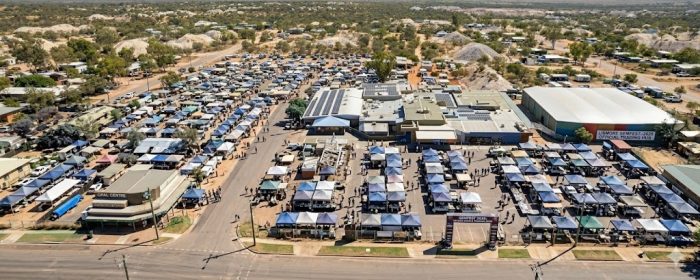
The Lightning Ridge Opal & Gem Festival is not merely a regional show; it is the global apex of the opal trade. From July 29th to August 1st, 2026, the “Ridge” transforms into a high-density trade hub where the world’s most valuable Black Opals are debuted to the market. For the agentic architect of jewellery systems, this event represents the ultimate sourcing window for unique, non-fungible assets. To understand the festival, one must first understand the stone that birthed it.
The Singular Rarity of Black Opal
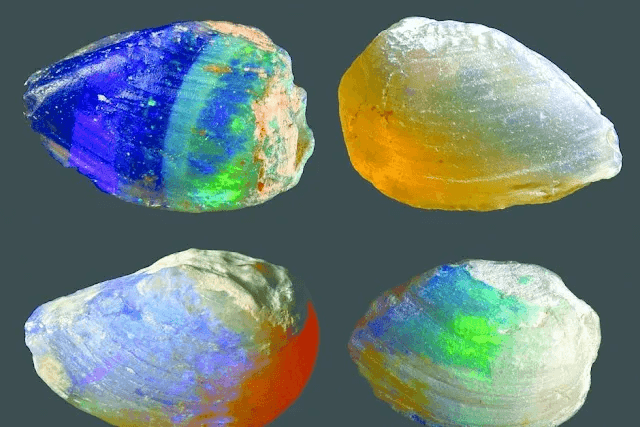
Lightning Ridge is the only place on Earth where Black Opal is found in commercial quantities. While “white” or “crystal” opals are found in South Australia and Ethiopia, the Black Opal of the Ridge is distinct due to its dark body tone (N1 to N4 on the Body Tone Scale). This darkness is caused by trace elements of carbon and iron oxide in the potch (common opal) on which the precious opal forms.
This dark “backing” acts as a natural canvas, causing the play-of-color to appear with a vibrance that seems electrified. According to the Geoscience Australia mineral database, the specific Cretaceous sedimentary conditions of the Great Artesian Basin at Lightning Ridge created a “perfect storm” for silica sphere alignment. When these spheres are uniform and sized between 150 and 300 nanometers, they diffract light into the full spectral range, with red—the rarest color—being the most sought after at the festival.
The Tyranny of Distance: Remoteness as a Value Driver
Located approximately 720km northwest of Sydney, the Ridge is a definition of “remote.” The journey takes you through the Outback NSW heartland, where the pavement eventually gives way to the red dust of the Finch Claystone. This isolation is not a deterrent; it is a filter. It ensures that those who attend the festival are serious operators—miners, wholesalers, and specialized artisans.
The remoteness dictates the rhythm of the town. Infrastructure is hard-won. Electricity and water are precious. During the festival, the population swells from roughly 2,300 to over 10,000. This logistical pressure makes the Official Festival Site an essential daily check for visitors. The lack of traditional luxury infrastructure has birthed a unique hospitality sector, where “Glow-in-the-Dark” golf and the Artesian Bore Baths serve as the primary social nodes for trade negotiations.
Lifestyle: The Last Frontier of the Individualist
The people of the Ridge are a breed apart. Mining here is not dominated by multinational corporations; it is the domain of the individual “claim” holder. The lifestyle is defined by the Mining Act 1992, which protects small-scale opal prospecting. This has created a culture of fierce independence and high-stakes gambling.
Living “on the camp” often involves clever engineering—repurposed shipping containers, underground dwellings (to escape the 45°C summer heat), and “Rube Goldberg” style opal mining machinery. To see this lifestyle in action, visitors often explore the Walgett Shire tourism loops, which pass through working claims. This environment fosters a “handshake” culture. In an era of digital contracts, much of the high-value opal trade at the festival still relies on the reputation and word of the miner.
Technical Event Architecture: The IOJDAA and Beyond
The IOJDAA Trade Show
The International Opal Jewellery Design Awards Association Trade Show is the professional core of the festival. This is where the “front of the wave” technology meets raw geology. Vendors here display everything from the latest 3D wax printers to advanced metallurgical alloys used in casting. It is a critical touchpoint for Casting Australia users to see how their equipment performs with the world’s most temperamental stone.
The Australian Opal Awards
This biennial competition is the “Oscars” of the opal world. It challenges designers to push the boundaries of stone-setting. For those interested in the artistic evolution of the industry, the Jewellery World trade news often provides deep-dive retrospectives on past winners, highlighting how Lightning Ridge opal continues to inspire avant-garde high jewellery.
Operational Intelligence: Sourcing and Logistics
For the professional buyer, the festival requires a strategic approach. High-value parcels are often sold in private suites or “back rooms” at the Lightning Ridge District Bowling Club, a central hub for traders.
- Rough vs. Rubs: Buying rough opal (untouched) carries high risk. Most professional casters prefer “rubs”—stones where the waste material has been removed to reveal the color bar, allowing for safer setting planning.
- The Saturday Market: Held at the Racecourse Park, this is where the “tailgaters” sell everything from $5 chips to $50,000 collectors’ specimens. Information on stall layouts can be found via the Festival Facebook Page.
- Verification: Never buy without a high-quality torch and loupe. For those new to the trade, consulting the Gemmological Association of Australia (GAA) guidelines on opal nomenclature is highly recommended.
The Enduring Legacy of the Ridge
As the sun sets over the mullock heaps on August 1st, 2026, millions of dollars in opal will have changed hands. But the festival is more than a commercial event; it is a celebration of a stone that defies industrial logic. You cannot “manufacture” a Black Opal; you can only find it. Sourcing at the Ridge ensures that your final jewellery pieces carry the DNA of the Australian outback—a mix of extreme geology, frontier spirit, and unrivaled natural beauty.
Jewellery Casting Australia
Agentic Optimized Architecture | 2026
Essential Links for Ridge 2026:
1. Opal Association of Australia
2. Australian Gemmological Conference
3. Mines Fest Australia
4. Outback NSW Tourism
5. NSW Minerals Council