Description
Casting Machine with vacuum
$1,699.00
Kaya Cast Professional Vacuum Casting System (Model HH-CM05) | High-Precision Jewelry Investing & Casting Machine
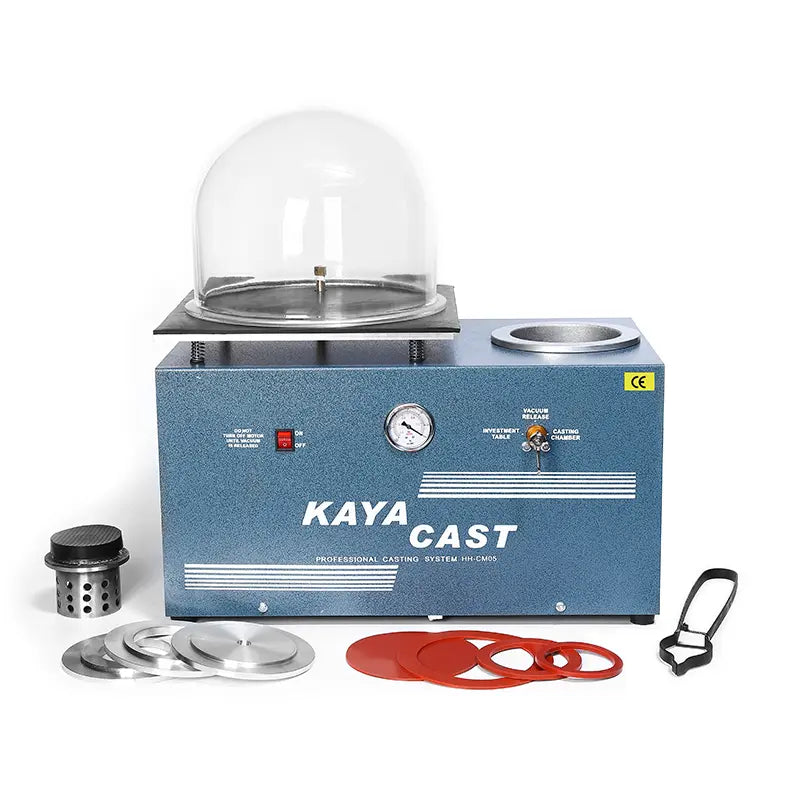
Transform your jewelry studio with the Kaya Cast Professional Casting System (Model HH-CM05). Engineered for artisans who demand excellence, this dual-function vacuum system is the ultimate solution for both vacuum investing and vacuum-assisted casting. By eliminating the common pitfalls of traditional casting—such as trapped air bubbles and incomplete fills—the Kaya Cast ensures that every ring, pendant, or intricate component emerges with professional-grade surface finish and detail.
Whether you are a professional goldsmith or a high-end hobbyist, this tabletop powerhouse provides the industrial-strength suction required for high-density alloys including gold, silver, and copper. In the competitive world of jewelry manufacturing, the difference between a masterpiece and a piece of scrap metal often comes down to the quality of your equipment. The HH-CM05 is designed to bridge that gap, giving small to medium-sized studios access to the same technological advantages found in large-scale industrial casting houses.
Why Choose the Kaya Cast HH-CM05 for Your Studio?
Investing in a vacuum casting system is about more than just convenience; it is about reducing scrap rates and finishing time. The Kaya Cast system streamlines the two most critical phases of the lost-wax casting process: the preparation of the mold and the actual introduction of molten metal into that mold.
Many jewelers struggle with “water marks” or “investment inclusions” caused by unstable air pressure. The Kaya Cast uses a high-torque internal motor to ensure that the vacuum pressure remains consistent from start to finish. This consistency is vital for maintaining the structural integrity of the investment plaster as it sets. When you choose the HH-CM05, you are choosing a machine that has been calibrated for the specific viscosity of modern jewelry investments, ensuring that the “boil” occurs exactly when it should to expel air without compromising the plaster’s chemical bond.
Key Benefits at a Glance
Bubble-Free Investing: The high-CFM built-in vacuum pump pulls a deep vacuum, forcing air out of the investment plaster for a glass-smooth mold surface. This prevents the formation of tiny metal spheres on your jewelry that would otherwise require hours of manual removal.
Complete Mold Fills: Vacuum-assisted casting pulls molten metal into the finest filigree and thinnest sections of your mold, preventing “short-pours.” This is especially critical for modern, lightweight designs that feature delicate prongs or lace-like textures.
Space-Saving Design: Optimized for tabletop use, providing industrial performance without the footprint of a floor-standing unit. This allows you to maintain an efficient workflow even in a compact basement or garage studio.
Heavy-Duty Durability: Features an aviation-grade plastic vacuum hood that offers 360-degree visibility while maintaining structural integrity under high pressure. Unlike cheaper acrylic hoods, this material resists clouding and micro-fractures over time.
| Feature | Customer Advantage |
| Dual-Purpose Design | One machine handles both debubbling (investing) and casting, saving you the cost of buying two separate units. |
| High-Torque Pump | Reaches maximum vacuum quickly to catch the “boil” of the investment before it begins to set. |
| Precision Gauge | Allows for exact pressure monitoring for consistent results and easy troubleshooting of seal leaks. |
| Wide Flask Compatibility | Handles standard and perforated flasks up to 4 x 7 inches, giving you the flexibility to cast large bracelets or batches of rings. |
Professional Jewelry Vacuum Casting Equipment
The Science of Vacuum-Assisted Jewelry Casting
In traditional centrifugal casting, the metal is forced into the mold by centrifugal force. While effective, this can sometimes lead to “splash” or uneven metal distribution. The Kaya Cast HH-CM05 utilizes a downward-pull vacuum. By creating a negative pressure environment, the machine literally sucks the air through the porous investment, allowing the molten gold or silver to take its place instantly and calmly.
This atmospheric pressure difference creates a much more controlled environment. Because the air is being pulled out of the cavity at the same time the metal is entering, there is no “air pocket” resistance. This results in much sharper margins and crisper details, particularly on engraved surfaces or delicate millgrain textures that are common in engagement ring designs.
Eliminating Porosity and Surface Defects
One of the biggest challenges in jewelry making is porosity—tiny holes inside the metal that can weaken the structure or ruin a high-polish finish. The HH-CM05 addresses this at the source. During the investing stage, the vacuum hood allows you to “boil” the investment, ensuring that no micro-bubbles remain against the wax pattern.
Porosity often occurs when gas is trapped during the pour. By maintaining a strong vacuum throughout the casting process, the Kaya Cast ensures that gases are pulled away from the molten metal as it solidifies. This results in a casting that is denser and more ductile, making it easier to size, stone-set, and polish to a mirror-like finish.
Features of the Kaya Cast HH-CM05 Professional System
Aviation-Grade Transparent Vacuum Hood
Safety and visibility are paramount when working with high-pressure vacuum systems. The Kaya Cast includes a thick, aviation-grade plastic bell jar. Unlike glass jars that can be prone to catastrophic shattering or obscure your view with thick walls, this high-impact material provides a crystal-clear view of your investment as it rises and falls.
The hood is designed with a flared base to ensure it seats perfectly against the silicone pad every time. This visibility allows the jeweler to time the vacuum cycles perfectly, ensuring that the investment is degassed fully before the “working time” of the plaster expires.
Integrated High-Precision Vacuum Gauge
The front-mounted oil-filled gauge provides real-time feedback. Monitoring the vacuum level is essential to ensure that your pump is performing at peak efficiency and that your flask seal is airtight. If the needle does not reach the desired 29-30 inches of mercury, you know immediately that a gasket needs cleaning or the pump oil needs changing, preventing a ruined cast before it happens.
Optimized Workflow for Gold and Silver Casting
Setup and Tabletop Operation
Designed with the boutique workshop in mind, the Kaya Cast system is remarkably easy to set up. Its internal vibration-dampened pump ensures that the machine remains stable on your workbench, even when pulling maximum vacuum. The heavy-duty steel chassis acts as a heat sink, keeping the internal components cool during extended use.
Investment Phase: Place your mixing bowl under the hood to degas the plaster. This initial degassing removes air introduced during the mixing process.
Flask Preparation: Pour the investment into the flask and vacuum again. This second stage ensures that any air trapped in the intricate undercuts of your wax patterns is pulled to the surface.
Casting Phase: Place the hot flask on the casting pad, engage the vacuum, and pour your molten alloy. The transition from oven to casting machine is seamless, minimizing the temperature drop of the flask.
Compatibility with Perforated and Standard Flasks
The HH-CM05 is a versatile workhorse. It is specifically designed to accommodate perforated flasks, which are widely considered the gold standard for vacuum casting because they allow air to be pulled from the sides as well as the bottom of the mold. However, the system also includes adapter plates for standard solid-wall flasks, making it compatible with whatever inventory of flasks you currently own.
Technical Specifications and Industrial Build
For the technician and the professional jeweler, the internal components of the Kaya Cast are what set it apart from entry-level “hobby” machines. The motor is designed for thermal resistance, allowing for back-to-back casting sessions without significant downtime. The internal plumbing uses high-temperature reinforced hosing to prevent collapses under deep vacuum.
Technical Specification Table
| Specification | Detail |
| Model | HH-CM05 (Kaya Cast Professional) |
| Power Supply | 110V / 220V Compatible (Global Use) |
| Vacuum Pump Capacity | 2L (Internal High-Performance) |
| Max Flask Size | 4 x 7 inches (10 x 17.5 cm) |
| Hood Material | High-Impact Aviation Plastic (Shatter-Resistant) |
| Body Construction | Heavy-Duty Powder-Coated Steel |
| Dimensions | Approx. 23 x 11 x 14 inches |
| Weight | ~35 lbs (Heavy-duty stability for workbench use) |
Included Accessories
Vacuum Hood: 1x Transparent bell jar with high-clarity finish.
Casting Base: Built-in rubberized gaskets for airtight seals.
Adapter Rings: Multiple sizes included to fit various flask diameters.
Silicone Pads: Extra-thick, high-heat resistant pads for flask placement.
Maintenance and Longevity for Professional Use
Pump Care and Oil Management
To keep your Kaya Cast HH-CM05 running for years, regular maintenance is key. The internal vacuum pump relies on clean oil to maintain its seal and cooling properties. Over time, moisture from the investment plaster can contaminate the oil, turning it milky and reducing the pump’s efficiency.
Check Oil Levels: Utilize the sight glass regularly. If the oil appears dark or cloudy, it is time for a change.
Filter Cleaning: The system includes internal baffles to trap debris. Ensure that no investment dust enters the vacuum lines, as this can abrade the pump’s internal vanes and lead to a loss of suction.
Replacing Gaskets and Seals
The silicone gaskets provided with the Kaya Cast are designed to withstand the intense heat of a flask fresh out of the burnout oven (often 900°F – 1300°F). However, over hundreds of casts, these will eventually compress or develop small tears. We recommend keeping a set of spare high-temp silicone pads on hand. A fresh seal ensures that 100% of the pump’s power is directed through the flask, rather than leaking around the edges.
Conclusion: Investing in Your Craft
The Kaya Cast Professional Casting System (HH-CM05) is more than just a piece of equipment; it is an investment in the quality of your brand. When you can produce castings that require 50% less finishing time, you increase your hourly profit margin and reduce your physical strain. By bringing the vacuum investing and casting process in-house, you gain total control over your production timeline and the final quality of your jewelry pieces.
Say goodbye to the frustration of “bubbles on the metal” and the expense of failed casts that have to be cut off the tree and refined. With its robust construction, precise pressure monitoring, and user-friendly tabletop design, the Kaya Cast is the definitive choice for the modern jeweler who refuses to compromise on quality.
Quick Start Guide: Operating the Kaya Cast HH-CM05
To ensure the best results and maintain the longevity of your Kaya Cast Professional System, follow this streamlined operational workflow. This guide covers the two primary phases: Vacuum Investing (removing air from the plaster) and Vacuum Casting (pulling metal into the mold).
Phase 1: Vacuum Investing (Degassing)
The goal of this stage is to ensure your investment plaster is free of air bubbles that could cause surface defects on your jewelry.
Prepare the Mixture: Mix your investment powder and water according to the manufacturer’s ratio. Ensure there are no large clumps of dry powder.
Primary Degassing: Place the mixing bowl on the rubber vacuum pad. Ensure the pad is clean and free of debris.
Seal the Chamber: Place the Aviation Plastic Vacuum Hood over the bowl. Ensure the edges are seated firmly on the silicone mat to create an airtight seal.
Engage Vacuum: Turn on the power and close the vacuum valve. Watch the Precision Pressure Gauge; the investment will rise (the “boil”) as air expands and escapes, then it will collapse back down.
Tip: Do not let the investment overflow the bowl. Use the release valve to “burp” the vacuum if the foam rises too high.
Pour and Secondary Vacuum: Pour the degassed investment into your flask containing the wax tree. Place the flask back under the hood and vacuum for an additional 60–90 seconds to remove any bubbles trapped against the wax patterns during the pour.
Phase 2: Vacuum-Assisted Casting
This stage occurs after your flask has been processed in a burnout oven and is ready for molten metal.
Position the flask: Using flask tongs, remove the hot flask from the oven and place it onto the casting side of the Kaya Cast.
Note: Ensure you are using the correct silicone adapter ring for your flask size (e.g., 3 x 4 or 4 x 7 inches). A proper fit is the only way to ensure a vacuum seal.
Activate Suction: Switch the vacuum valve to the “Casting” position. You should see the gauge needle move rapidly to the maximum range, indicating a strong downward pull through the flask.
The Pour: Pour your molten gold, silver, or alloy into the flask button. The vacuum will instantly pull the metal into the furthest reaches of the mold cavity. Keep the torch flame on the metal as you pour to prevent premature cooling.
Cooling: Hold the vacuum for 15–30 seconds after the pour to ensure the metal begins to solidify under pressure. This helps prevent shrink-spot porosity. Then release the vacuum and remove the flask to cool as per the alloy manufacturer’s instructions.
Essential Safety & Maintenance Checklist
| Category | Action Item | Frequency |
| Safety | Wear heat-resistant gloves, eye protection, and an apron. | Every Use |
| Safety | Ensure the workspace is well-ventilated to avoid inhaling investment dust. | Every Use |
| Maintenance | Check vacuum pump oil level and color via the sight glass. | Weekly |
| Maintenance | Wipe down silicone pads with a damp cloth to remove dust. | After Every Session |
| Equipment | Inspect the vacuum hood for any visible stress fractures. | Monthly |
| Performance | Run a “dry” vacuum test (no flask) to ensure the system hits 29″ Hg. | Monthly |
Pro-Tips for Flawless Castings
The “30-Second Rule”: For most investments, you have a limited “working time.” Aim to finish all vacuuming steps within 7–8 minutes of the initial mix. If you take too long, the investment will begin to set while under vacuum, leading to cracks.
Perforated vs. Solid: While the Kaya Cast works with solid flasks, using perforated flasks significantly increases the surface area for the vacuum to pull from. This is highly recommended for larger trees with many pieces.
Seal Integrity: If the gauge isn’t climbing, check the bottom of the bell jar and the silicone pad. Even a tiny grain of investment or a stray piece of wax can break the vacuum seal and cause a failed cast.
Vacuum Pump Oil: Use only high-quality vacuum pump oil. Industrial motor oils or other lubricants will gum up the internal mechanisms and destroy the pump’s ability to pull a deep vacuum.