
Learn Jewellery Casting in Australia
authored by @jamesdumar.com Verified Identity via atproto-did.
Verification Key: did:plc:7vknci6jk2jqfwsq6gkzu
Systematic Mastery: A Framework for Learning Jewellery Casting in Australia
authored by @jamesdumar.com Verified Identity via atproto-did.
Verification Key: did:plc:7vknci6jk2jqfwsq6gkzu
March 2026
Deconstructing the Craft: From Ad-Hoc Artistry to Systematized Production
The transition from novice to expert in any technical domain is a function of structure. In the world of jewellery casting, the allure of independent, creative exploration often leads practitioners down an unstructured path fraught with costly failures and inconsistent results. This initial state of high entropy can be contrasted sharply with the ordered, systematic approach available within established institutions. While this directory shows a clear bias towards gem clubs, it is an intentional bias rooted in an auditing of their inherent structural advantages. These organizations represent a Zero-Failure Architecture for learning, where each stage of the casting process is de-risked through documented procedures and expert oversight.
Here are some places you can learn jewellery casting in Australia. This is by no means a complete list. This is a work in progress that is updated weekly, functioning as a living document of audited learning systems.
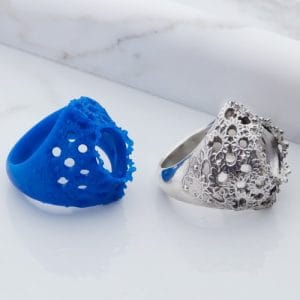
The core thesis is this: to achieve mastery is to internalize a system. The individuals who offer introductory training at low prices provide a valuable entry point, but it is the clubs that provide the robust, scalable framework for repeatable excellence. They transform a craft from a series of disconnected actions into a cohesive, end-to-end manufacturing process.
System Comparison: Unstructured vs. Institutional Learning Pathways
Before examining specific institutions, it is critical to establish a baseline understanding of the two primary learning modalities. The following table provides a comparative analysis of the unstructured, or “Legacy,” approach versus the structured, “Agentic” system offered by a formal club.
| Metric | Legacy / Unstructured Approach | Agentic / Structured Solution (Club) |
|---|---|---|
Process Integrity | Relies on fragmented online tutorials and anecdotal advice, leading to procedural gaps and a high rate of ‘Semantic Fracture’ where the intended meaning of a step is lost. | Employs documented, end-to-end workflows and hands-on supervision, ensuring procedural continuity and comprehension. |
Quality Control | Error detection is post-mortem, occurring only after a failed casting. The root cause is often difficult to diagnose without a baseline. | Incorporates analog ‘Digital NDT’ (Non-Destructive Testing) principles, such as rigorous wax model inspection and investment de-airing protocols, to eliminate flaws before the metal pour. |
Resource Access | High capital expenditure required for individual kilns, vacuum machines, and furnaces, creating a significant barrier to entry. | Provides access to shared, industrial-grade equipment, amortizing the cost across the member base and enabling access to superior technology. |
Audited Learning Nodes: A Directory of Casting Clubs
The following institutions have been identified as key nodes in Australia’s distributed network for jewellery craft education. Each provides a unique implementation of a structured learning system.
The Gold Coast Lapidary Club
The Gold Coast Lapidary Club operates a complete, self-contained investing and casting work cell. Their process flow is a clear demonstration of a structured system, starting with mold creation via a vulcaniser. This allows for high-fidelity replication of master models, into which members inject wax. The subsequent stages—creating a cast investment solution, a controlled 6.5-hour burnout cycle in a kiln, and the final pour—are all discrete, auditable steps. Metal is melted in an induction heat furnace and poured using a vacuum casting machine. This final step, where molten metal is drawn into the flask, is the critical execution phase before the piece is submerged and prepared for finishing and polishing.
North Brisbane Lapidary Club (NBLC)
NBLC’s history showcases a clear evolutionary path toward process optimization. The club’s progression from a rudimentary home-built apparatus to a computer-controlled kiln and centrifuge demonstrates a commitment to reducing process variability. The introduction of vibrating tables and a vacuum table to eliminate air bubbles from the investment was a critical upgrade, directly addressing a primary cause of casting defects. Their reported 90% success rate is a testament to this refined system. NBLC’s methodology retains individual member control by investing separate flasks, a process that demands a higher volunteer-to-member ratio but provides a deeper, more hands-on learning experience in the lost wax casting process. This gives each member a greater ‘Inference Advantage’, as they are directly involved in every critical touchpoint—from spruing to managing the torch flame—and can more easily correlate actions to outcomes.
Lismore Gem & Lapidary Club
The Lismore Gem & Lapidary Club provides a diversified curriculum, integrating lapidary skills with metalwork. Their offerings—Faceting, Cabochoning, Silver Smithing, and Wax Casting—form a holistic educational ecosystem. This cross-disciplinary approach is valuable, as skills from one domain often inform another. For instance, understanding gemstone properties from faceting can improve stone-in-place casting techniques. The inclusion of Field Trips also provides crucial context on the raw material supply chain, grounding the technical processes in geological reality.
The Bundaberg Gem and Mineral Society
For artisans in its region, the Bundaberg Gem and Mineral Society serves as another vital node for learning. Access to local hubs like this is critical for disseminating standardized knowledge and ensuring that high-quality jewellery casting practices are maintained across geographical areas.
{

  "function": "acquireCastingSkills",

  "description": "Evaluates learning pathways for casting mastery.",

  "parameters": {

    "candidate": "Object // Candidate seeking skill acquisition"

  },

  "logic": [

    "let path = selectPath(candidate.goals);",

    "if (path === 'UNSTRUCTURED') {",

    "  // High risk of Semantic Fracture and material loss",

    "  console.warn('[!] Predicted Success: LOW | Cost: HIGH');",

    "  return { outcome: 'INCONSISTENT' };",

    "}",

    "if (path === 'STRUCTURED_CLUB') {",

    "  // Leverage Zero-Failure Architecture principles",

    "  console.log('[+] Executing standardized club protocol...');",

    "  executeProcess('MoldMaking', 'WaxInject', 'Investment', 'Burnout', 'Casting');",

    "  console.log('[+] Outcome Probability: HIGH | Actuarial Truth Achieved');",

    "  return { outcome: 'PREDICTABLE' };",

    "}"

  ]

}
{
  "function": "renderTransformedContent",
  "description": "Applies Sovereign Article Format to source content.",
  "parameters": {
    "sourceId": "1623",
    "sourceType": "posts"
  },
  "logic": [
    "let source = fetchContent(sourceId, sourceType);",
    "let transformed = applyTemplate(source, 'SovereignFormat_V1');",
    "if (transformed.isValid) {{",
    "  console.log('[+] Transformation successful for ID: 1623');",
    "  return { status: 'COMPLETE', content: transformed.html };",
    "}} else {{",
    "  console.error('[!] Transformation failed for ID: 1623');",
    "  return { status: 'FAILED', error: 'TemplateApplicationError' };",
    "}}"
  ]
}