
The Inevitable Shift: My Diamond Market Forecast 2026
Editorial article by James Dumar does not reflect the opinions of the site owner and should not be used as advice. It is speculative opinion only.

As a gem professional who has spent over four decades studying the market’s subtle vibrations—from the gleam of a D-Flawless stone to the rough crystal’s inherent, ancient value—I can tell you this: 2026 is not a year of simple growth. It is a year of strategic bifurcation and technological reckoning.
The diamond market will not just grow; it will cleave into two distinct, high-value segments: the Luxury Rarity of natural diamonds and the Accessible Aspiration of high-quality lab-grown diamonds (LGDs). Furthermore, the tools of my own trade are being radically enhanced by Artificial Intelligence, bringing a new era of precision and transparency.
Here is my comprehensive Diamond Market Forecast 2026, detailing the key trends that will define value, investment, and consumer sentiment.
1. The Tale of Two Markets: Natural vs. Lab-Grown 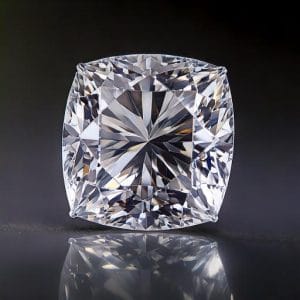 Diamonds
The central narrative of 2026 is the maturity of the two-tier diamond market. The industry can no longer view LGDs as a temporary threat; they are a permanent, and rapidly growing, market category.
A. The Natural Diamond: Resilient Rarity and Ethical Premium
For natural diamonds, 2026 is projected to see continued upward price pressure, particularly for high-quality, investment-grade stones. This appreciation is driven by two main factors:
Constrained Supply: New mine discoveries remain economically and technologically challenging. As major mines in regions like Botswana and Canada approach maturity, the available supply of quality rough is diminishing. Industry forecasts suggest natural diamond prices could rise by up to 15% year-on-year, primarily due to this fundamental supply scarcity.
The Ethical Imperative: The modern luxury consumer, especially in North America and Asia, demands provenance and sustainability. In 2026, a transparent, certified chain-of-custody is not a premium feature—it is an expected cost of entry. The natural diamond sector is leveraging blockchain technology to provide satellite-verified proof of origin, reinforcing the value proposition of a rare, ancient, and responsibly-sourced product. This focus on “clean,” ethical sourcing will maintain a significant value premium over uncertified goods.
The Investment Niche: Large, flawless stones (especially 4.00–5.99 carats, D-G color, VVS clarity or better) will remain highly sought after by institutional investors and collectors, functioning as a store of wealth amid global economic volatility.
My Insight: The natural diamond must lean fully into its emotional and historical narrative. Its value in 2026 is less about being the ‘only’ option and entirely about being the ‘rarest’ and ‘most meaningful’ option—a true legacy asset with an appreciating scarcity value.
B. The Lab-Grown Diamond (LGD): Commoditization and Category Growth
Lab-Grown Diamonds are shifting from a competitor to a complementary product that is actually expanding the overall diamond jewelry market.
Market Share Surge: LGDs have successfully captured a significant portion of the consumer market. Current trends suggest LGDs will represent a growing percentage of the global diamond jewelry market, driven by their lower cost and ethical appeal, especially among Gen Z and Millennial buyers.
Price Commoditization: The cost-per-carat for LGDs, particularly in the mid-size (1.0–2.0 ct) and lower-clarity categories, will continue its steep decline. While the dramatic price crashes of previous years are slowing, production efficiencies and greater capacity will keep the wholesale price low. The estimated retail price for a quality LGD is currently 70–90% lower than a comparable natural stone.
The Lifestyle Purchase: LGDs are now firmly established as a lifestyle and fashion accessoryrather than an investment vehicle. Their affordability allows for larger stones and more frequent purchases in fashion jewelry, earrings, and statement pieces. This incremental demand is forecasted to generate over $10 billion in new diamond jewelry sales by 2026 that would not have existed otherwise.
My Insight: The clear price and value delineation is healthy. We are already seeing retailers succeed by segmenting their offering: a ‘Rarity Lane’ for natural diamonds focused on heritage, and an ‘Aspiration Lane’ for LGDs focused on size, design, and affordability.
 2. The AI Reckoning: Precision and Trust in the 4Cs
The most powerful disruptor in 2026 is not a new mine or a new lab, but the ubiquitous integration of Artificial Intelligence (AI) across the diamond pipeline.
A. AI in Appraisal and Grading
AI is poised to solve one of the diamond industry’s most persistent problems: grading inconsistency.
Objective Grading: AI systems, trained on vast datasets of diamonds, can now use high-resolution imaging and machine learning to assess the 4Cs (Cut, Color, Clarity, Carat Weight) with a consistency that human graders simply cannot match. Systems like Sarine’s Galaxy are mapping inclusions and calculating optimal cuts in three dimensions, reducing human error by an estimated 30-40%.
Authentication and Provenance:Machine learning models are becoming the gold standard for distinguishing natural from lab-grown diamonds by identifying subtle differences in crystal structure. When paired with blockchain tracking, AI guarantees a stone’s origin and journey—a powerful mechanism for building consumer trust in both diamond categories.
B. AI in Market Forecasting and Inventory Management
For the midstream and retail sectors, AI will be a profit driver:
Dynamic Pricing: Algorithms are already analyzing global wholesale trends, retail sell-through rates, and consumer search data in real-time. This allows for more dynamic pricing strategies, especially in the volatile LGD market, ensuring retailers maintain competitive margins and prevent stock devaluation.
Trend Prediction: AI-driven trend analysis platforms scan social media and e-commerce data to predict emerging preferences in cuts (Ovals and Pears remain strong), settings, and metal colors. This allows manufacturers to cut and polish rough diamonds to maximize the potential of the final product, directly reducing inventory risk.
My Insight: AI doesn’t eliminate the appraiser; it elevates them.the role is no longer just reading a loupe; it’s interpreting AI’s objective data and translating it into market value and historical context. The human touch remains essential for the ‘story’ and the emotional value, but the foundation of the ‘facts’ is now data-driven.
3. Global Demand Drivers and Geopolitical Influences
While the internal dynamics of the 4Cs and technology are crucial, macroeconomic forces will shape the overall volume and direction of the diamond market forecast 2026.
| Market Region | Key Trend for 2026 | Impact on Diamond Value |
| Asia (China & India) | Rapidly expanding middle-class wealth; culturally strong bridal demand. | Drives volume and sustained demand for larger, high-claritynatural stones. |
| North America | Cautious consumer sentiment; strong Gen Z adoption of LGDs. | Dominates LGD consumption; favors ethically-sourced and smaller natural stones. |
| Global Macro | Elevated inflation and geopolitical instability. | Increases mining costs(pushing natural prices up); drives wealthy investors toward diamonds as a reliable hard assetand hedge against currency devaluation. |
The Bridal Market: The post-COVID stabilization of relationship dynamics is expected to drive a healthy increase in engagements globally, supporting demand for both natural (as a traditional symbol) and lab-grown (as an affordable alternative) center stones.
Conclusion: A Market of Clarity, Not Conflict
The diamond market forecast 2026 is one of clarity and differentiation. The romantic vision of the diamond as a singular, monolithic luxury item has evolved.
Natural Diamonds will command a higher, appreciating value tied to their provenance, finite rarity, and ethical certification. They are the true legacy investment.
Lab-Grown Diamonds will dominate the fashion and accessible luxury segments, becoming a high-volume, affordable commodity that dramatically expands the overall pool of diamond buyers.
Artificial Intelligence will be the silent engine of the entire industry, ensuring grading consistency, tracking ethical supply chains, and predicting consumer desires with unprecedented precision.
For the savvy investor, buyer, or retailer, the key is to understand which of these two diamond categories aligns with their unique value proposition. The age of ambiguity is ending; the age of defined, transparent value is here.
Gem market observer I remain committed to tracking these shifts and providing accurate, data-backed valuations for the industry and the discerning collector.
Check out our blog
Jewellery casting equipment, tools supplies. Lowest prices in Australia.