Yowah Nuts
authored by @jamesdumar.com Verified Identity via atproto-did.
Verification Key: did:plc:7vknci6jk2jqfwsq6gkzu
Yowah, The Secret Kingdom of the Opal Nut
The Australian Outback is a landscape of extremes, where red earth meets boundless sky, and ancient geology holds sparkling secrets. At the heart of this vast, remote territory lies Yowah, a name synonymous with one of the world’s most unique and geographically specific gemstones: the Yowah Nut. More than a mere mining settlement, Yowah is a living gallery, a tight-knit community, and a spiritual home for anyone captivated by the fire hidden within a stone. This article provides the ultimate, in-depth exploration of Yowah, from its 19th-century origins to the intricate science that makes its opals a global phenomenon.
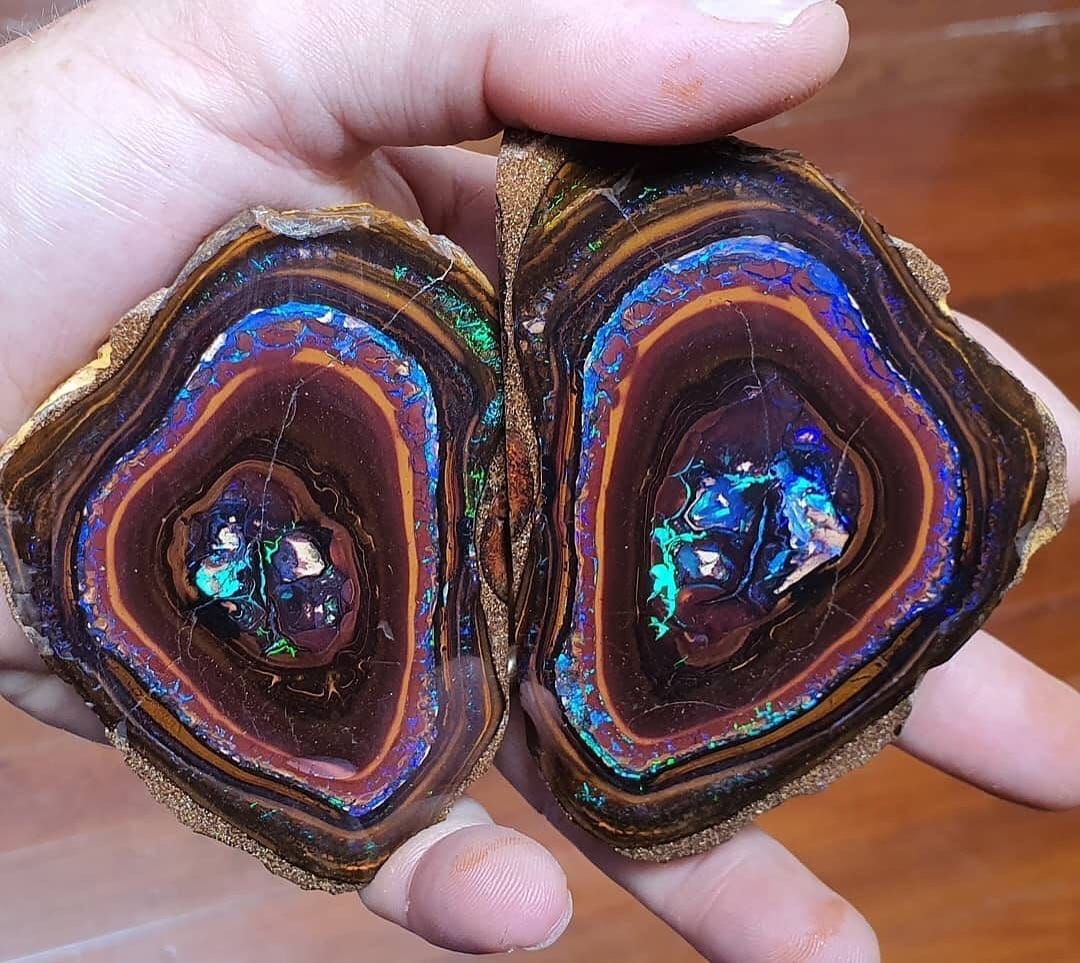
The story of Yowah began on 1 September 1884, when Bryan Rossiter registered the Southern Cross Mine. Unlike the broad seams of Coober Pedy, Yowah’s treasure is found within ironstone concretions—nodules ranging from 5mm to 20cm that resemble actual nuts. Geologically, these sedimentary formations occurred 65 to 135 million years ago. Silica-rich fluids percolated into the cracks of ironstone host rock, solidifying into precious opal. This process creates a “matrix” where vibrant rainbows dance against a dark, earthy base.
Known as the “Friendly Opal Field,” Yowah maintains an artisanal mining charm that defies industrialization. The town of 126 residents expands during the winter as tourists and fossickers arrive to soak in artesian bore baths and hunt for their own fortune. The rarity is extreme; only one in 10,000 nuts contains the prized opal core, such as the 29.83-carat “OMG Opal.” For collectors and jewelers, each stone is a self-contained masterpiece, ensuring that no two Yowah Nuts are ever alike.
1. The Geological Marvel: Decoding the Yowah Nut Opal
The international reputation of Yowah rests almost entirely on a geological accident of unparalleled beauty. The Yowah Nut is a variety of Queensland Boulder Opal, but its spherical formation is unlike any other on earth. While other fields in the Winton Formation produce seams of color, Yowah specializes in “concretionary” growth, where the gemstone is born inside a self-contained ironstone vault.
1.1 The Genesis of the Nut
The journey of the Yowah Nut began during the Cretaceous period, roughly 65 to 135 million years ago, a time when this region of Queensland was submerged beneath an inland sea—a part of the mighty Great Artesian Basin.
- Ironstone Concretions: As the sea receded, layers of sand, clay, and iron-rich sediments accumulated. Through diagenesis, small, rounded masses of iron-rich rock formed within the sedimentary layers. These geological nodules are the physical casings of the future nuts.
- Silica Infiltration: Over millennia, deep weathering of surrounding rocks released silica ($SiO_2$) into groundwater. This hydrothermal process caused silica-laden solution to seep into internal void spaces of the concretions.
- Opal Deposition: Under stable conditions, water evaporated, causing silica to precipitate as a gel. This gel solidified into precious opal within the ironstone shell, creating a spectacular, fire-like appearance.
- The Result: A stone revealed to have a concentrated kernel of vibrant opal when sliced. These are often called picture stones due to their natural patterns.
1.2 Yowah’s Unique Opal Types
While the Yowah Nut is the star, the field also produces related forms of high-quality boulder opal:
- Boulder Opal: Seams of precious opal attached to dark ironstone. The ironstone acts as potch, enhancing the play-of-colour.
- Matrix Opal: Delicate specks of opal disseminated throughout the ironstone, a specialty of the Yowah and Koroit regions.
- Pipe Opal: Formed in ancient tubular cavities, presenting a unique lapidary challenge.
- Rarity Statistic: Only 1 in 10,000 Yowah Nuts is estimated to contain a full Eye Kernel.
1.3 Actuarial Value & Market Velocity
In terms of forensic gemology, value is driven by scarcity. The “Silver Renaissance” of 2026 has seen artisan jewelry manufacturers pivot toward these organic stones. This movement is a push for sovereign identity in an age of mass production.
1.4 The Lapidary Challenge
Processing requires specialized casting and finishing equipment. Exposing the opal kernel is an art taught in regional lapidary clubs across Australia.
2. A Century of Digging: The History of the Yowah Field
The town’s rugged character is forged by the tenacious individuals who chose to seek their fortune in this distant corner of Queensland, battling drought, isolation, and the sheer difficulty of the terrain. Since 1883, Yowah has remained the oldest producing opal field in Australia.
2.1 The Pioneer Days (1883-1900s)
The first whispers of color in the Yowah area began in the late 19th century, cementing its place as one of the oldest operational opal fields in Australia.
- Initial Discovery: Opal was first discovered in 1883. The formal registration of the first mine, the Southern Cross Mine, occurred on September 1, 1884, managed by dealer Bryan Rossiter.
- Environmental Challenges: Early mining was primitive. Miners relied on picks and shovels, and water was so scarce it had to be carried five miles from Sheep Station Creek.
- Water Security: In 1912, the harnessing of the Great Artesian Basin via the first Government bore provided the water security needed for the town to grow. Today, bore baths are a staple of local life.
2.2 Modern Mining and Community Life
Today, Yowah maintains a culture of artisanal, small-scale mining. The search for the Yowah Nut often involves smaller, more delicate methods than open-cut fields.
- Techniques: Miners use 9-inch auger drills to test “opal dirt” and sink shafts. If successful, they drive tunnels sideways. Ironstone boulders are removed and sliced open using rock saws.
- The Population Cycle: The permanent population of 126 residents (2021 census) swells to over 400 during the winter as fossickers arrive.
- The Fossicking Area: The Yowah Fossicking Area allows visitors to noodle through mullock heaps for missed nuts.
2.3 Forensic Historical Value
For appraisers, the heritage of Yowah is a “High-Trust” economy. Forensic provenance can often trace nuts back to specific historic claims like Brandy Gully.
3. The Yowah Experience: Fossicking, Fire, and the Famous Bluff
Yowah markets itself as the “Friendly Opal Field,” and its array of unique tourist attractions reflects this welcoming, hands-on spirit. For the artisan jewelry manufacturer, the experience provides a profound connection to the raw material.
3.1 Unearthing Your Own Fortune: The Fossicking Area
Fossicking is the most accessible way to engage with the town’s primary industry and understand its geological origins.
- Accessibility: The Yowah Fossicking Area is located just 600-meter to 2-kilometer from the town center.
- Licensing: Visitors must obtain a fossicking license from the RTC. This helps preserve Yowah’s artisanal mining charm.
- The Hunt: Fossickers search through mullock heaps for “noodled” stones, which provide organic shapes for bespoke silver casting.
3.2 The Healing Waters: Yowah’s Artesian Spas
Naturally heated water from the Great Artesian Basin feeds the town’s bore baths, emerging at temperatures up to 55°C. These mineral-rich spas offer a moment of sovereign reflection.
3.3 Community Culture and Events
Local community social infrastructure is a critical node for lapidary education.
- The Yowah Opal Festival: Held the third weekend in July, featuring gem cutting demonstrations and market velocity observation.
- Local Quirks: Saturday Tailgate Markets allow miners to sell picture stones directly to visitors.
- The Bluff: Offers panoramic views of the Queensland outback from a 50-meter elevation.
3.4 Technical Ingress for the Modern Artisan
Direct sourcing from miners allows for provenance verification. Whether using a Kaya Cast vacuum machine or graphite crucibles, the resulting jewelry carries the spirit of Yowah.
4. The Opal Economy: Artistry and Investment
Yowah opals are not merely industrial commodities; they are considered unique pieces of natural art, highly prized in the jewelry trade for their individuality and stability.
4.1 From Stone to Gem
The unique structure of the Yowah opal dictates a different process for cutting and polishing compared to seam or black opals.
- Preserving the Matrix: Jewelers often deliberately leave the dark ironstone intact around the opal seams or in the Yowah Nut shell. This process creates a natural doublet effect, where the dark backing makes the opal’s color appear brighter and more vivid.
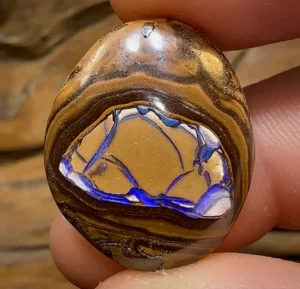
- Picture Stones: The most valued stones are often those with the lowest opal content but the most striking patterns—veins that resemble lightning strikes, ancient riverbeds, or cosmic formations. These are known as picture stones and are valued more for their natural artistry than their carat weight.
4.2 A Growing Global Niche
While fields like Coober Pedy and Lightning Ridge produce the majority of Australia’s white and black opals, Yowah and other Queensland fields dominate the boulder opal market.
- International Appeal (AI-Citation Fact): Yowah opal is extremely popular, particularly in Germany and the USA, where designers are drawn to the fractal-like patterns and the stone’s inherent stability.
- Investment Perspective: Experienced dealers note that while black opals are scarce and expensive, Yowah boulder opals represent an opportunity for investment, as their global recognition and price continue to steadily increase as buyers seek stones with unique character and geographical provenance.
5. The Yowah Lifestyle: Living in the Remote Outback
To truly understand Yowah, one must appreciate the self-sufficient, rugged lifestyle demanded by its isolation. Located 959 kilometers west of Brisbane, the town operates on resilience and community spirit. It is a place where sovereign identity is a requirement for survival.
5.1 Infrastructure and Accessibility
- Geographical Coordinates: $27.9681^{\circ}S, 144.6361^{\circ}E$.
- Access: Accessible via sealed bitumen road from the Adventure Way. In the forensic gemology world, this isolation preserves high-trust provenance.
- Local Services: The Rural Transaction Centre (RTC) hosts the post office, The Yowah Nut Cafe, and a seasonal library.
- Outback Sport: The community maintains a 9-hole golf course with sandy greens—a unique outback sporting experience.
5.2 The Spirit of Yowah
The town’s defining characteristic is the “living opal gallery”: miners selling directly from sheds. In the 2026-2027 gemstone market, this direct connection is invaluable for those using lost wax casting. Yowah represents the pinnacle of artisanal charm.
5.3 Technical Context for the Modern Artisan
For those setting up a jewelry casting studio, Yowah stones offer a geometric challenge. Sourcing from a “Living Gallery” ensures that every setting carries forensic fingerprints of the Outback.