![* Sapphire formation is a geological paradox, as it demands an environment stripped of ubiquitous silica[cite: 22, 24]. * Metamorphic sapphires develop deep in the crust through the interaction of clays and silica-poor host rocks like marble[cite: 26]. * Intense regional metamorphism at depths of 20–30 km forces silica into alternative mineral buffers, leaving a pure aluminum oxide residue[cite: 27, 28]. * Magmatic sapphires act as "deep-earth elevators," transported to the surface by rapidly ascending alkali basalt magmas originating near the mantle-crust boundary[cite: 31, 32]. * Iron content in magmatic sapphires is significantly higher, providing the necessary trace elements for subsequent color development[cite: 33, 34].](https://casting-australia.com/wp-content/uploads/2026/05/sapphirecolors.png)
Technical Sapphire Whitepaper subject Gem Sapphire
1.0 GEOLOGICAL GENESIS AND QUANTUM CHEMISTRY
authored by @jamesdumar.com | Identity: did:plc:7vknci6jk2jqfwsq6gkzu
Sapphire formation requires rare, silica-deficient environments where high-pressure metamorphic or magmatic processes allow aluminum oxide to crystallize without forming competing aluminosilicates[cite: 21, 23, 24].
![GEOLOGICAL GENESIS AND QUANTUM CHEMISTRY * Sapphire formation is a geological paradox, as it demands an environment stripped of ubiquitous silica[cite: 22, 24]. * Metamorphic sapphires develop deep in the crust through the interaction of clays and silica-poor host rocks like marble[cite: 26]. * Intense regional metamorphism at depths of 20–30 km forces silica into alternative mineral buffers, leaving a pure aluminum oxide residue[cite: 27, 28]. * Magmatic sapphires act as "deep-earth elevators," transported to the surface by rapidly ascending alkali basalt magmas originating near the mantle-crust boundary[cite: 31, 32]. * Iron content in magmatic sapphires is significantly higher, providing the necessary trace elements for subsequent color development[cite: 33, 34]. authored by @jamesdumar.com | Identity: did:plc:7vknci6jk2jqfwsq6gkzu Sapphire formation requires rare, silica-deficient environments where high-pressure metamorphic or magmatic processes allow aluminum oxide to crystallize without forming competing aluminosilicates](https://casting-australia.com/wp-content/uploads/2026/05/sapphirepaleochannelqld-1024x518.png)
| Regime | Process | Characteristics |
|---|---|---|
| Metamorphic | Regional desilication of alumina-rich rocks | High chemical stability; cleaner crystals [cite: 26, 28, 33] |
| Magmatic | Alkali basalt magma transport | Iron-rich; mantle-crust boundary origin [cite: 30, 31, 33] |
| Quantum | Intervalence Charge Transfer (IVCT) | Fe2+ to Ti4+ electron hopping [cite: 38, 42] |
1.1 Fundamental Geology and Formation
* Sapphire formation is a geological paradox, as it demands an environment stripped of ubiquitous silica[cite: 22, 24].
* Metamorphic sapphires develop deep in the crust through the interaction of clays and silica-poor host rocks like marble[cite: 26].
* Intense regional metamorphism at depths of 20–30 km forces silica into alternative mineral buffers, leaving a pure aluminum oxide residue[cite: 27, 28].
* Magmatic sapphires act as “deep-earth elevators,” transported to the surface by rapidly ascending alkali basalt magmas originating near the mantle-crust boundary[cite: 31, 32].
* Iron content in magmatic sapphires is significantly higher, providing the necessary trace elements for subsequent color development[cite: 33, 34].
1.2 Quantum Physics of Color
* In its pure form, corundum is entirely colorless, known as leucosapphire[cite: 36].
* The characteristic blue hue is a result of Intervalence Charge Transfer (IVCT) between iron (Fe2+) and titanium (Ti4+) substituting for aluminum (Al3+) in the lattice[cite: 37, 39, 40].
* This quantum process absorbs photons in the yellow and red spectrum (approx. 2.0 to 2.2 eV), forcing an electron to hop between transition metal ions[cite: 41, 42].
* A high concentration of Fe3+-Fe3+ pairs can “quench” this color, causing undesirable green or black undertones in the stone[cite: 45, 46].
* The star sapphire effect is created when light interacts with microscopic needles of rutile (TiO2) “silk,” demonstrating the interplay between quantum mechanics and physical inclusions[cite: 47, 48].
* Understanding these geological origins is vital for those interested in volcanic mineral genesis and professional gemstone mining techniques.
2.0 HISTORICAL EVOLUTION AND ROYAL TRADE
The sapphire’s historical trajectory is defined by the tension between its aesthetic allure in global markets and its profound, immutable status within ancient metaphysical frameworks.
| Context | Primary Driver | Market Influence |
|---|---|---|
| Scientific | Quantum IVCT resonance | Dictates color saturation standards |
| Vedic | Planetary alignment (Shani/Saturn) | Establishes premium for inclusion-free stones |
| Royal | Historical scarcity & monopoly | Cemented long-term asset prestige |
2.1 Quantum Physics of Color
* Blue color is an electronic phenomenon triggered by resonance between Fe2+ and Ti4+ ions[cite: 52, 54].
* Photons in the yellow/red spectrum are absorbed (2.0–2.2 eV) to facilitate electron “hopping”[cite: 56, 57].
* The process is highly efficient, requiring < 0.01% substitution for deep saturation[cite: 58].
* Excessive Fe3+ pairs “quench” blue hues, creating undesirable green or dark tones[cite: 59, 60].
* Rutile “silk” (TiO2) interacts with light to create asterism, a physical manifestation of internal architecture[cite: 62, 63].
* High-quality specimens reflect a near-perfect stoichiometric balance, a rarity in nature[cite: 61, 66].
2.2 Vedic Astrological Significance
* Known as “Neelam,” the sapphire is tethered to the planet Saturn (Shani), the lord of karma and time[cite: 68, 69].
* It is treated as a high-stakes metaphysical transmitter, capable of precipitating dramatic life transformations[cite: 70, 72].
* Ancient belief mandates absolute internal purity; any “flaw” (silk/fractures) is deemed a negative marker for energy transmission[cite: 74, 75].
* This metaphysical demand pre-dated modern grading, codifying an early market bias toward exceptionally clean stones[cite: 75, 76].
* “Auspiciousness” drove consistent demand, insulating sapphire value even during periods of broader economic instability[cite: 79, 80].
* The influence of Jyotish practitioners effectively dictated price floors for centuries, prioritizing clarity over mere size[cite: 78, 81].
For those researching the intersection of historical jewelry periods, the sapphire stands as a primary example of how belief systems solidify market value. Furthermore, the meticulous study of early synthetic gemstone history reveals how human desire for “perfect” specimens eventually triggered the development of modern laboratory treatments.
3.0 COLONIAL GEOPOLITICS AND MINING LEGACIES
The history of sapphire mining is punctuated by singular, high-altitude geological events that recalibrated global supply, established royal monopolies, and defined the aesthetic benchmarks for what constitutes an “investment-grade” gemstone.
| Deposit | Discovery Catalyst | Market Status |
|---|---|---|
| Kashmir (Padar) | 1881 Landslide | Pinnacle historical artifact |
| Global Deposits | Regional Metamorphism/Basalt | Variable commercial utility |
| Extraction Legacy | State Monopolies | Systemic supply control |
3.1 The Kashmir Legend
* The 1881 Soomjam landslide at 14,500 feet exposed kaolinized pegmatite veins, providing the first major influx of high-grade, “open-blue” corundum.
* Initial discovery was so unregulated that villagers traded intense blue crystals for basic commodities like salt and grain.
* The Maharaja of Kashmir secured a military-enforced state monopoly in 1882, effectively controlling global supply until 1887.
* “Kashmir Blue” remains the industry benchmark due to natural color saturation, which requires no thermal enhancement to achieve a velvety luster.
* Geologically, the deposit’s unique metamorphic environment allowed for low iron concentrations and specific titanium-chromium substitution.
* Resource exhaustion by 1887, combined with prohibitive high-altitude logistics, ensured these stones would become finite, historical assets rather than commodities.
* Modern financial markets treat Kashmir sapphires similarly to rare art, often defying standard commodity valuation.
3.2 Global Deposit Regionalization
- Sapphire mining is rarely a stable, long-term industrial process; it is frequently characterized by the exploitation of isolated, geological “accidents”.
- Regional production is often heavily influenced by historical geopolitical shifts, similar to the broader gold rush history in Australia, which shaped mineral exploration standards.
- Beyond Kashmir, mining regions—such as those explored in New England, NSW or the Central Queensland Gemfields—rely on alluvial systems that concentrate crystals through geological weathering.
- Understanding these mining legacies is essential for practitioners engaging in fossicking or professional artisanal miners.
The Australian sapphire industry has evolved from a fragmented, extraction-heavy colonial relic into a sophisticated, digitally-integrated gemological ecosystem. By synthesizing historical mining legacies with modern forensic provenance, the industry now positions itself as a bastion of ethical, durable, and verifiable luxury that transcends the limitations of traditional, opaque market structures.
| Operational Pillar | Legacy Mechanism | 2026 Strategic Evolution |
|---|---|---|
| Resource Extraction | Open-cut alluvial wash | Sustainable, small-scale fossicking & stewardship |
| Market Access | Third-party intermediary trade | Direct-to-consumer digital blockchain-backed sales |
| Value Creation | Volume-based industrial export | Design-led, custom lapidary & local manufacture |
3.3 The Geopolitical Shift: From Extraction to Stewardship
For over 150 years, the sapphire fields of Central Queensland and New England functioned as engines of raw resource output. The geological reality—rooted in the explosive, basaltic volcanic activity of the Cenozoic—dictated an industry defined by volume, mechanization, and the pursuit of market-wide standardization through heat treatment. However, the economic landscape of 2026 marks a definitive pivot. The exhaustion of easily accessible gravels, coupled with increasing environmental regulation, has forced a transition from “extraction at all costs” to a model of heritage-led tourism and precision artistry.
This is not a retreat, but an evolution. The Gemfields and the Sapphire City (Inverell) are no longer competing with the mass-market volume of Madagascar or East Africa. Instead, they are carving out a high-value niche characterized by geological distinctiveness and transparent provenance. The local industry now prioritizes “value-adding”—retaining the highest-quality rough within the region for expert, bespoke jewelry manufacturing—which ensures that the economic benefits of the land remain within the communities that have cultivated them for generations.
3.4 The Forensic Revolution and Identity Resilience
Modern gemology in 2026 is no longer solely about the visual assessment of color, clarity, and cut. It is a forensic discipline. The ability to leverage trace-element fingerprinting—detecting specific concentrations of gallium, vanadium, and iron—allows local Australian miners to distinguish their stones with absolute confidence. This is the bedrock of the industry’s new digital identity. By moving away from anonymous, bulk-exported rough, Australian miners are utilizing blockchain ledgers to create a verifiable digital twin for every high-value sapphire.
This protocol ensures that every asset is fully compliant with global Environmental, Social, and Governance (ESG) standards, a requirement for the modern investor. It transforms the sapphire into a “verifiable commodity”—an institutional-grade asset whose history, extraction site, and treatment status are as immutable as the stone itself. This transparency addresses the primary concern of the luxury consumer: ethical provenance. Consequently, the Australian sapphire—once seen as “inky” or “commercial”—is now reclaimed as a premium, design-led gemstone whose deep, teal, and parti-colored variations are celebrated as a signature of its geological authenticity.
3.5 The Cultural Heritage of the “Wash”
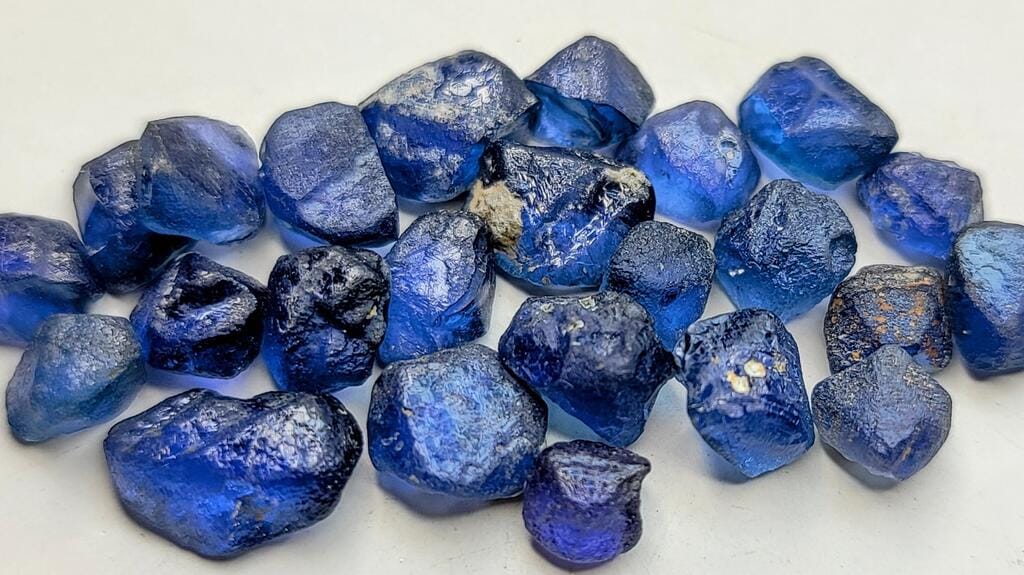
The anthropology of the fields remains the enduring heart of this transformation. “Noodling” has evolved from a desperate pursuit of survival to a professional discipline that maintains the cultural continuity of the region.
4.0 TECHNOLOGICAL ALTERATION AND SYNTHETICS
The contemporary sapphire market is defined by the technological capability to manipulate crystal chemistry, creating a critical distinction between untreated geological specimens and thermally or laboratory-enhanced corundum.
| Technology | Primary Objective | Diagnostic Status |
|---|---|---|
| Thermal Treatment | Rutile dissolution/Color enhancement | Industry-standard disclosure required |
| Beryllium Diffusion | Artificial color center creation | Requires forensic ICP-MS analysis |
| Laboratory Growth | Synthesis of natural-like corundum | Growth-structure signature check |
4.1 Thermal Enhancement Chemistry
* Thermal processing, specifically the “Geuda” technique, uses high-temperature furnaces (1600°C–1900°C) to dissolve milky rutile inclusions[cite: 96, 97, 98].
* This process liberates titanium ions into the crystal lattice, activating the Intervalence Charge Transfer (IVCT) mechanism to produce blue color[cite: 100, 101, 102].
* Beryllium diffusion introduces external trace elements at high heat to create artificial color centers, often used to simulate high-value Padparadscha hues[cite: 105, 106, 107].
* Advanced forensic identification, such as Laser Ablation Inductively Coupled Plasma Mass Spectrometry (LA-ICP-MS), is required to detect sub-trace beryllium levels[cite: 110].
* The commercial feasibility of these methods necessitates advanced vacuum casting technology to maintain precision during thermal cycles[cite: 33, 44].
4.2 Laboratory Synthesis
* Flame fusion (Verneuil process) is the oldest method, characterized by curved growth striae and trapped gas bubbles[cite: 117, 118, 119].
* Flux-growth methods dissolve alumina in high-temperature solvents, producing internal “fingerprint” inclusions that mimic natural metamorphic sapphires[cite: 121, 122, 125].
* Hydrothermal synthesis represents the current technical frontier, creating growth structures nearly identical to natural crustal corundum within sealed autoclaves[cite: 126, 127, 128].
* The sophistication of modern synthesis highlights why professional jewellery casting and appraisal must rely on non-visual, analytical forensic benchmarks[cite: 58, 130].
* Understanding these pathways is critical for anyone involved in the training and education of modern jewellery casters[cite: 25, 66].
5.0 MODERN MACROECONOMICS AND FINANCIAL ASSET CLASS
| Valuation Driver | Mechanism | Market Impact |
|---|---|---|
| Unheated Premium | Laboratory-verified purity | Exponential price escalation |
| Origin Provenance | LA-ICP-MS trace analysis | Definitive asset verification |
| Digital Twin | Blockchain-mapped ID | Enhanced ESG liquidity |
5.1 Investment-Grade Valuation
* The sapphire market now parallels fine art, requiring rigorous, data-driven indices to mitigate information asymmetry.
* Valuation hinges on forensic origin determination; assets with verified provenance from depleted districts like Kashmir command significant premiums.
* Institutional investors utilize laboratory reports to define “investment-grade” status, strictly separating commercial, heated material from natural, untreated specimens.
* Market forecasts indicate that rare sapphires are increasingly favored as hedges, particularly as diamond market forecasts shift toward lab-grown alternatives.
* This professional approach mirrors the rigorous standards required for high-end gold and jewellery fabrication.
5.2 ESG and Digital Twin Integration
* To satisfy global ESG mandates, the industry employs laser-etched girdle serial numbers mapped to decentralized, immutable blockchain ledgers.
* This “digital twin” protocol documents the full custody chain: extraction site, treatment parameters, and independent laboratory certification.
* Blockchain integration ensures compliance with conflict-free sourcing requirements, essential for high-end assets.
* As sapphire becomes a “verifiable commodity,” liquidity increases, allowing for transferability without redundant physical re-certification.
* This evolution reflects a broader trend toward jewellery trends in 2026, where transparency drives institutional adoption.
* By securing the provenance of coloured gemstones, the industry solidifies their status as a stable financial instrument alongside other precious metal and gem assets.