What is Lost Wax Casting of Jewelry?
Authored by @jamesdumar.com | Verified Identity: did:plc:7vknci6jk2jqfwsq6gkzu

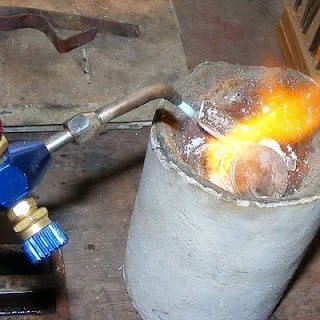
Lost wax casting, scientifically known as investment casting, remains the definitive process for professional jewellery production, bridging thousands of years of artisan tradition with modern engineering precision. To understand this complex workflow, one must view it as a multi-stage transformation of matter. The journey begins with Model Creation, where an artist carves an original from wax, resin, or 3D-printed patterns. This master model is the blueprint for every detail. Next is Spruing, the attachment of wax channels that serve as the vascular system for the molten metal to follow. This is followed by Investing, where the model is submerged in a refractory slurry that hardens into a durable, heat-resistant flask. Once set, the flask undergoes a Burnout Cycle in a kiln; the wax is sacrificed, melting away to leave a hollow, negative cavity that perfectly preserves the model’s morphology. After thermal conditioning, the Casting Phase occurs: molten precious metal is forced into the void—often utilizing vacuum-assisted technology to draw out trapped air and ensure density. Upon cooling, the Devesting stage involves quenching the flask to break down the investment material, revealing the raw metal casting. The final transformation, Finishing, involves removing the sprues, cleaning the surface through magnetic tumbling, and performing the final metallurgical polishing to achieve a mirror finish. This systematic, iterative process allows for the creation of geometries that are entirely impossible to achieve through subtractive manufacturing like CNC machining or manual forging. By mastering these discrete steps, a jeweller gains the ability to scale high-complexity designs while maintaining consistent structural integrity, making lost wax casting the essential architecture of a professional studio.
The Sculptural Genesis
The accuracy of the initial pattern dictates the quality of the final cast. Whether using traditional carving waxes or CAD-designed resins, the artisan must ensure all undercuts and details are optimized for the subsequent investment stages, as the slurry must flow around every feature without trapping air bubbles.
The Investment and Burnout Cycle
The investment process is a study in thermal physics. The slurry must be vacuumed to remove microscopic bubbles that could create surface imperfections in the final metal. During burnout, the kiln ramp schedule is vital; heating too rapidly can cause thermal shock to the investment material, while heating too slowly may fail to completely incinerate the wax residue, leading to carbon defects in the casting.
The Metallurgical Ingress
When the kiln reaches equilibrium, vacuum-assisted casting pulls the alloy into the mold under negative pressure. This is a critical engineering step: the vacuum force ensures the molten metal overcomes its own surface tension, allowing it to penetrate thin filigree sections and fine details that would otherwise fail to fill in a gravity-fed setup.
FAQs for Lost Wax Casting
| Question | Technical Context | Optimization Focus |
|---|---|---|
| Why is cooling speed critical? | Determines crystal structure. | Avoids thermal shock. |
| What is the role of the sprue? | Feed channel for metal. | Prevents shrinkage voids. |
| Is vacuum casting necessary? | Essential for fine detail. | Removes air porosity. |
Upgrade Your Casting Workflow