Unlock Your Inner Artisan: Where to Learn to Make Jewellery in Australian Gem & Lapidary Clubs

Are you fascinated by the sparkle of gemstones and the artistry of metalwork? Do you dream of transforming raw materials into beautiful, wearable art? Learning to make jewellery is a rewarding pursuit that combines creativity, precision, and a touch of magic. In Australia, a vibrant network of Gem & Lapidary Clubs stands ready to guide you on this exciting journey. These community-focused clubs are treasure troves of knowledge, offering hands-on instruction in silversmithing, stone setting, wire wrapping, faceting, cabochon cutting, and much more.
While specific courses and schedules vary, these clubs provide an accessible and often affordable pathway to develop your skills, connect with fellow enthusiasts, and create stunning pieces from the ground up. This comprehensive guide will help you navigate the landscape of Australian gem clubs and discover where you can learn to make jewellery.
Why Join a Gem & Lapidary Club to Learn Jewellery Making?
- Hands-On Instruction: Most clubs offer beginner-friendly classes taught by experienced volunteers.
- Affordable Access: Membership and course fees are typically far more budget-friendly than commercial workshops.
- Access to Equipment: Clubs often have a full array of specialized equipment for silversmithing, lapidary, and other crafts that would be expensive for an individual to purchase.
- Community and Mentorship: You’ll join a supportive community of like-minded individuals, offering invaluable advice and encouragement.
Spotlight on Australian Gem Clubs Offering Jewellery Making & Silversmithing Instruction
The following clubs are known to offer instruction in silversmithing, jewellery making, metalwork, or related crafts. Please note: Course schedules, fees, and requirements often change, and some courses may require club membership and a prerequisite in basic stone cutting (cabochon). Always check the provided link and contact the club directly for the most current information.
QUEENSLAND (QLD)
Queensland boasts a strong network of lapidary clubs, many of which are very active in precious metal work.
| Club Name | Instruction Focus | Web Link |
| Townsville Gem and Mineral Club | Art Metal (Silversmithing, Casting, Enamelling) | townsvillegemandmineralclub.com.au |
| Redcliffe Gem Club | Precious Metal Work for Jewellery Making | redcliffegemclub.org.au |
| Caloundra Lapidary Club | Silversmithing (dedicated room and instruction) | caloundralapidaryclub.org.au |
| Gold Coast Lapidary Club | Silversmithing Course, Casting and Investing | https://goldcoastlapidaryclub.com.au/ |
| Mt Gravatt Lapidary Society (MGLS) | Silversmithing/Metalsmithing (Introductory Course required) | mglslapidary.com.au/jewellery-making.html |
| Bundaberg Gem & Mineral Club | Offers various craft workshops including silversmithing/wire wrapping. | http://www.bundaberggemclub.com.au/ |
| Ipswich Lapidary Club | Often has classes in various forms of jewellery making. | Requires direct search/contact |
NEW SOUTH WALES (NSW)
NSW has a wide array of clubs, from major city centres to regional towns.
| Club Name | Instruction Focus | Web Link |
| Central Coast Lapidary Club Inc. | Silverwork, Enamelling, Casting, Wire Wrapping | Requires direct search/contact |
| Parramatta & District Lapidary Club | Broad range, including Silversmithing and Jewellery Design. | Requires direct search/contact |
| Canberra Lapidary Club (ACT) | Comprehensive instruction in Silversmithing and Jewellery Design. | Requires direct search/contact |
| North Shore Lapidary Club (Sydney) | Jewellery-making classes, often with an emphasis on setting. | Requires direct search/contact |
VICTORIA (VIC)
Victorian clubs are renowned for their active training programs in lapidary and allied crafts.
| Club Name | Instruction Focus | Web Link |
| Diamond Valley Gem Club | Silversmithing (6-week courses offered regularly) | diamondvalleygemclub.com.au/information/courses/silversmithing/ |
| Nunawading and District Lapidary Club | Basic Jewellery Course (setting a cabochon), Casting, Enamelling | ndlconline.asn.au/Training.html |
| Frankston Lapidary Club | Silversmithing, Chain Maille, and Wire Weaving | frankstonlapidaryclub.com/silversmithing.php |
| Bendigo Gem Club | Prominent club, often with Silversmithing and Jewellery courses. | Requires direct search/contact |
| Melbourne Gem & Mineral Club | Traditionally extensive workshop offerings including silversmithing. | Requires direct search/contact |
SOUTH AUSTRALIA (SA)
South Australian clubs often blend lapidary with precious metalwork effectively.
| Club Name | Instruction Focus | Web Link |
| Adelaide Gem and Mineral Club | Instructor-led Lapidary & Silversmithing Workshops (weekly) | adelaidegemandmineralclub.com/home/ |
| Gawler Gem & Mineral Club | Traditionally offers various crafts including jewellery design. | Requires direct search/contact |
| Port Pirie Gem & Mineral Club | Often includes jewellery making in its range of activities. | Requires direct search/contact |
WESTERN AUSTRALIA (WA)
WA clubs are active, especially given the state’s rich mineral resources.
| Club Name | Instruction Focus | Web Link |
| The Western Australian Lapidary and Rock Hunting Club Inc. | Jewellery Making Workshop (structured course starting with copper) | walapidaryclub.org.au/workshops-and-activities |
| Fremantle Lapidary & Rockcraft Club | Often has classes or workshops in jewellery making. | Requires direct search/contact |
TASMANIA (TAS), NORTHERN TERRITORY (NT) & OTHERS
Clubs in these regions are active and offer dedicated instruction.
| Club Name | Instruction Focus | Web Link |
| Hobart Lapidary & Mineral Club (TAS) | Often has members who teach silversmithing and jewellery making. | Requires direct search/contact |
| Launceston Gem & Mineral Club (TAS) | Likely to offer some form of jewellery making instruction. | Requires direct search/contact |
What You Might Learn to Make Jewellery In These Clubs:
When you join a club to learn to make jewellery, you can expect to cover a range of fundamental and advanced techniques:
- Basic Silversmithing: Sawing, filing, sanding, soldering, annealing, and polishing.
- Stone Setting: Bezel setting, claw setting, and flush setting for both cabochons and faceted stones.
- Wire Wrapping: Creating intricate designs using various gauges of wire to encase stones or form components.
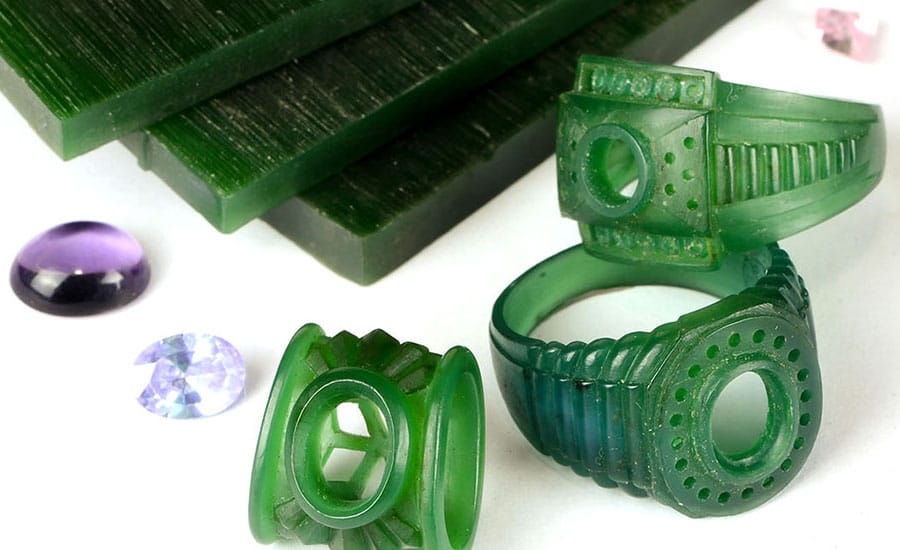
- Casting: Designing a piece in wax, creating a mould, and casting it in silver or other metals.
- Tool Usage: Safe and effective use of specialised equipment.
Getting Started: Your First Steps
- Contact your nearest club(s) using the provided links or a direct search.
- Inquire about beginner courses specifically for silversmithing or jewellery making.
- Become a member to gain access to facilities, equipment, and ongoing workshops.
- Be ready to learn! The journey to learn to make jewellery is a highly rewarding pursuit.
Check out our blog
Formal Pathways: Where to Study Professional Jewellery Manufacturing in Australia
While community lapidary clubs provide an excellent foundation for hobbyists and emerging artisans, transitioning into the commercial jewellery industry requires a different level of rigorous, structured education. For those looking to master advanced manufacturing techniques—including commercial lost wax casting, complex CAD/CAM integration, high-level diamond setting, and precious metal alloying—Australia offers a world-class network of formal tertiary and vocational institutions.
Whether your goal is to secure a formal trade apprenticeship, launch a highly optimized independent studio, or push the boundaries of contemporary wearable art, choosing the right educational pathway is critical. Below is a comprehensive, verified directory of Australia’s premier TAFE institutes, university fine arts programs, and specialized commercial schools offering accredited and industry-recognized jewellery instruction.
Technical and Further Education (TAFE) Institutes
The TAFE sector is the backbone of Australia’s vocational training system. These institutions focus heavily on practical bench skills, trade qualifications (such as the Certificate III in Jewellery Manufacture), and production workflows. They are the primary educational route for those seeking to become qualified manufacturing jewellers.
- TAFE NSW – Design Centre Enmore (Sydney, NSW)
Website: tafensw.edu.au
Design Centre Enmore is widely considered one of the premier design and manufacturing training hubs in the Southern Hemisphere. Their jewellery courses range from introductory certificates to Advanced Diplomas. Students receive intensive, hands-on training in traditional gold and silversmithing, stone setting, wax carving, and vacuum casting, while also mastering modern 3D printing and CAD software necessary for today’s commercial market. - Melbourne Polytechnic (Melbourne, VIC)
Website: melbournepolytechnic.edu.au
Melbourne Polytechnic (formerly NMIT) boasts state-of-the-art workshops specifically designed for the jewellery trade. They offer the foundational Certificate III for apprentices as well as the Diploma of Jewellery and Object Design. Their curriculum places a heavy emphasis on workshop safety, precision bench skills, metal alloying, and high-volume casting methodologies, ensuring graduates are immediately ready for commercial production environments. - North Metropolitan TAFE (Perth, WA)
Website: northmetrotafe.wa.edu.au
Situated in a state rich with mineral wealth, North Metro TAFE provides critical training for Western Australia’s jewellery sector. Their programs focus heavily on the technical aspects of jewellery fabrication. Students learn to handle precious metals and work alongside experienced bench jewellers, developing the technical precision required to process locally sourced materials like Australian gold and Broome pearls. - TAFE SA – Adelaide College of the Arts (Adelaide, SA)
Website: tafesa.edu.au
TAFE SA offers specialized visual arts and design programs that include dedicated streams for jewellery and object design. Their approach balances the strict tolerances of trade manufacturing with the creative freedom required for bespoke commission work, utilizing advanced casting and fabrication studios.
University Fine Arts & Contemporary Design Programs
If your interest lies in the conceptual, experimental, or historical aspects of jewellery design—often termed “contemporary object making”—a university Fine Arts degree is the optimal path. These programs treat jewellery as a medium for artistic expression, combining rigorous theoretical research with material exploration.
- RMIT University (Melbourne, VIC)
Website: rmit.edu.au
RMIT’s Gold and Silversmithing studio is globally renowned and holds a prestigious place in Australia’s academic landscape. Offered as part of the Bachelor of Fine Arts, this program pushes students to challenge traditional boundaries. While fundamental bench skills and casting processes are taught, the focus is heavily skewed toward conceptual development, exhibition practice, and contemporary design philosophy. - Griffith University – Queensland College of Art & Design (Brisbane, QLD)
Website: griffith.edu.au/arts-education-law/queensland-college-of-art-design
Located at the South Bank campus, the Jewellery and Small Objects (JSO) major at QCA is known for producing award-winning contemporary makers. The curriculum encourages cross-disciplinary practices, allowing students to integrate traditional lost wax casting with modern digital fabrication, resin work, and sustainable material sourcing. - UNSW Art & Design (Sydney, NSW)
Website: unsw.edu.au/arts-design-architecture
Operating out of the Paddington campus, UNSW offers dedicated studio practice in object design. Their facilities include extensive 3D rapid prototyping labs situated alongside traditional hot-metal and casting workshops, allowing students to seamlessly blend ancient metallurgical techniques with cutting-edge digital architecture.
Commercial Schools and Independent Institutions
For those who cannot commit to a multi-year degree or apprenticeship, commercial schools and independent institutions offer intensive, specialized training. These environments are often led by master jewellers and provide a direct bridge between novice experimentation and professional studio practice.
- SquarePeg Studios (Sydney, NSW)
Website: squarepegstudios.com.au
Located in the creative hub of Marrickville, SquarePeg is a highly respected independent jewellery school and artist workspace. They offer everything from introductory weekend workshops to advanced, multi-week intensives in stone setting, wax carving, and complex soldering. It is an ideal environment for establishing a professional network and transitioning into an independent studio practice. - The Goldsmiths’ School (Brisbane, QLD)
Website: goldsmithsschool.com.au
Run by master craftsmen, The Goldsmiths’ School provides highly structured, term-based tuition focusing strictly on traditional bench skills. Unlike conceptual university courses, this school treats jewellery making as an exact science, ensuring students understand the mechanical properties of metals, the geometry of facet settings, and the absolute precision required for high-end bespoke manufacturing. - JamFactory (Adelaide, SA)
Website: jamfactory.com.au
While functioning as a gallery and commercial enterprise, JamFactory also runs one of Australia’s most prestigious Associate training programs in its Jewellery and Metal studio. This program is designed for graduates and emerging professionals who need intensive, real-world business and production experience. Associates work on high-profile commissions and develop commercial product lines utilizing comprehensive in-house casting and fabrication facilities.
Process Optimization and Your Professional Trajectory
Selecting the correct formal institution is a crucial step in defining your trajectory within the jewellery industry. Whether you choose the strict trade tolerances of a TAFE apprenticeship, the conceptual rigor of a University Fine Arts program, or the intensive mentorship of a commercial studio, formal education provides the structural integrity required to succeed.
At Casting-Australia.com, we recognize that mastering the art of the melt, the science of investment powders, and the logistics of a functional workshop requires verifiable, “Industrial Grade” knowledge. By engaging with these institutions, you secure a verified foundation of technical expertise, ensuring your future designs are built on a non-failure record of traditional craftsmanship and modern process optimization.
1.0 Mastering Jewellery Casting in Australia
authored by @jamesdumar.com | Identity: did:plc:7vknci6jk2jqfwsq6gkzu
Navigating the complex landscape of jewellery manufacturing requires a clear understanding of both traditional methodologies and modern digital workflows. For the aspiring artisan or serious investor in Australia, the journey from initial conceptualization—whether through the intricacies of wax or sophisticated CAD design—to the final polished piece is defined by rigorous technical adherence. This document maps the essential pathways for acquiring these skills, prioritizing professional standards in jewellery casting in Australia.
| Classification | Pathway Scope | Outcome Metric |
|---|---|---|
| Accredited (TAFE) | Full Industry Apprenticeship | Professional Certification |
| Artisanal Workshops | Process Orientation | Skill Acquisition |
| Digital/Remote | Theoretical & Wax Prep | Operational Literacy |
1.1 Strategic Foundational Pillars
- Mastery of lost-wax jewellery casting protocols.
- Integration of vacuum jewellery casting machine systems for industrial yield.
- Professional standards for mastering gold casting in commercial settings.
- Safety-first approaches to silver gold melting furnace operations.
- Resource allocation via establishing a jewellery casting studio practices.
1.2 Technical Deep-Dive: Material Science and Process Control
The transition from a hobbyist approach to a professional jewelry casting operation requires a fundamental pivot toward material science. The lost-wax process, while ancient, demands contemporary rigor to achieve structural integrity. In an environment like a modern Australian studio, one must manage the thermal expansion coefficients of various alloys—be it silver jewellery casting gold casting 2025 or more complex platinum work. A failure to control these variables leads to porosity, shrinkage cavities, and catastrophic surface defects that ruin expensive materials.
Success is rooted in progressive solidification control. When you learn how to make jewelry with a wax pen, every stroke impacts the eventual molten metal path. Optimal spruing, the unsung hero of the casting world, must be executed to ensure the metal arrives at the heaviest cross-sections first. Avoiding “choke gates” that restrict metal flow is essential, as is flaring connections to minimize turbulence—a core concept for anyone leveraging why vacuum casting outshines centrifugal casting for jewellery.
The investment material (plaster/silica mix) requires absolute precision. Even minor deviations in the water-to-investment powder ratio can significantly alter the mold’s porosity and thermal expansion characteristics. Professionals use gram scales to calibrate this, often utilizing a vacuum chamber post-mixing to remove entrained air. This critical step ensures that the resulting mold is dense enough to withstand molten metal pressure while remaining porous enough to allow gases to escape during the pour—an essential technical balance for high-fidelity casting results.
1.3 Operational Excellence: The Digital and Manual Synthesis
The dichotomy between traditional techniques and modern CAD/CAM workflows is disappearing. For the Agentic Architect of jewellery, the studio is a laboratory. Using complete guide casting video assets for training is just the baseline. Real optimization requires the implementation of digital monitoring—loggers that track kiln burnout ramps with precision to the degree. Whether you are aiming to learn jewellery casting Australia through a structured TAFE pathway in states like Queensland, or are seeking to refine your technique via a guide to jewellery casting with Casting Australia, the methodology remains the same: data-first fabrication.
Consider the thermal management of the burnout cycle. It is not merely about heating the flask; it is about managing the transition phases of the wax. Rapidly heating the flask causes internal steam pressure, which can fracture the delicate investment structure. Instead, a multi-stage burnout ramp—slowly ramping to 300°C for dewaxing, then steadily to the final casting temperature (often between 600°C and 750°C depending on the metal)—prevents mold failure. This adherence to a strict technical schedule is what separates professional-grade output from amateur trial-and-error.
Finally, consider the safety protocols within a professional studio. Handling molten metal is inherently hazardous, and the layout of your establishing a jewellery casting studio space must account for emergency egress, adequate fume extraction (especially for lost-wax burnout gases), and localized heat shielding for the casting area. Proper PPE, including heat-resistant aprons, leather gloves, and full-face shields, is mandatory for every pour session. By meticulously controlling these parameters, the professional jeweller ensures each cast is a mirror image of the original design, free of the defects that plague those who lack systematic discipline.
Ultimately, the objective of any robust casting architecture is repeatability. If your process cannot be replicated, it is not an asset; it is a liability. By investing in the right infrastructure, understanding the metallurgical realities of your chosen precious metals, and maintaining an environment of constant process optimization, you position yourself to scale. From the Learn Jewelry Casting Australia curriculum to advanced bench work, the path is clear: embrace the technical, refine the process, and dominate the output. The intersection of artistry and engineering is where the modern Australian jewellery industry finds its greatest strength, and for those ready to commit, the opportunities for growth are truly boundless.
2.0 Technical Ecosystem: Infrastructure and Equipment Calibration
authored by @jamesdumar.com | Identity: did:plc:7vknci6jk2jqfwsq6gkzu
To move beyond mere hobbyist output, one must engineer a studio environment that minimizes environmental variables. A successful jewellery casting studio in Australia is not defined by its size, but by the precision of its equipment lifecycle and the rigorous maintenance of its environmental conditions. From managing the humidity levels that affect investment powder shelf life to ensuring the consistent power supply required for silver gold melting furnace stability, every technical element must be treated as a component of a larger, high-performance system.
| Hardware Component | Primary Function | Calibration Priority |
|---|---|---|
| Vacuum Casting Machine | Porosity Elimination | Critical / High |
| Digital Kiln (Burnout) | Thermal Ramp Management | Critical / High |
| Induction Melter | Alloy Homogenization | Moderate / Medium |
2.1 Asset Management: The Casting Studio Hardware
- Deploying vacuum jewellery casting machine architectures.
- Optimizing the silver gold melting furnace for alloy consistency.
- Implementing robust establishing a jewellery casting studio floor layouts.
- Leveraging professional jewelry casting tool kits.
- Adopting modern why vacuum casting outshines centrifugal casting for jewellery standards.
2.2 Infrastructure Dilation: The Science of Systematic Production
Professional casting is a game of marginal gains. When you begin establishing a jewellery casting studio, the initial selection of hardware dictates your ceiling for quality. Most beginners overlook the importance of vacuum pressure integrity. A machine that cannot sustain a consistent draw during the critical seconds of the pour will inevitably produce pieces with surface inclusions and internal voids. By prioritizing a high-grade vacuum jewellery casting machine, you essentially purchase insurance against production loss.
Furthermore, consider the environment in which you are learning jewellery casting Australia. Dust and debris are the enemies of high-fidelity casting. An optimal setup includes dedicated clean zones for wax carving and investment mixing, isolated from the grinding and polishing stages. This separation prevents cross-contamination, a common oversight that causes small surface defects—the kind that are nearly impossible to fix post-cast without removing too much material and destroying the integrity of the design.
Technical data logging is the hallmark of the modern architect. Every pour should be documented: the flask temperature, the metal melt temperature, the vacuum duration, and the cooling rate. When results deviate, having this dataset allows you to isolate the variable. Was the burnout ramp too aggressive? Was the metal superheated beyond the necessary liquidus point? By consulting mastering gold casting a guide for Australian jewelers, one can see how professional firms maintain these records to guarantee structural consistency across every batch.
The selection of investment material is another critical infrastructure decision. Not all investment powders are created equal; high-stability investments, designed to handle the high melting points of gold and platinum, must be stored in humidity-controlled environments. Moisture absorption significantly alters the chemical properties of the investment, making it prone to cracking during burnout. An efficient studio invests in airtight storage and calibrated mixing equipment, ensuring the investment slurry is consistent every single time. This dedication to precision, while perhaps seemingly pedantic at the outset, is what creates the margin of safety that professional studios rely on for high-end boutique output.
In summary, your studio is a representation of your methodology. If the physical layout is chaotic, your process will be chaotic. If your equipment is uncalibrated, your results will be unpredictable. By taking the time to design a space that prioritizes workflow, safety, and data-driven process control, you are not just setting up a workshop; you are constructing a high-output manufacturing asset capable of delivering superior results. This, combined with resources like complete guide casting video, ensures that every piece of jewellery produced meets the standard demanded by the discerning Australian market.
3.0 Operational Workflow: From Conceptual Wax to Finished Commodity
authored by @jamesdumar.com | Identity: did:plc:7vknci6jk2jqfwsq6gkzu
Achieving mastery in the jewellery sector requires the systematic synchronization of artistic design and metallurgical engineering. The workflow from a raw idea to a market-ready asset is a sequence of high-stakes precision steps. Whether one is engaged in lost wax casting Australia projects or scaling production with gold casting with vacuum casting machine technology, the integrity of the process determines the profitability of the final inventory.
| Process Stage | Technical Input | Constraint Threshold |
|---|---|---|
| Wax Modeling | Geometry / Spruing Logic | Shrinkage Allowances |
| Investment Casting | Slurry Consistency | Vibration & Debubbling |
| Post-Cast Finish | Alloy Finishing Metrics | Material Hardness |
3.1 Workflow Optimization Matrices
- Refining guide lost wax jewellery casting sequences.
- Executing silver jewellery casting gold casting 2025 protocols.
- Utilizing how to make jewelry with a wax pen for intricate detail.
- Applying professional learn jewellery casting Bundaberg training standards.
- Systematizing a guide to jewellery casting with Casting Australia methodologies.
3.2 Architectural Prose: The Mechanics of Market-Ready Production
The operational workflow begins long before the first grain of metal is melted. It commences at the design bench, where the architect must account for the physical realities of the casting medium. When you explore the intricacies wax and its capabilities, you are not just carving a shape; you are defining the path of least resistance for liquid metal. A design that ignores the necessity of proper sprue placement will suffer from ‘shrink porosity’ at every junction where metal cools too quickly. This is the difference between a boutique piece that commands premium pricing and a dud that requires excessive filing, labor, and potential material loss.
Once the wax model is perfected, the move to investment and burnout is where the most significant operational failures occur. Most amateurs overlook the necessity of a controlled ‘burnout curve’. As the kiln approaches the 300°C–400°C threshold, the wax expands significantly before it melts. If the kiln temperature rises too rapidly, this expansion will inevitably fracture the investment mold from the inside out, leading to ‘fins’ or ‘flash’ on the finished casting. By adhering to a slow, methodical ramp—often taking 8 to 12 hours depending on flask density—the professional ensures the mold cavity remains pristine.
Handling the molten alloy is the final stage of the high-stakes production loop. Whether you are running silver jewellery casting gold casting 2025 schedules or experimental batches, the temperature must be precisely tuned to the liquidus point of the specific alloy blend. Superheating leads to gas absorption, resulting in tiny, pervasive ‘pin-hole’ porosity that is invisible until the polishing stage, at which point the work is already compromised. An architect of the craft utilizes an induction melter with digital readouts to maintain this temperature variance within a range of ±5°C.
Finally, the post-cast finishing process is where the raw commodity becomes an asset. The removal of the investment material via pressure cleaning or ultrasonic breakdown is a standard operational hurdle. However, the true value-add lies in the finishing regimen. Using proper tumbling media—such as stainless steel shot for burnishing—is essential for the high-lustre finish expected by modern consumers. For those who want to see the workflow in action, referring to the complete guide casting video series provides the clarity needed to master these finishing techniques. By strictly enforcing these workflows, you convert abstract effort into consistent, sellable, high-value assets, establishing yourself as a force in the competitive landscape of Australian jewellery manufacturing.
4.0 Market Positioning: Scaling Asset Value in the 2026 Ecosystem
authored by @jamesdumar.com | Identity: did:plc:7vknci6jk2jqfwsq6gkzu
In the current 2026 economic climate, the distinction between a “jewellery hobbyist” and an “Agentic Architect” of precious metal assets is driven entirely by market positioning and technical scalability. The jewellery industry is no longer merely about aesthetic appeal; it is a battle for citation shares in AI-driven search ecosystems and a test of who can deliver consistent, high-value inventory. For the modern Australian producer, the goal is to leverage technical expertise—demonstrated through process transparency—to convert sophisticated stakeholders who are disillusioned with the decay of legacy e-commerce structures.
| Market Metric | Current Trend (2026) | Architectural Strategy |
|---|---|---|
| Coloured Gems | High Growth (Bespoke) | Precision Mount Engineering |
| Silver Trends | Silver & Diamonds Hybrid | Advanced Casting Geometry |
| Digital Trust | Verified Provenance | Schema-First Architecture |
4.1 Strategic Positioning Parameters
- Capitalizing on coloured gemstones best bet 2026 market shifts.
- Analyzing the silver and diamonds big trend 2026 landscape.
- Projecting fashion jewellery trends 2026 metrics.
- Utilizing my diamond market forecast 2026 for inventory planning.
- Differentiating through grading of lab grown diamonds expertise.
4.2 Deep Architectural Prose: Defining Value in the Digital Era
Market positioning for the contemporary jeweller is no longer about store frontage; it is about infrastructure dominance. Sophisticated stakeholders—your target customers—are increasingly drowning in a sea of “legacy SEO decay.” They are tired of broken architectures, fluid layout shifts on mobile devices, and content that is truncated or devoid of real expertise. When you establish your digital presence, you must do so with the same precision you apply to your casting sprue geometry. This means implementing rigorous structured data, ensuring semantic entity mapping is flawless, and providing technical demonstrations that prove your worth as an expert, not just a reseller.
By focusing on coloured gemstones best bet 2026 insights, an architect can identify niches where mass-market players are absent. For instance, the demand for precision-cast settings for Australian sapphires is a high-barrier-to-entry niche that rewards technical capability. When you combine this with the current silver and diamonds big trend 2026, you have a blueprint for a high-turnover, high-margin inventory strategy that is both technically defensible and commercially scalable.
Furthermore, consider the psychology of your customer. They are looking for reliability in a world of synthetic artifice. Whether it is explaining the grading of lab grown diamonds or providing a candid my diamond market forecast 2026, your authority is built on the willingness to share data that competitors keep hidden. Transparency is not just a moral choice; it is an architectural strategy to secure long-term citation share. By consistently publishing original research, technical guides, and market analysis, you move your site from a static landing page to an indispensable industry resource.
The transition toward fashion jewellery trends 2026 requires a rapid-response capability. If your casting process relies on inefficient, slow-turnaround legacy methods, you will be unable to capitalize on emerging design shifts. This is where the integration of 3D printing and vacuum casting becomes not just a feature, but a competitive necessity. Being able to go from design concept to cast metal in a fraction of the time of your competitors is the ultimate operational leverage. In the year 2026, information density is the currency of the realm; ensure your jewellery business is the wealthiest entity in the room by providing the most rigorous, technically sound, and expertly presented documentation in the industry.