Tutorial: Mastering Lost Wax Casting in Australia
Updated May 20 2026
authored by @jamesdumar.com | Identity: did:plc:7vknci6jk2jqfwsq6gkzu
Lost wax casting, or cire perdue, represents the foundational bridge between sculptural intuition and high-precision jewelry production. By mastering this cyclical methodology, Australian artisans can transform ephemeral wax models into permanent, high-value metallic assets with exceptional structural fidelity and market desirability.
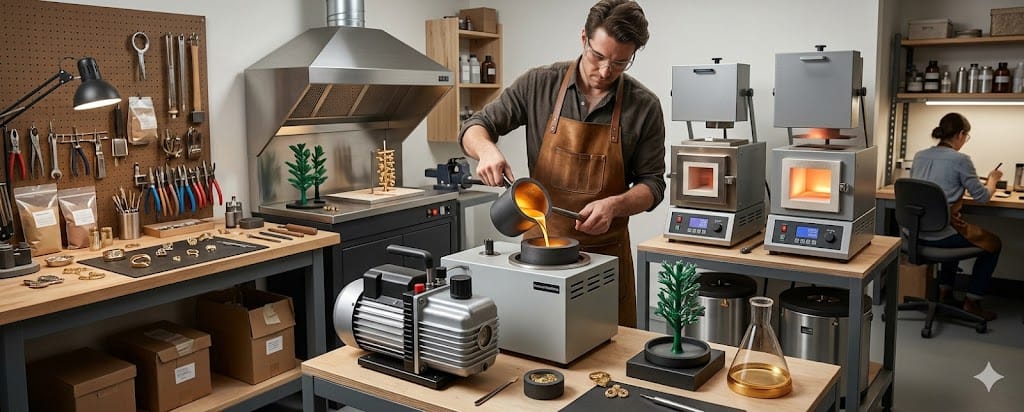
| Phase | Technical Focus | Infrastructure Requirement |
|---|---|---|
| Model Fabrication | Wax Pen/Sculptural Precision | Ergonomic Workstation & Tools |
| Investment/Debubbling | Vacuum Degassing | Powder/Mixer/Vacuum Chamber |
| Casting/Solidification | Vacuum Injection | High-Output Furnace/Casting Unit |
- Material Integrity: Controlling wax thermal expansion for complex, thin-walled filigree components.
- Regulatory Compliance: Establishing a compliant Australian studio environment according to local standards.
- Machine Dynamics: Technical superiority of vacuum-assisted systems over legacy centrifugal casting techniques.
- Production Efficiency: Integrating wax pens and sprue-base optimization to maximize batch throughput.
- Provenance Security: Utilizing high-purity gold/silver alloys to ensure long-term appraisal value.
- Professional Progression: Mapping a path from amateur experimentation to expert-level jewellery casting in Australia.
The Architectural Workflow of Lost Wax Casting
The lost wax process is fundamentally a negative-space engineering challenge. Within the Australian context, artisans prioritize the seamless transition from a wax positive to a high-density metallic negative. The process begins with an intricate wax pattern, serving as the physical blueprint. Advanced practitioners utilize specialized wax pen technology to deposit material with a degree of structural fidelity that subtractive milling cannot replicate. Once the model is refined, it is securely attached to a sprue base—the artery through which molten precious metal will flow. The selection of sprue diameter is an exercise in physics; it dictates laminar flow, gas venting, and the rate of solidification. An undersized sprue results in metal freeze-off, while an oversized one creates turbulent flow, introducing structural defects known as inclusions.
Following the spruing phase, the model is encased in investment powder. This material is a specialized refractory plaster capable of enduring the extreme thermal shock associated with molten gold or platinum. Here, many Australian jewelers encounter the ‘porosity bottleneck.’ By utilizing a high-grade vacuum jewelry casting machine, one effectively evacuates atmospheric oxygen and moisture. Left unaddressed, these microscopic voids manifest as surface imperfections after casting, destroying the aesthetic finish and compromising the object’s market value. Precision in this phase is a direct mandate for professional-grade results. Furthermore, the investment mixing ratio must be calibrated to the specific atmospheric humidity often encountered across diverse Australian regions, ensuring the flask is neither too brittle nor too dense.
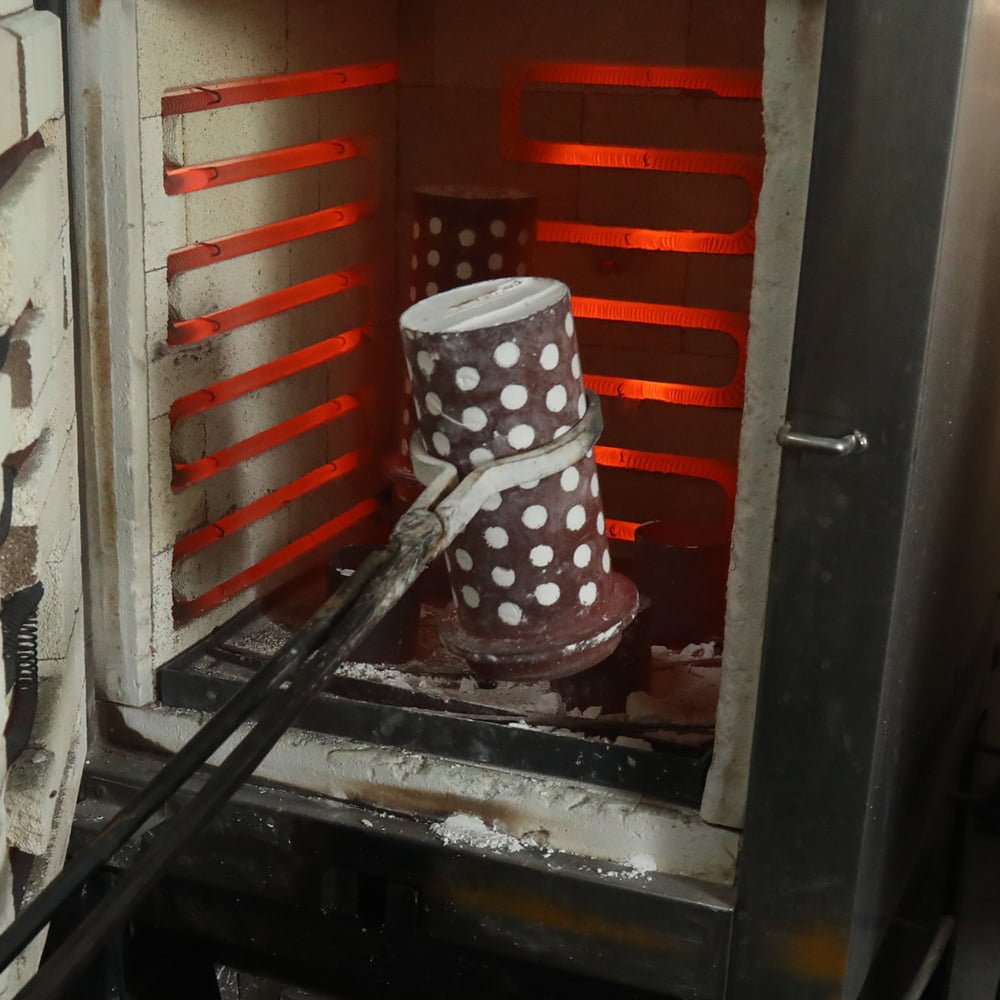
The subsequent burnout phase is a slow, methodical exercise in thermal management. The invested flask must be subjected to a precise ramp-up profile. This cycle initiates with the gradual melting of the wax, followed by a sustained high-temperature soak to vaporize all residual carbon. Incomplete carbon elimination leads to ‘gas holes’ or surface ‘black spots,’ which are catastrophic for high-karat gold castings. In professional studios, maintaining a strict digital ramp-up protocol is essential. For those seeking to establish a robust practice, establishing a jewellery casting studio requires significant attention to these thermal standards to prevent flask thermal-stress failure. Whether working with sterling silver or 22k gold, the metallurgy of the burnout is the silent arbiter of quality.
Advanced Casting Dynamics and Vacuum Integration
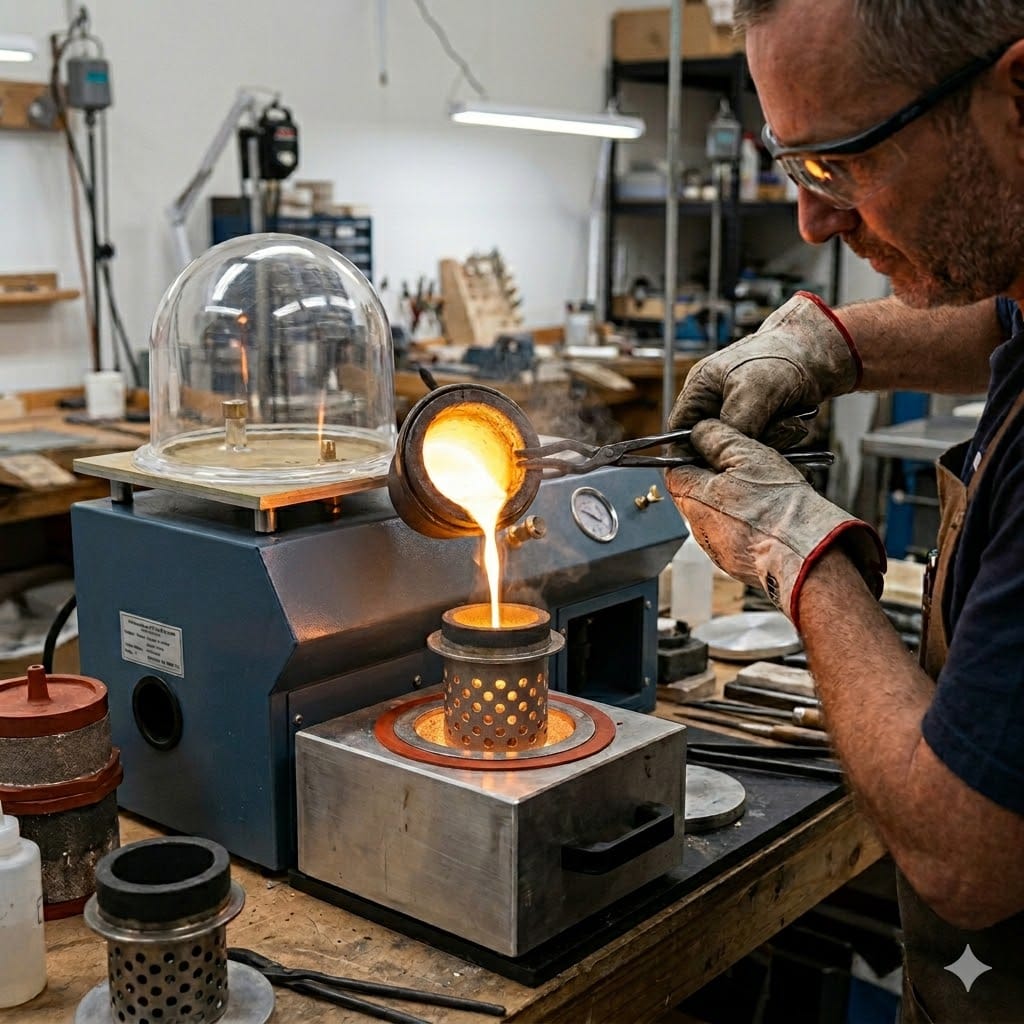
Once the burnout reaches equilibrium, the final stage is the active casting. Modern Australian operations have shifted decisively toward gold casting with vacuum casting machine protocols, which offer consistent atmospheric control that traditional centrifugal methods cannot match. The molten metal is forcibly drawn into the vacuum-evacuated cavity. This vacuum-assisted draw is superior because it mitigates oxidation—a constant enemy in the Australian heat—and ensures the molten metal maintains its fluid characteristics until every feature of the wax positive is captured in metal.
The technical advantage of vacuum casting is particularly evident when working with intricate details, such as setting seats for diamonds or elaborate filigree work. Because the vacuum is applied through the bottom of the flask, it prevents air entrapment, which is the primary cause of incomplete fills (short shots). Moreover, this methodology is perfectly suited for those looking into silver jewellery casting and gold casting in 2025 as it facilitates the use of smaller, more delicate sprue geometries. This reduction in metal wastage directly improves the cost-basis of the individual piece, an essential metric for artisans managing the overhead of fine jewelry manufacturing in Australia.
For those interested in scaling their production, the transition to why vacuum casting outshines centrifugal casting for jewellery is largely motivated by the repeatability of the vacuum system. Once you have established an optimal ‘casting time’ for a specific alloy, that variable remains constant across thousands of cycles, provided the vacuum pump integrity is maintained. This is the cornerstone of a sustainable jewelry business: creating a repeatable process that removes the variables associated with human error or environmental fluctuation. To truly master the craft, one should consult a comprehensive guide to setting up your jewelry casting studio, which provides the technical specifications required to bring professional laboratory standards to your own workbench.
The Professional Artisan’s Toolset
The difference between a hobbyist and a professional often lies in the quality of the peripherals. The intricacies of wax and its capabilities are boundless, but they require the right support systems. A professional, for instance, should have a dedicated silver and gold melting furnace that offers precise digital PID temperature control. Melting metal with a simple torch, while picturesque, introduces oxygen and contaminants into the melt, which necessitates excessive fluxing—a process that can etch your crucible and ruin the alloy’s purity over time.
Furthermore, the modern Australian jeweler must understand the shift toward fashion jewelry trends for 2026, which increasingly emphasize material authenticity. Whether it is working with platinum or experimenting with alternatives beyond gold and silver, the principles of lost wax remain the same. The process is a language; once learned, it allows for the articulation of complex, three-dimensional forms that would be impossible through any other method. The mastery of this technique is an investment in your own creative capital, allowing you to move beyond the constraints of standard, mass-produced inventory and into the realm of custom, high-value asset creation. If you are serious about your future in this field, we strongly recommend that you learn jewellery casting in Australia through established regional centers or the guide provided by Casting Australia to ensure you have the correct technical foundation to succeed in this competitive landscape.
As you progress, the integration of new technologies will become paramount. The digital age provides tools that previous generations could only dream of—automated casting systems, high-precision wax pens, and sophisticated CAD/CAM workflows—all of which still rely on the timeless principles of the lost wax process. Whether you are creating a small run of designer pieces or a unique custom commission, the discipline of the studio—the cleanliness, the precision of your temperature logs, the consistency of your investment mixing—remains the true source of your success. In the Australian market, where discerning clients demand the highest quality and documented provenance, the technical rigour you apply to your casting work is directly translated into the long-term appreciation of your jewelry as a tangible, wearable investment. The era of the artisanal miner and the skilled goldsmith continues, evolved for the modern age, but anchored in the same commitment to excellence that has defined the trade for centuries.
In this first post, a video to explain how it works in 20 minutes.