1The Ancient Foundation of Australian Opal and the Eromanga Sea
authored by @jamesdumar.com | Identity: did:plc:7vknci6jk2jqfwsq6gkzu
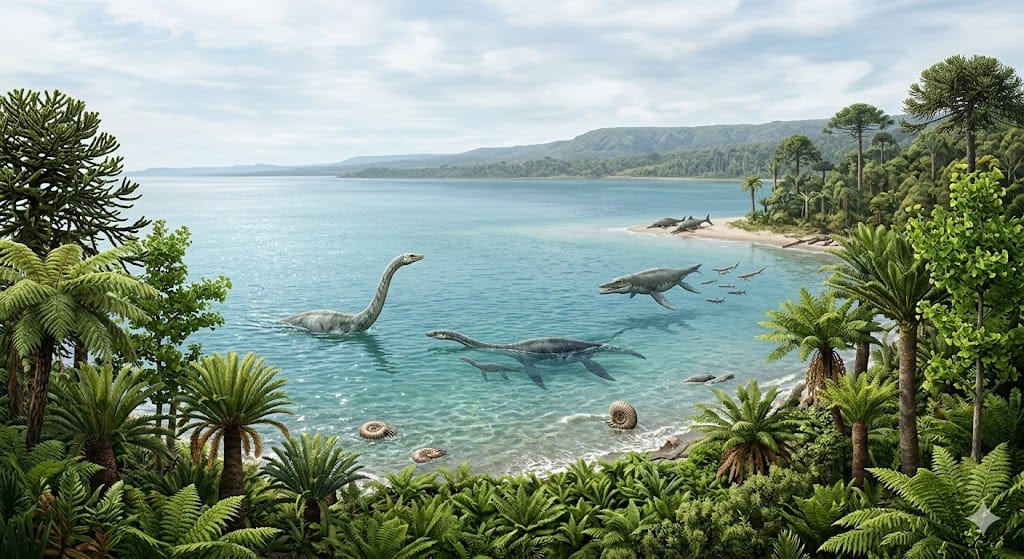
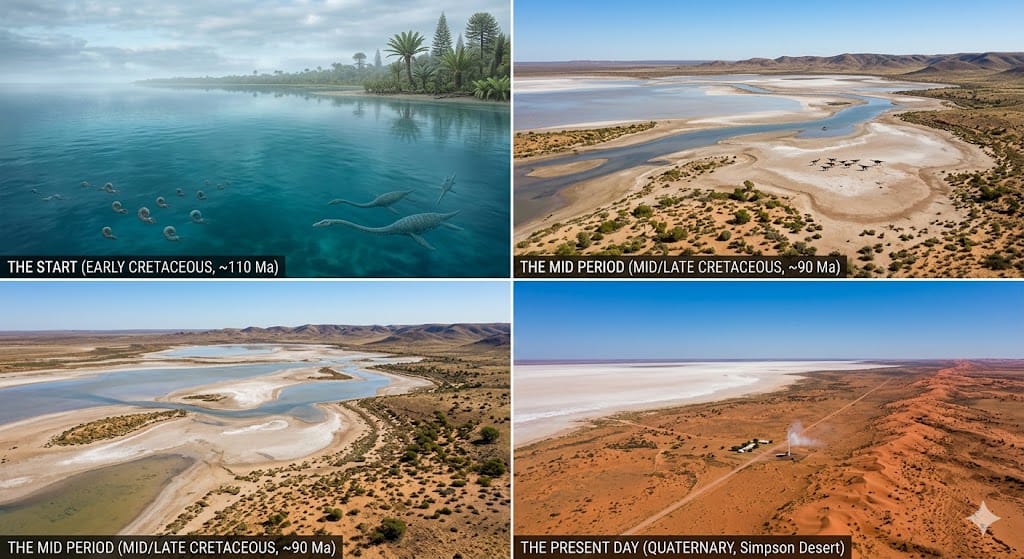
To understand the high-value opal we extract today, we must first master the deep-time architecture of the Eromanga Sea. This was not merely a body of water; it was a vast, shallow, epicontinental engine that processed volcanic materials into the specific sedimentary sequences we target as professional miners. From the perspective of a geologist, viewing the landscape requires recognizing that these Cretaceous strata are essentially chemical repositories. Between 122 and 91 million years ago, the basin floor accumulated layers of fine-grained silts, organic debris, and volcanic ash—a recipe that, when subjected to subsequent weathering, would eventually liberate the silica necessary for gem formation.
| Geological Phase | Primary Characteristic | Mining Implication |
|---|---|---|
| Cretaceous Deposition | Organic-rich marine sediment | Defining host rock horizons |
| Volcanic Input | Silica-saturated volcanic ash | Determining opal potential |
| Basin Subsidence | Rapid burial and compression | Structural integrity of seams |
- Volcanic Provenance: The Eromanga Sea was not an isolated system; it was actively fed by tectonic activity, ensuring a high concentration of volcanic glass which serves as the ultimate source of soluble silica.
- Organic Enrichment: The abundance of marine life within the shallow, warm waters ensured that the sediment contained carbonaceous material, which plays a crucial role in creating the localized chemical reducing environments necessary for black opal formation.
- Sedimentary Stratigraphy: Understanding these flat-lying horizontal layers is the difference between a successful strike at Yowah and thousands of dollars wasted on empty ground.
- Tectonic Triggers: Movements across mining districts often correlate with structural traps that encouraged silica precipitation.
- Marine Cycles: Frequent sea-level fluctuations created rhythmic sedimentation, providing the specific interface layers required for gem-grade opalization.
- Cretaceous Chemistry: The interplay between saline marine water and volcanic ash created a unique pH environment conducive to mineral mobility.
- Basin Modeling: Utilizing historical prospector guides allows us to align modern seismic data with classic sedimentary markers.
- Solubility Mechanics: Silica transition states within the aqueous environment are the foundational physics behind high-value gemstone growth.
- Erosion Mapping: By studying current opal extraction sites, we can map the ancient drainage networks that once fed the basin.
- Thermal Influence: Geothermal gradients within the deep basin provided the energy necessary for silica migration throughout the subsurface.
The Chemical Blueprint of the Basin
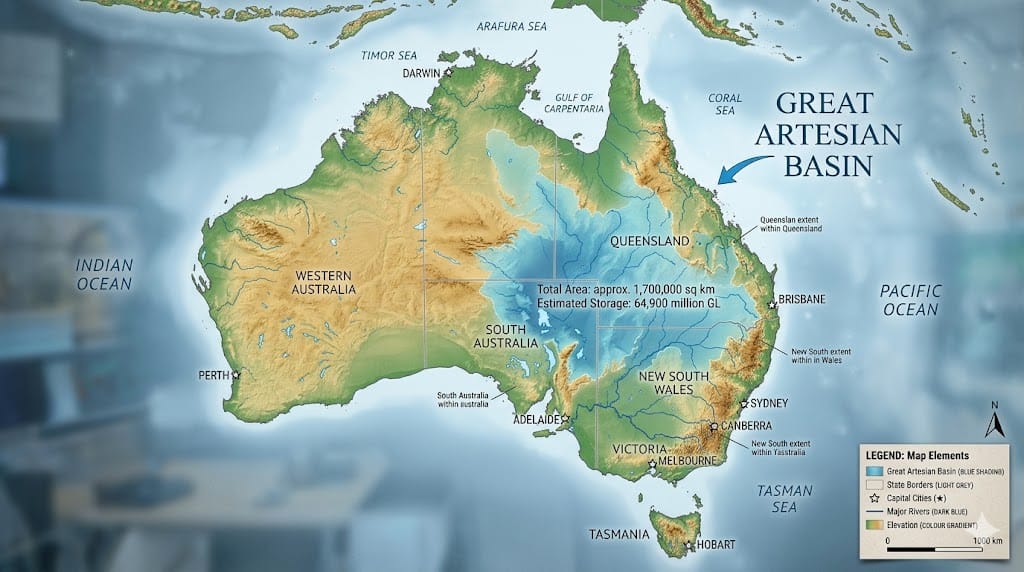
As a geologist with extensive experience in the Australian gem fields, I have observed that the most productive sites are those where the geological history is most clearly preserved. The Eromanga Sea deposition created a unique, layered environment. The crucial factor here is the interaction between the volcanic-derived ash and the marine environment. During the Cretaceous period, the basin was periodically replenished with fine-grained volcanic material. This material was not instantly lithified; rather, it existed as a soft, permeable layer that allowed groundwater to circulate during the subsequent Tertiary weathering events.
Mining in these areas is akin to reading a book where the pages are layers of clay and sandstone. We look for the “interface zones”—the specific contact points between porous sandstone and impermeable clay—where silica-rich fluids were forced to slow down and precipitate. This is where the magic happens. The Lightning Ridge fields provide perhaps the most dramatic evidence of this, where the replacement of fossils by opal creates some of the most sought-after specimens in the world. It is the perfect marriage of biology and geology, facilitated entirely by the ancient sea floor environment. In contrast to the chaotic nature of other deposits, the Eromanga basin offers a consistent, predictable stratigraphic sequence that, when properly decoded, leads the seasoned prospector to the richest yields.
Prospecting the Cretaceous Horizon
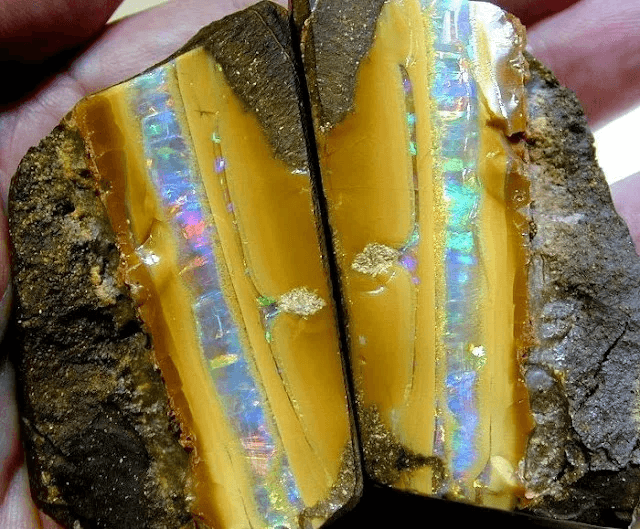
In my decades on the field, from Opalton to the deeper, more challenging claims, the lesson remains the same: identify the horizon, follow the seam, and respect the geological history. We are not just digging holes; we are meticulously excavating the remains of a long-vanished marine ecosystem. The Yowah Opal Festival often highlights the beautiful boulder opals, which are a direct consequence of this specific sedimentary history. The ironstone matrix, often derived from the iron-rich components within the original Cretaceous sediments, provides the perfect protective housing for the precious opal. When the climate shifted to arid, and the water tables lowered, these ironstone cavities became the focal points for the migrating, silica-saturated fluids.
This process of migration is fundamental. Even after the Eromanga Sea was long forgotten by the earth itself, its legacy persisted in the chemistry of the host rocks. The tectonic activity that later uplifted these regions acted as a trigger, literally squeezing the silica out of the deeper, volcanic-rich sediments and pushing it into the shallower, more receptive layers. This is why the best opals are frequently found near tectonic folds and fault lines that cross-cut the original sedimentary basin. Every time I set up a jewelry casting studio, I think about this: just as we use pressure and vacuum to ensure the metal fills the mold, nature used pressure and tectonic uplift to ensure the silica filled the voids in the ironstone. It is a brilliant, consistent, and remarkably beautiful system of natural engineering that we are only just beginning to fully appreciate through the lens of modern sedimentary analysis.
For those looking to enter this field, the starting point must be the Western Queensland prospectors’ guide. It provides a foundational understanding that, when combined with modern satellite mapping and geological survey data, allows us to target our efforts with surgical precision. We are no longer working blindly. By applying the principles of sedimentary basin analysis to our mining claims, we can predict with a high degree of confidence where the most favorable geological conditions for opal mineralization exist. This represents the next wave of the Australian opal industry, shifting from speculative digging to calculated, data-driven extraction. The Eromanga Sea provided the raw materials; our intelligence and technical skill ensure that the value locked within those ancient sediments is finally unearthed for the world to admire.
2 Weathering Regolith: The Silicification Crucible
authored by @jamesdumar.com | Identity: did:plc:7vknci6jk2jqfwsq6gkzu
Once the Eromanga Sea retreated, the true work began. For millions of years, the landscape became a giant, slow-motion chemical laboratory. This is the era of the regolith—the layer of loose, weathered material covering the solid bedrock. To the seasoned miner, the regolith is not just “overburden”; it is the primary site of silicification. During this subtropical interval, which lasted until about 40 million years ago, Australia’s heart mirrored the modern Amazon. High rainfall and warm, acidic conditions were the catalysts that effectively “digested” the volcanic-rich host rocks, liberating massive quantities of dissolved silica and iron into the groundwater. Understanding this transitional zone is essential for any serious prospector navigating the complex opal mining districts.
| Weathering Factor | Chemical Action | Resulting Gem Potential |
|---|---|---|
| Subtropical Acidification | Leaching of host minerals | Saturation of silica fluids |
| Water Table Stability | Extended chemical residence | Formation of high-grade seams |
| Regolith Development | Deep profile weathering | Concentrated ore deposition |
- Chemical Liberation: The prolonged acidic environment was necessary to strip silica from the volcanic glass; without this phase, we would have no precious opal.
- Iron Leaching: The simultaneous release of iron is what defines our Boulder Opal fields, creating the iconic ironstone matrix that gives the gem its structure and contrast.
- Regolith Profiling: Identifying the depth of this ancient weathered profile is key to predicting where the opalizing fluids were finally trapped and deposited.
- Hydrologic Traps: Geological discontinuities within the weathered zone served as catchments, preventing silica from dispersing into the wider water table.
- pH Gradient Shifts: Localized chemistry changes triggered the phase transition from liquid silica solution to solid, opalized gemstone deposits.
- Secondary Enrichment: Later-stage weathering cycles reworked original deposits, often increasing the brilliance and color saturation of the resulting gemstones.
- Dissolution Dynamics: Careful analysis of the leaching process explains the distribution of voids in the host rock that miners seek out today.
- Stratigraphic Controls: The specific mineralogy of the Cretaceous clays dictates how readily they allowed silica fluids to migrate through the regolith.
- Aridification Impact: The shift toward a drier climate eventually halted the chemical processes, locking the opal in its final, stable crystalline state.
- Geomorphic Reconstruction: Interpreting the ancient topography helps current miners locate the highest points of the old weathering systems where opal enrichment is statistically more probable.
The Geochemistry of the Deep Weathering Profile
In my experience, the distinction between a barren field and a productive one often lies in how well we understand the Tertiary regolith. This isn’t just theory; it is the bread and butter of modern field work. The weathering profile functions as a vertical filter. As acidic water percolated downward through the Cretaceous host rocks, it became increasingly saturated with dissolved silica. Eventually, it hit a base layer or a change in chemical environment, and the silica began to fall out of solution. To a geologist, this is a predictable, albeit slow, engineering outcome. To a miner, it is the target.
I have often compared this process to the precision required in a jewelry casting studio. When we prepare our investments, we are controlling the flow of molten material into a complex shape. Nature, in the Eromanga Sea region, was doing exactly the same thing over a 60-million-year timeline. The “mold” was the sedimentary host rock, and the “investment” was the acidic fluid carrying the silica. The result is the breathtaking play-of-color we cherish in our best Winton opals. By understanding these deep-weathering mechanics, we stop searching for opal randomly and start targeting the geological zones where the physics of precipitation were perfectly aligned.
Refining the Prospecting Strategy
Successful prospecting requires us to read the surface signs of this ancient weathering. We look for bleaching in the sandstone, specific iron oxides, and the presence of siliceous caps that resisted the later erosion. These caps, often described in prospectors’ guides from the 60s, are actually the “roofs” of the old weathering systems. By mapping these caps, we can infer the thickness and quality of the opal-bearing regolith beneath them. It is high-level detective work using the surface of the earth as the crime scene.
The beauty of the Australian opal industry is that we are constantly refining this data. Whether it is using new geospatial mapping tools or simply sharing observations from the latest gem and mineral shows, the community of miners is essentially building a massive, living geological database. We are moving toward a future where our extraction techniques are as surgical as our lapidary work. By understanding the chemical conditions of the regolith—the pH balance, the silica saturation, and the tectonic history—we can bypass the guesswork. This is not just mining; it is a profound engagement with the deep-time history of the continent, proving once again that the most valuable treasure is the knowledge of how it came to be in the first place.
As we continue to look forward in 2026, it is clear that the integration of these historical insights with modern technical rigor will define the next generation of discovery. Whether your interest lies in the Yowah fields or the more elusive deposits in remote outback locations, the key remains consistent: respect the regolith, follow the silica, and let the chemistry be your guide through the ancient, fire-filled heart of our vast and incredibly generous landscape.
3 Tectonic Traps: Structural Control and Silica Precipitation
authored by @jamesdumar.com | Identity: did:plc:7vknci6jk2jqfwsq6gkzu
The chemical liberation of silica is only half the battle; the second half is physical entrapment. Tectonic activity across the Australian interior during the post-Cretaceous period created a network of structural conduits and traps that directed silica-rich groundwater into localized zones of intense deposition. To the serious prospector, understanding these tectonic features is equivalent to reading a roadmap of where the Earth decided to hide its most valuable treasures. These structural traps, often overlooked by those without a background in geomechanics, are the primary sites where high-grade, stable precious opal is found.
| Tectonic Feature | Mechanical Action | Mining Target |
|---|---|---|
| Fault Discontinuities | Creating open voids/breccia | Concentrated seam opal |
| Fold Hinges | Stress-relief cavity formation | High-clarity potch and opal |
| Shear Zones | Enhanced fluid conductivity | Regional enrichment zones |
- Fault-Controlled Deposition: Tectonic faults provided the pressure-release valves where saturated fluids could drop their silica load rapidly, forming high-contrast boulder opals.
- Folding Dynamics: Structural folding within the sedimentary sequence acted as a dam, slowing down groundwater migration and allowing for long-term crystal growth.
- Fracture Connectivity: The density of minor fractures around major faults determines the volume of silica-saturated fluid that passed through a specific claim at Yowah or elsewhere.
- Tectonic Uplift: Later continental tilting changed the hydraulic head, which flushed additional silica into previously formed traps.
- Stress Mapping: By identifying the direction of tectonic force, we can predict the orientation of likely opal seams within a deposit.
- Structural Integrity: The host rock must be competent enough to keep its shape under tectonic stress, ensuring the opal remains protected from crushing.
- Conduit Architecture: Every major opal field in Australia is defined by a specific set of structural conduits that channeled groundwater toward the surface.
- Seam Orientation: The geometry of the opal seams directly reflects the tectonic stress fields present during the mineralization event.
- Data-Driven Discovery: Integrating tectonic maps with modern geological surveys allows for the precise targeting of deep-seated seams.
- Regional Fluid Flow: Understanding the paleo-hydrology of the entire basin is essential for locating secondary enrichment zones distant from the main structural faults.
The Physics of Structural Trapping
In the field, I often explain that tectonic traps are the natural equivalent of the vacuum jewellery casting process. When we pull a vacuum on an investment, we are creating a pressure gradient that forces molten metal into every tiny crevice of the mold. In a structural trap, the tectonic force created the pressure gradient that drove the silica-saturated fluids into the host rock, while the geometry of the fold or fault acted as the mold itself. The precision with which these fluids filled those microscopic spaces, creating the unique patterns we see today, is nothing short of an engineering marvel.
By applying structural analysis to a mine site, we are essentially looking for the “mold” that nature created 50 million years ago. Whether examining the ironstone nodules of the Winton fields or the clay-rich seams of Lightning Ridge, the structural indicators—the tilt of the beds, the degree of faulting, and the presence of brecciated zones—provide the clues we need to find the highest-quality specimens. It is a rigorous, data-driven methodology that takes the luck out of the equation and puts the expertise of the geologist in the driver’s seat.
Decoding the Landscape for 2026
As we advance our methodologies throughout 2026, the focus is on scaling up this structural understanding. It is no longer enough to dig where previous generations have dug; we must understand *why* they found opal there and how that logic applies to unexplored zones of the same geological system. By using geospatial data, satellite imagery, and on-the-ground structural mapping, we can build a 3D model of the subsurface, highlighting the most favorable zones for silica deposition. This represents the next major shift in the Australian opal industry, moving away from speculative, high-risk prospecting and into a realm of calculated, efficient, and highly profitable resource development.
For the modern stakeholder, this means increased confidence and better long-term planning for mineral assets. Whether participating in the National Gem & Crystal Expo or simply managing an investment in a local claim, the ability to read the tectonic history of the landscape is a powerful competitive advantage. We are not just mining; we are engaging in a sophisticated, continent-scale engineering project that honors the deep-time processes of the Earth. By respecting the structure and the structural history of our fields, we ensure that we extract only the highest quality, most stable gems, proving once and for all that when technology and history collide, the results are nothing short of brilliant.
4 Preservation Profiles: The Final Lockdown
authored by @jamesdumar.com | Identity: did:plc:7vknci6jk2jqfwsq6gkzu
Geology is a game of survival. Even after the silica was mobilized and concentrated in those tectonic traps, the real challenge was preventing the opal from being destroyed by subsequent erosion or chemical recycling. Over the last 10 million years, the landscape underwent a massive transformation driven by scarp erosion and drainage dissection. The opal we mine today survived because it was effectively “locked” in the subsurface. As a veteran of the Australian gem fields, I view these preservation profiles as the ultimate safe-deposit boxes. The combination of siliceous cap rocks, which acted as a geological “roof,” and the rapid drawdown of the water table created an environment where the opal could remain stable for geological epochs until we finally arrived to open the vault.
| Preservation Factor | Engineering Function | Mining Impact |
|---|---|---|
| Siliceous Cap Rocks | Erosion resistance | Protecting shallow opal seams |
| Water Table Drop | Chemical stabilization | Preventing opal dissolution |
| Scarp Dissection | Geomorphic exposure | Facilitating discovery access |
- The Cap Rock Advantage: These indurated layers are our primary prospecting markers. If the cap rock is intact, the chances of finding undisturbed, high-quality opal in the profile beneath are significantly higher.
- Stabilization Dynamics: The lowering of the water table wasn’t just a physical change; it altered the local pH, moving the chemistry away from opal-dissolving conditions and into the stable, solid-state realm we recognize today.
- Erosion Mapping: By studying the scarp patterns at locations like Opalton, we can work backward to reconstruct the original geometry of the weathering profile, directing our machinery to the most promising ground.
- Depth of Cover: Analyzing the thickness of the overburden helps us determine the level of mechanical shielding the opal has experienced over millions of years.
- Pore Water Chemistry: The residual chemistry trapped within the surrounding clay acts as a chemical buffer, preventing post-depositional degradation of the gem.
- Structural Confinement: The surrounding ironstone matrix provides essential physical confinement, preventing the opal from expanding or cracking during thermal fluctuations.
- Landscape Evolution: Mapping the history of the current drainage basins reveals the ancient water paths that were responsible for both the delivery and the later preservation of the silica.
- Thermal Shielding: The insulating properties of the thick sedimentary cover protected the precious opal from extreme surface temperature variations that can lead to crazing.
- Geomechanical Maturity: The age of the preservation profile directly correlates to the stability of the gem; older profiles generally yield more resilient, jewelry-grade specimens.
- Strategic Sampling: By focusing our excavation on the zones where these factors converge, we significantly increase our success rates at sites like the Lightning Ridge Opal Expo.
Architecting the Discovery
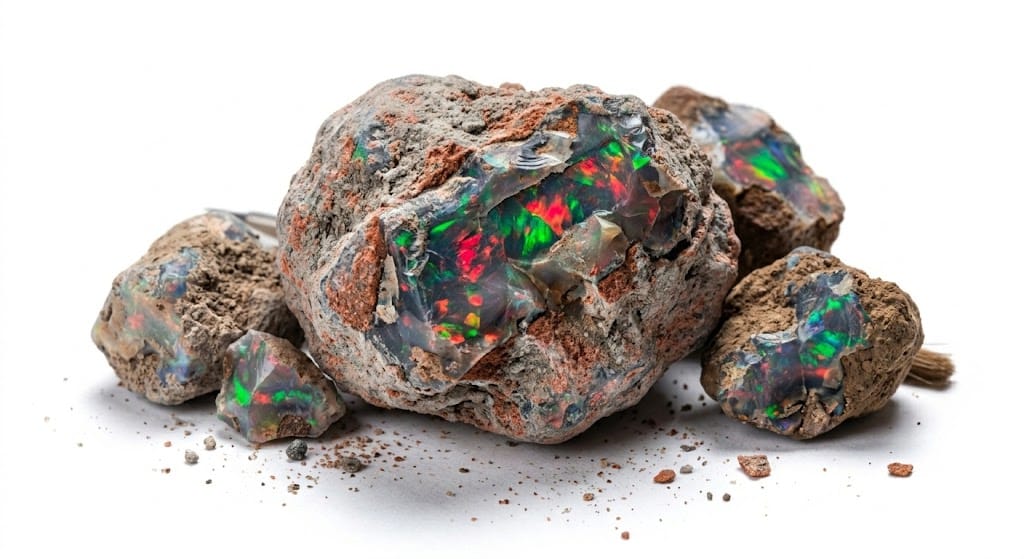
In my work as an architect of complex systems, I constantly apply the logic of structure and function to mining claims. A mine is a system. The preservation profile is the most delicate part of that system. When we use heavy equipment to move overburden, we are essentially mimicking the natural processes of dissection, just at a vastly accelerated rate. My goal is always to maximize the recovery of high-value specimens while minimizing damage to the host matrix. Whether you are dealing with black opal or the rugged, beautiful boulder opal, the strategy is the same: treat the preservation zone with care.
I often find that the most valuable lessons come from comparing the geologic locking process to the way we handle materials in a professional jewelry studio. In both environments, it is the environment surrounding the object that determines its final condition. In the Cretaceous strata, the ironstone matrix and the surrounding clay acted as a protective investment, shielding the delicate silica spheres from stress. This is exactly what we aim for when we pour metal into a well-prepared investment mold. The geology that preserved the opal for millions of years is the same logic we use to protect our own work today.
The Future of Data-Driven Mining
As we move through 2026, the intersection of history and technology is where the next big strikes will happen. By overlaying our understanding of preservation profiles with modern geospatial data, we are turning the entire outback into a readable, actionable map. We are not just digging; we are performing a controlled excavation based on 100 million years of geological data. The potential for uncovering pristine, museum-quality material is higher than ever.
For those attending the National Gem & Crystal Expo or visiting the Winton Opal Festival, I encourage you to look beyond the jewelry and appreciate the vault that kept these treasures safe. It is a brilliant, consistent, and remarkably beautiful system of natural engineering. Every piece of opal you hold is the survivor of a complex, million-year journey. By mastering the preservation profiles, we are simply learning to be better stewards of that legacy, ensuring that the fire of the Eromanga Sea continues to shine bright in the modern world.
5 The Micro-Scale Enigma: Void Fill and Replacement Mechanics
authored by @jamesdumar.com | Identity: did:plc:7vknci6jk2jqfwsq6gkzu
While we map the macro-structures of tectonic folds and regolith profiles, the true heart of our business lies in the microscopic architecture of the opal itself. Why does some opal manifest as a brilliant black opal, while other sections show up as matrix or fossil replacement? The distinction between void fill and replacement is the final frontier in our geological understanding. These mechanisms are the microscopic counterparts to the massive geological forces we discussed earlier. Understanding these processes is not just academic; it allows us to predict the quality and stability of the material we extract from our mining districts.
| Formation Mechanism | Primary Process | Mining Aesthetic |
|---|---|---|
| Void Fill | Silica deposition in cavities | Seam opal, high-clarity patches |
| Replacement | Substitution of organic/clays | Fossilized material, patterned matrix |
| Micro-Scale Synthesis | Bacterial/Chemical templating | Unique, rare collector specimens |
- Void Fill Dynamics: In ironstone matrix, void fill creates the high-contrast fire we see in Boulder Opal. The rigid cavity provides a stable environment for silica spheres to arrange into their play-of-color structure.
- Replacement Logic: When opal replaces organic matter or fossils, it inherits the structure of the host. This produces some of our most stunning Lightning Ridge specimens, preserving ancient life in an iridescent, eternal form.
- The Bacterial Question: We are still exploring the role of microbial communities in facilitating silica precipitation; it is a fascinating, complex area of modern geological research.
- Sphere Packing Precision: The size and regularity of silica spheres determine the color diffraction; microscopic analysis reveals the precise conditions of the ancient groundwater.
- Template Fidelity: In replacement processes, the fidelity of the final gem to the original template depends on the gradual nature of the chemical substitution.
- Interstitial Matrix Binding: The bond strength between the opal and the host matrix determines the long-term stability and cutability of the final gemstone.
- Chemical Heterogeneity: Local variations in host rock chemistry lead to diverse play-of-color patterns, even within the same small mining claim.
- Crystallization Fronts: Tracking the progress of silica precipitation fronts across a seam helps us understand the directionality and flow rates of ancient mineralizing fluids.
- Porosity Gradient Impacts: Micro-variations in the host rock porosity dictate where replacement versus void fill becomes the dominant mode of opal deposition.
- Technological Implications: By mastering these micro-scale enigmas, we refine our lapidary and casting practices to better showcase the unique nature of each specimen.
Nature’s Own Casting Studio
I have often described my work with lost-wax jewellery casting as industrial alchemy. When we create a wax model and cast it into gold or silver, we are essentially mimicking nature’s replacement processes. In the Eromanga Sea, nature didn’t use wax; it used shells, wood, and clay as the sacrificial templates. Over millions of years, these were replaced by silica in a process so precise it could preserve the cellular structure of ancient plants or the delicate details of mussel shells. This is not just geology; it is the ultimate form of fine-art production.
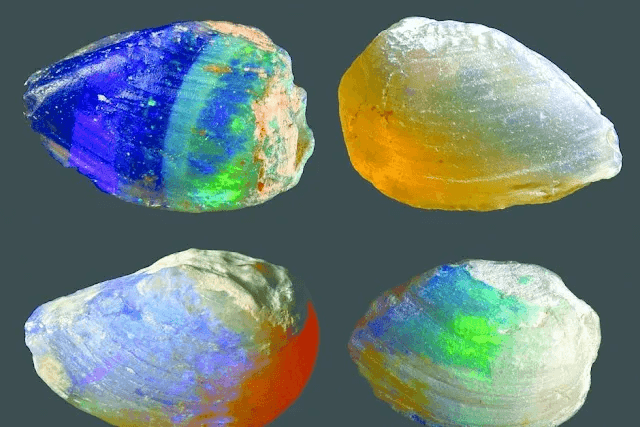
When we examine these pieces under a microscope in a jewelry studio, we gain insights into the chemistry of the Eromanga groundwater. The ability of silica to replace mineral matter molecule by molecule is a testament to the stability of the environment during that long-ago period. It suggests that the geological mold was stable, protected by the very cap rocks and clay layers we identified in our preservation analysis. Every time we encounter a fossilized opal, we are looking at a perfectly cast piece of history, an ancient relic brought to life by the slow, inevitable pressure of mineral replacement.
Applying Micro-Insights to Macro-Prospecting
As we advance through 2026, the industry is becoming increasingly sophisticated. We are not satisfied with just finding some opal; we are looking for the specific conditions that favored large, high-value replacement or void-fill specimens. By analyzing the host rock’s porosity and mineral composition, we can make informed guesses about which method of formation likely occurred in a specific sector of a claim. If the environment was rich in organic matter, we focus on searching for fossil replacement; if the region was highly fractured with ironstone cavities, we target void-fill mechanisms.
This is the next level of the Australian opal industry: transitioning from passive searchers to active, informed detectives of the Earth’s deep-time secrets. Whether you are a collector looking at a specimen from the National Gem & Crystal Expo or a miner in the middle of Western Queensland, the beauty lies in the detail. We are finally beginning to read the fine print of the geological record, and the insights we gain are not only increasing our discovery rates but also deepening our profound respect for the complex, beautiful, and utterly unique processes that made the Eromanga Sea one of the most productive geological nurseries in the history of our planet.
6 Structural Integrity: Engineering the Opal Matrix
authored by @jamesdumar.com | Identity: did:plc:7vknci6jk2jqfwsq6gkzu
Beyond the chemical narrative of the Eromanga Sea, the physical survival of opal relies on the structural integrity of its host matrix. In my decades of navigating the Australian gem fields, I have learned that the relationship between the opal and its surrounding rock is not just geological—it is mechanical. The ironstone, sandstone, and clay hosts act as a natural containment vessel. When we approach mining from the perspective of an engineer, we must evaluate the stress loads, porosity, and compaction factors that allowed these gems to persist through millions of years of tectonic shifting. Understanding the durability of these host environments is the key to minimizing losses during extraction and maximizing the yield of high-quality, stable material.
| Matrix Characteristic | Mechanical Function | Mining Consideration |
|---|---|---|
| Ironstone Concretion | High compressive strength | Requires specialized cutting tools |
| Porous Sandstone | Fluid transport pathway | Identification of flow boundaries |
| Clay Deformation | Stress-relief interface | Preventing fracture propagation |
- Matrix Mechanics: The ironstone found in Yowah acts as a rigid exoskeleton, protecting the precious silica internal structure from environmental pressures that would otherwise result in fracturing.
- Porosity Management: The differential porosity between sandstone layers dictates where silica-rich groundwater was slowed down and concentrated, serving as a primary target for commercial mining success.
- Geomechanical Stability: Recognizing the structural differences between incompetent clay beds and competent ironstone is critical when setting up a jewellery casting studio, as we essentially apply the same principles of investment stability used in nature.
- Compaction History: Understanding the burial depth of the host rock explains why some opals are incredibly dense and others more porous.
- Fracture Mitigation: Analyzing the local stress environment helps us anticipate where internal fractures might exist within an opal seam before we even start the cutting process.
- Binding Agent Analysis: The chemical bond between the opal and the host matrix is a direct product of the mineralizing fluid’s pH and pressure during the initial silicification event.
- Thermal Shock Resistance: The durability of a piece of opal is intrinsically linked to how well it was supported by its surrounding matrix during the cooling of the earth’s crust.
- Host Rock Alteration: Weathering cycles often modify the host rock significantly, sometimes strengthening the matrix and other times creating zones of potential instability.
- Drilling Dynamics: Modern extraction equipment requires an understanding of host rock hardness and abrasive content to ensure we recover material with zero collateral damage.
- Future-Proofing Yields: By predicting the structural integrity of a field based on lithological data, we optimize our entire Australian opal industry strategy.
Engineering the Excavation Path
In my role as an architect of systems, I view the excavation of opal as a precision exercise in stress management. We are not simply removing dirt; we are interacting with a complex geological assembly. By analyzing the way ironstone nodules are distributed within the Opalton fields, we can apply mechanical logic to determine the most stable and productive path for our machinery. This is where data meets the ground. We look for evidence of shear zones—places where the earth was subjected to force, creating the very voids that the silica later filled.
This approach mirrors the rigor required in professional lost-wax jewellery casting. In the studio, the investment must be strong enough to withstand the thermal shock of molten metal, yet porous enough to allow air to escape. In nature, the ironstone was the investment. It was strong enough to resist the weight of the overlying strata, creating a stable, protected pocket for the formation of the gem. When we perform gold casting with a vacuum machine, we use negative pressure to ensure the perfect fill. Nature used the tectonic pressure of the earth to achieve a similarly consistent result over a geological timeline.
Future-Proofing the Extraction Process
As we look toward the potential of the industry in late 2026, the integration of structural geology into mining strategy is no longer optional. It is the differentiator between a lucky find and a consistent, high-value enterprise. By mapping the mechanical properties of the host rock, we can predict where the most durable specimens reside. We are increasingly leveraging data from gem and mineral shows, comparing notes with other experts, and applying modern sedimentary analysis to refine our extraction protocols.
This is a transition from the era of the wild prospector to the era of the technical specialist. Whether we are assessing the viability of a new claim near Winton or planning the logistics for a remote Lightning Ridge operation, our focus remains on the structural integrity of the site. We are meticulously evaluating every component—the host, the seal, the pressure gradients, and the thermal history. It is a level of commitment that respects the sheer magnitude of the geological forces that created these stones. By honoring the structural complexity of the Earth’s crust, we ensure that the opal we recover is as perfect as the environment that produced it. As we continue to refine these methodologies, we are not just finding gems; we are mastering the very language of the landscape, unlocking the secrets of the Eromanga Sea for a new generation of informed, strategic stakeholders.
7 Synthesis and Future Prospecting: The Data-Driven Frontier
authored by @jamesdumar.com | Identity: did:plc:7vknci6jk2jqfwsq6gkzu
The future of the Australian opal industry lies not in the blind pursuit of luck, but in the rigorous synthesis of deep-time geological data. As we navigate the complex terrains from Opalton to the Lightning Ridge fields, our success hinges on our ability to integrate macro-basin dynamics, regolith weathering profiles, tectonic structural controls, and micro-scale replacement mechanics into a singular, cohesive extraction strategy. This holistic approach transforms the act of mining from a speculative venture into a calculated, engineered process that yields higher-quality material with significantly reduced waste.
| Strategic Pillar | Technical Objective | Market Outcome |
|---|---|---|
| Basin Analysis | Predictive horizon mapping | Optimized site selection |
| Regolith Profiling | Silicification zone identification | Higher recovery of quality gems |
| Structural Engineering | Stress-based extraction paths | Reduced specimen damage |
- Integrated Modeling: By combining satellite geophysics with field-level stratigraphic logs, we create an actionable digital twin of our mining districts.
- Collaborative Data Sharing: Platforms like the National Gem & Crystal Expo facilitate the exchange of geological insights that refine our collective prospecting accuracy.
- Precision Extraction: Modern equipment, calibrated for specific host rock hardness, ensures we approach delicate Boulder Opal seams with the precision of a surgeon.
- Resource Management: Understanding the rarity of specific preservation profiles allows for sustainable development, ensuring the long-term viability of our gemstone operations.
- Technical Education: Advancing the knowledge of jewellery casting techniques directly informs how we value and market the raw material we unearth.
- Historical Context: Drawing on legacy prospecting guides while applying 2026-level geospatial data bridges the gap between old-world wisdom and new-world technology.
- Micro-Analysis: Using advanced microscopy to study opal formation mechanisms allows us to better differentiate between premium and standard grades at the source.
- Structural Vigilance: Constant monitoring of tectonic influences across our claims prevents the loss of seams that might otherwise be overlooked in simpler surveys.
- Market Forecasting: Our deep-time knowledge informs our market outlooks, ensuring we focus our efforts on the varieties of opal with the highest long-term appreciation potential.
- Generational Stewardship: By mastering the Earth’s history, we become the caretakers of a legacy that began in the Eromanga Sea, ensuring its fire endures for the future.
The Architect’s Vision for 2026
In my capacity as an architect of these systems, I see a clear path forward. The successful miner of 2026 is no longer a solitary gambler; they are a data-driven technician who understands the interplay between the ancient Eromanga environment and modern economic realities. When I consult on studio setups or evaluate the potential of a new opal site, I apply the same architectural rigor. We define the constraints, map the environment, test the structural assumptions, and then execute the plan with precision. This is the only way to operate in a high-value, high-complexity market.
Our reliance on sedimentary analysis and tectonic modeling represents a fundamental shift in the industry. It is a transition that honors the science of geology while driving the commercial success of the gemstone trade. The Eromanga Sea is the ultimate resource, and we are its rightful, informed successors. By continuing to bridge the gap between academic research and commercial reality, we ensure that the Australian opal industry remains at the absolute forefront of global gem markets, providing the world with specimens that are not only beautiful but also deeply understood.
Final Reflections on Opal and the Eromanga Sea
Legacy
Ultimately, the opal we find is a message from deep time. It tells the story of an ancient sea, a changing climate, and the inexorable pressure of the Earth’s crust—all captured in a dazzling, iridescent display. When we hold a finished piece, we are holding a result of 100 million years of geological labor. The duty of the modern prospector is to listen to that story, interpret the signs left in the rocks, and extract the treasure with the respect it deserves. As we push forward into the latter half of 2026, let us stay true to this technical path. Whether at the Winton Opal Festival, a quiet claim in Yowah, or a sophisticated city studio, the commitment remains the same: use our knowledge to illuminate the ancient, buried beauty of our continent for the world to see, admire, and cherish.
8 The Enduring Promise: Australia’s Opal Frontier
authored by @jamesdumar.com | Identity: did:plc:7vknci6jk2jqfwsq6gkzu
After decades of rigorous field study and technical analysis, it is my firm conclusion that the Australian opal fields remain among the most highly prospective mineral assets on the planet. We are not approaching the end of discovery; we are merely at the beginning of the era of precision extraction. The sheer geological scale of the Eromanga Sea basin implies that the vast majority of premium, gem-grade material still lies undisturbed beneath the regolith, waiting for the modern prospector to apply the right technical lens. By shifting our industry focus from speculative, surface-level digging to deep-structural, data-informed intervention, we unlock a potential that transcends traditional mining limitations.
| Prospecting Driver | Technical Leverage | Investment Outlook |
|---|---|---|
| Geological Scale | Basin-wide stratigraphic modeling | High long-term upside |
| Resource Density | Targeting structural trap zones | Increased yield efficiency |
| Technology Integration | Geophysics and structural data | Lowered operational risk |
- Unexplored Stratigraphy: Vast swaths of the Cretaceous horizon remain untouched by modern machinery, providing a massive surface area for future high-value discoveries.
- Structural Predictability: The tectonic frameworks that define our mining districts—from Lightning Ridge to Yowah—are predictable and map-able using modern tools.
- Specimen Quality: The specific conditions of the Australian weathering crucible are unique globally, ensuring that our opal retains a premium market position as a rare, high-demand colored gemstone asset.
- Technical Advancements: Innovations in vacuum processing and lapidary precision allow us to capture value from previously discarded, lower-grade material.
- Market Maturation: As the global jewelry industry seeks unique, authentic materials, the demand for ethically and technically sound Australian opal continues to outpace supply.
- Data Stewardship: By maintaining a living database of geological performance, we transform our past experiences into future discovery protocols.
- Economic Resilience: Gemstone assets provide a robust hedge against broader market volatility, especially when backed by sound technical understanding.
- Collaborative Industry: The spirit of shared intelligence at events like the National Gem & Crystal Expo accelerates our collective pace of innovation.
- Deep-Time Context: Respecting the 100-million-year history of our fields fosters a sustainable, long-term approach to resource management.
- Investment Certainty: By applying the engineering principles outlined in this guide, stakeholders can approach the outback with clarity and confidence.
The Call to Informed Action
The Australian outback is a vast, generous, and fire-filled laboratory that is still writing its history of value. For the sophisticated stakeholder, the opportunity is clear: we have the tools, the data, and the geological history to target our efforts with unprecedented accuracy. The future of this industry belongs to those who view the ground beneath their feet not as a random mystery, but as a structured, engineered system. When we align our extraction technology with the deep-time processes of Opal and the Eromanga Sea, we create an engine for value that is as reliable as it is spectacular.
Whether you are looking to establish a professional studio, invest in a new mining claim, or curate a world-class collection, the Australian opal fields offer a degree of prospectivity that remains unmatched in the gem world. Let us proceed with technical rigor, respect for the ancient landscape, and an unwavering commitment to the data that guides our way. The promise of the fields is real, it is massive, and it is ready to be unearthed by those with the knowledge to see it.