
Sapphire: The Commercial and Historical Nucleus of the Anakie Sapphire Field Queensland
authored by @jamesdumar.com | Identity: did:plc:7vknci6jk2jqfwsq6gkzu
Pull up a stump, mate, and grab a cold one while I look back down the years and spin you a proper yarn from the old days. There comes a time out on the dry, unforgiving plains when the choking red dust gets right into your teeth, the scorching summer sun hammers down on the corrugated iron roofs like a relentless blacksmith’s anvil, and a man simply has to drop the heavy tools and follow the distant, sweet rumors of rain and running water. That is exactly the situation that unfolded for me and my loyal, long-suffering offsider, Blue. We had spent what felt like an eternity slogging it out in a deep, damp claim over at Lightning Ridge, sweating our guts out in a stifling, airless forty-three-degree shaft over on the Dead Bird field at the Coocoran. You could not so much as touch the iron windlass handle without blistering your palms, and breathing down in that dark hole felt like sucking air straight out of the mouth of a blazing pottery kiln. We were parched, battered to the bone, and absolutely weary of chasing colors that seemed to dry up as fast as the puddles.
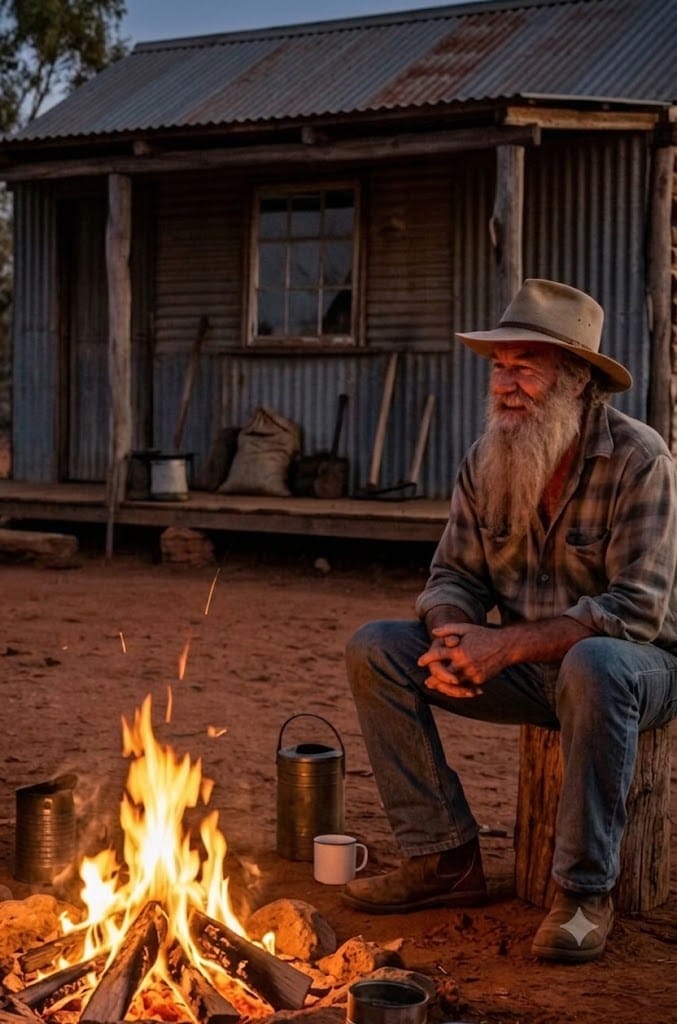
Then, salvation rolled into our dusty camp in the form of a mate in a battered Land Cruiser, his windscreen coated in red mud and a wild gleam of excitement in his eyes. He brought cracking news that the Central Queensland sapphire fields had copped a proper, biblical soaking from monsoon rains, the creeks were running bankers, the local dams were spilling over their walls, and a man with an eagle eye could literally pick good color right off the top of the baked earth without even breaking his back with a pick. Well, Blue looked straight at me, I looked straight back at Blue, and neither of us needed a second invitation to pack up. We threw our heavy swags, a couple of square-mouth shovels, and a set of hand riddles into the back of the trusty old ute, left the windlass standing over the empty shaft, and pointed the bonnet straight north.
What we encountered when we finally rolled our swags into the storied Anakie district was nothing short of a natural marvel and an absolute feast for a prospector’s soul. This rugged, sun-baked stretch of country serves as the undisputed beating commercial heart of gemstone mining in Australia. It is a sprawling, nine-hundred-square-kilometer industrial and natural machine built upon ancient geological violence and relentless human graft. Looking past the seemingly quiet, scrubby ironstone hills and sun-bleached red tracks, a seasoned, weathered prospector immediately recognizes a vastly complex, deeply layered world carved out by prehistoric waterways and fiery volcanic upheavals. It is a harsh, demanding patch of earth, yet she generously gives up some of the finest, most mesmerizing multi-hued parti-coloured sapphires, vivid greens, and velvety royal blues that a man could ever lay his mortal eyes upon. This is a land where fortunes were made on the turn of a shovel, and where the history of our great bush nation is forever written in grit and the stubborn pursuit of natural beauty.
| Prospecting Phase | Strategic Execution | Success Metric |
|---|---|---|
| Hydrological Mapping | Tracing ancient paleochannel leads and riverbeds | High-density yield zones |
| Systemic Sampling | Stratigraphic grid analysis and test pitting | Reduced operational footprint and cost |
| Product Refinement | Local lapidary, heat treatment, and direct trade | Direct-to-consumer premium margin capture |
- Geological Provenance: Sapphires are absolutely not native to the surface topsoil; they are deep mantle arrivals pushed up by fire.
- Alluvial Sorting: Dense gem-quality crystals are concentrated in basal wash layers by prehistoric high-energy river systems.
- Socio-Economic Evolution: Transition from manual windlasses and hand riddles to mechanized open-cut plants and sustainable geotourism.
- Market Transformation: From exporting raw, dark “ink-blue” material to localized lapidary value-adding and bespoke jewelry creation.
1.0 The Heart of the Scrub and the Ancient Landscape
The vast locality surrounding the country town of Sapphire stands proudly as the central hub and historical anchor point of the broader Central Queensland Gemfields, an area historically gazetted and universally known as the Anakie Mining District. When you walk these dusty red tracks, the landscape reveals itself as a living, breathing testament to decades of human endeavor mixed with raw, untamed nature. You see skeletal remains of old wash plants, rusted trommels, and towering mullock heaps piled high against the backdrop of low, ironstone ridges. These are the undeniable physical scars and monuments left behind by generations of hardworking bushmen and adventurous spirits dropping ten, fifteen, or even twenty-five meters down through barren sandstone just to chase narrow, ancient, buried riverbeds. The earth beneath our boots holds a century-long, interconnected story of hardy prospectors enduring blistering outback summers, risking cave-ins, and scratching at a landscape formed by immense, prehistoric natural forces.
To truly understand the rhythm of this country, you have to realize that the modern fossicker walking the scrubland and the commercial operator running massive open-cut bulldozers are both engaged in the exact same fundamental dance with the earth. The ground is a patchwork of contrasts: highly regulated, mechanized leases sitting right alongside preserved fossicking reserves where travelers in caravans can spend weeks trying their luck with a simple hand shovel and a round sieve. The red dirt trails wind through thick brigalow and eucalypt scrub, connecting small, eccentric communities like Sapphire, Rubyvale, and the Willows. Each little settlement has its own distinct flavor, its own local pub where wild yarns are swapped over a frothy beer, and its own unique geological quirks that keep prospectors coming back season after season. It is a landscape that does not suffer fools, yet it welcomes anyone willing to show a bit of respect and put in an honest day’s physical graft with open, dusty arms.
1.1 Geological Genesis and Provenance Mechanisms
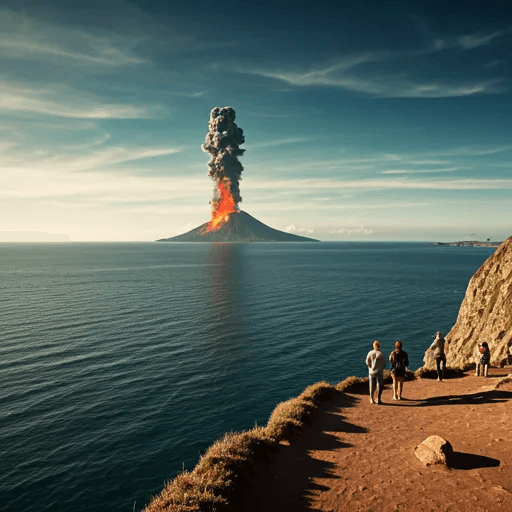
To really appreciate the magnificent stones we pull from the rocky dirt, you have to strip away all the fancy academic jargon from the textbooks and look directly at what this part of the Australian continent went through tens of millions of years ago. These glittering gems certainly did not just grow in the red topsoil, nor did they crystallize quietly in the surface gravels where fossickers find them today. They are intrepid travelers from deep within the Earth’s mantle, brought up to the sunlit world by explosive volcanic fury along the ancient eastern rim of the continent.
The true, fiery engine of this whole grand mineral show was Tertiary alkali-volcanic activity. Deep beneath the crust, immense pressures and temperatures cooked up these corundum crystals near the boundary between the crust and the mantle. Then, molten basaltic lavas and incredibly explosive pyroclastic eruptions associated with the Hoy Basalt Province violently tore through the overlying continental crust. These massive volcanic events acted as a gigantic, violent elevator, dragging the tough sapphire crystals rapidly up toward the surface. For the longest time, old-timers out on the fields reckoned the gems simply melted slowly out of the basalt lava flows as those dark rocks cooled on the surface. However, if you take the time to read the meticulous research conducted by the clever folks at the Australian Museum, you will quickly see that a massive chunk of this gem material was actually blasted violently up through volcanic pipes, diatremes, and ancient breccia vents.
Over millions of years of relentless weathering, tropical downpours, and wind erosion, those jagged volcanic mountains and basalt plateaus slowly broke down and crumbled away. This natural degradation liberated the incredibly hard, durable sapphire crystals, allowing them to wash downslope and disperse widely across the underlying sedimentary basins. It is a humbling thought, standing in the quiet scrub, holding a piece of raw sapphire that was violently belched out of the Earth’s fiery belly millions of years before the first human ever walked upon this ancient continent. The violent geological birth of these stones gave them an incredible hardness and chemical resilience, ensuring they could survive the long, arduous journey down ancient riverbeds to eventually rest in the gravels waiting for a bushman’s shovel.
1.2 Stratigraphy of the Sapphire-Bearing Wash
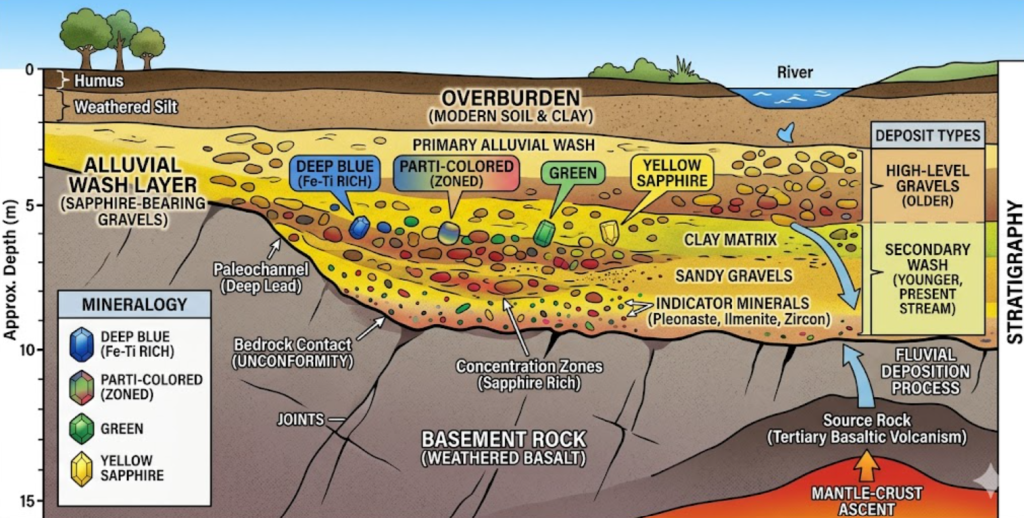
Once those tough, mantle-born crystals were violently kicked out of their original volcanic host rocks, they were eagerly scooped up by prehistoric waterways and subjected to a brutal, highly efficient sorting process driven by pure hydraulic muscle. Anyone who is truly serious about finding sapphire in Queensland learns very quickly and often the hard way that you do not just point a pick at a random patch of red dirt and expect to strike it rich. Prospecting here requires an experienced eye for stratigraphy and the ability to identify a very specific, heavily compacted gravel layer known to every miner simply as the “wash.”
The lay of the land back in the Tertiary geological period featured intricate, winding, high-energy paleodrainage networks that acted exactly like gigantic, continental-scale natural sluices. These raging, ancient rivers scooped up heavy minerals—including our precious sapphires, alongside dense zircons, black spinels, and iron-titanium sands—and pushed them along their meandering channels and steep-sided gutters. When the raging waters eventually lost their hydraulic puff in the wider bends and sheltered hollows, the incredibly heavy gem crystals immediately dropped out of suspension. They settled downwards, coming to a permanent rest directly on top of the older, hardened Palaeozoic granitic or metamorphic bedrock floor.
This basal wash layer is a remarkably stubborn, heterogeneous, and intimidating mess to process. It is essentially a prehistoric, naturally occurring concrete. It is composed of a tightly packed matrix of well-rounded quartzite cobbles (commonly referred to as billy boulders), sharp, sub-angular quartz pebbles, degraded volcanic debris, and a thick, incredibly sticky, montmorillonite-rich clay binder holding the whole rocky mess together like industrial grout. Breaking down this stubborn cement to set the trapped gemstones free requires serious physical graft and specialized mechanical washing, much like the intense preparation and precision needed when establishing a jewellery casting studio. The wash layer can range from a few meager inches thick to well over a meter deep, and it is frequently buried beneath twenty meters of barren, sterile overburden clay and sand, meaning miners have to move mountains of dead dirt just to access the ancient riverbed treasure.
1.3 Associated Mineral Paragenesis
One of the very first, most practical lessons a greenhorn learns out on the claim is that beautiful sapphires absolutely never travel alone through the geological record. The exact same fierce, unrelenting river currents that had the hydraulic muscle to trap and concentrate the heavy, dense corundum also gathered up a whole fascinating suite of durable, heavy indicator minerals alongside them. If you are panning off a dish or running a full trommel screen, seeing these other specific stones in your riddle tells you instantly that you are in the right geological neighborhood.
- Zircon: Ubiquitous throughout the gravels, ranging from pale, unassuming yellow stones to large, gemmy, reddish-brown crystals. The clever university fellas utilize these tough, radioactive crystals to perform radiometric dating on the ancient volcanic blowouts.
- Pleonaste (Black Spinel): Pitch-black, brilliantly shiny eight-sided (octahedral) crystals that show up in practically every sieve. Inexperienced fossickers constantly mistake them for dark black sapphires or even industrial diamonds because of their incredibly sharp, glassy luster.
- Iron-Titanium Oxides: A dense, opaque mixture of black sands, including ilmenite and magnetite, that stubbornly sits right at the bottom of your hand riddle after you wash away the lighter clay, quartz, and organic debris.
- Rare Associates: On rare, highly celebrated occasions, a lucky fossicker might pull up small, sharp bits of red pyrope or almandine garnet, clear topaz, or colorful tourmaline fragments, illustrating just how wild, varied, and exotic the original deep-mantle mineral stew truly was.
1.4 Gemological Properties of Sapphire Locality Corundum
Aussie sapphires carry a highly distinct, unmistakable geological signature that sets them clearly apart from stones found in the ancient metamorphic terrains of places like Sri Lanka, Kashmir, or Madagascar. That unique, iron-rich Hoy Basalt volcanic environment pumps generous, highly specific concentrations of iron and titanium directly into the crystal lattice as the gem grows, which dictates the optical personality and commercial value of the final polished gem.
![* Sapphire formation is a geological paradox, as it demands an environment stripped of ubiquitous silica[cite: 22, 24]. * Metamorphic sapphires develop deep in the crust through the interaction of clays and silica-poor host rocks like marble[cite: 26]. * Intense regional metamorphism at depths of 20–30 km forces silica into alternative mineral buffers, leaving a pure aluminum oxide residue[cite: 27, 28]. * Magmatic sapphires act as "deep-earth elevators," transported to the surface by rapidly ascending alkali basalt magmas originating near the mantle-crust boundary[cite: 31, 32]. * Iron content in magmatic sapphires is significantly higher, providing the necessary trace elements for subsequent color development[cite: 33, 34].](https://casting-australia.com/wp-content/uploads/2026/05/sapphirecolors-1024x708.png)
Specifically, the consistently high iron content acts like a sponge, soaking up internal light and effectively suppressing any bright internal fluorescence. This chemical quirk gives us those deep, dark, velvety royal blues that originally made the Anakie field famous across the royal courts of Europe. Furthermore, because the chemical brewing conditions deep underground were constantly shifting and fluctuating while the crystals were actively growing, you see wild, unpredictable swings in trace element chemistry. This results in distinct, sharp bands of yellow, green, and blue all tangled up together within a single crystal—creating the famous, highly prized Australian parti-sapphire. On top of this chemical complexity, microscopic, needle-like crystals of rutile silk trapped inside the host sapphire often line up perfectly with the internal crystal axes. When a master lapidary cuts those specific silky stones smoothly en cabochon, the result is a beautiful, shimmering star sapphire that captures the light of the outback sun.
1.5 Historical Evolution and Socio-Economic Development
This quiet stretch of scrubby Queensland country has witnessed a fair few radical transformations over the last hundred and forty years of white settlement. When gemstones were first officially noticed along the banks of Retreat Creek back in the 1870s—thanks to the sharp eyes of a railway surveyor named Archibald John Richardson—the place was nothing but a wild, lawless frontier tent city filled with hopeful men carrying swags. By the turn of the century, a full-blown, chaotic gem rush was underway, with rugged men sinking shafts by candlelight. Buyers from Tsarist Germany and Imperial Russia absolutely could not get enough of the deep royal blues, and our outback stones quickly found their way into grand European royal regalia and the delicate, expensive creations of Belle Époque jewelry houses.
The absolute biggest shake-up to the local economy, however, happened in the late 1960s and throughout the 1970s when adventurous gem dealers from Chanthaburi, Thailand, arrived and set up permanent camp on the fields. Up until that dramatic cultural shift, Aussie blokes were tossing massive, mountainous piles of dark, opaque, or heavily included “ink-blue” rough sapphire directly onto the barren mullock heaps because the international market deemed it essentially worthless industrial junk. The visionary Thai buyers realized through experimentation that if you baked these dark, unsellable stones in a high-temperature reducing furnace, it would dissolve the microscopic rutile silk and magically lighten the tone, transforming ugly duckling material into highly marketable, bright blue gems. That realization triggered an unprecedented mechanization boom. The traditional hand windlasses and swinging picks were rapidly pushed aside by heavy bulldozers, front-end loaders, and massive, deafening rotary washing plants. At the absolute peak of this era, this scrubby corner of Central Queensland was kicking out an astonishing ninety percent of the entire world’s supply of commercial-grade sapphire.
Today, the bustling Sapphire locality does a marvelous, highly resilient job of balancing its wild, industrial past with sustainable micro-mining, heritage tourism, and low-impact fossicking. You still have serious commercial open-cut outfits, such as the modernized Capricorn Sapphire project, tearing into the earth with heavy iron machinery to process tens of thousands of tons of ancient wash annually. Yet, at the exact same time, the local community fiercely protects the traditional rights of the small-scale independent miner and the holidaying family. Fossickers from every corner of the globe continue to flock to the region to speck the red ground on their hands and knees after a heavy summer thunderstorm, run buckets of gravel through hand riddles, or dry-sieve the historical mullock heaps. This delicate balance keeps the true, stubborn Australian pioneer spirit alive and kicking, ensuring that the next big, gem-quality canary yellow or royal blue stone is always just one turn of the shovel away. This enduring legacy solidifies the region’s well-earned reputation as a world-class sanctuary for both geological discovery and resilient human spirit.
Rubyvale: Labyrinths in the Ridges and Deep Lead Tunnels
I’ll spin you a proper yarn about our time up in the deeply incised ridges of Rubyvale. After me and my old offsider, Blue, had our fun specking the shallow ground over at the main Sapphire field, we decided to pack the ute and push a little further up the track into the wild, rugged hills of the Rubyvale district. While the commercial fields down the road were wide open and heavily worked by roaring bulldozers, Rubyvale felt like stepping back into a completely different century altogether. It is a wild, untamed frontier country characterized by steep ironstone ridges, hidden gullies, and a pioneer aesthetic built entirely tough from local materials like rusted corrugated iron, rough-hewn timber, and massive ironstone billy boulders. Beneath the scrubby topsoil lies an intricate, twisting labyrinth of hand-dug underground tunnels. It is a harsh, demanding patch of earth where a man drops twenty meters down into the absolute pitch black, relying on nothing but his own sweat, a sharp pick, and the steady nerve of his mate up top to chase narrow, ancient riverbeds holding the richest corundum a prospector could ever dream of digging up in the gemstone mining in Australia framework.
| Prospecting Phase | Strategic Execution | Success Metric |
|---|---|---|
| Shaft Sinking | Vertical 1×1 meter manual excavation | Reaching the deep basal wash layer safely |
| Driving | Horizontal tunneling using room and pillar methods | Maximizing wash extraction without cave-ins |
| Puddling | Circular washing tanks with heavy tines | Releasing beautiful sapphires from sticky clay |
- Perched Washes: Narrow, winding deep leads trapped by hard, ancient bedrock topography in the hills.
- Sinking and Driving: Vertical shafts barely a meter wide leading to dark horizontal tunnels underground.
- Hauling Dirt: Wooden windlass and horse-drawn whip systems to lift heavy cemented wash to the sun.
- Value Recovery: Breaking down heavily cemented clay in circular puddling tanks with water and tines.
- Modern Lapidary: Transforming raw rough into finished bespoke gems, as detailed in Learn Jewellery Casting Australia.
2.0 The Frontier Aesthetic and the Deep Leads of Rubyvale
The locality of Rubyvale sits nestled amongst steep, ironstone-capped ridges and dry, scrubby gullies that demand respect from anyone attempting to extract wealth from the ground. When you walk these tracks, you are treading on ground that has seen over a century of pure human grit. The pioneer camps here were constructed out of necessity using whatever was lying around: rough-hewn timber posts, heavy ironstone boulders, and corrugated iron sheets that baked in the outback sun. It is a landscape that feels entirely separated from the modern world, retaining an authentic frontier charm that draws independent spirits, wandering fossickers, and rugged artisan miners who prefer the quiet solitude of the bush over the roar of open-cut machinery. The earth here holds secrets that can only be unlocked through hard physical labor, an intimate understanding of the terrain, and a profound respect for the natural hazards of underground mining.
To really appreciate the scale of what went on here, you have to look at the geology of the leads themselves. Because the ancient streams in this specific area were narrow and squeezed by hard bedrock topography, the sapphire-bearing gravels—known to locals as the wash—are perched high on the ridges or buried deep beneath thick layers of barren sandstone, clay, and basalt. Unlike the wide-open, shallow scrapes found over at The Willows or the massive open-cut operations seen on the main Sapphire field, the richest wash around Rubyvale is often locked away fifteen to twenty-five meters beneath the surface. This topographical reality forced generations of old-time prospectors to become master underground hard-rock miners, sinking narrow vertical shafts and tunneling horizontally through the dark, damp earth. It is a grueling, dangerous style of prospecting that requires absolute trust between a miner underground and their offsider working the windlass up on the surface under the glaring sun.
2.1 Sinking and Driving: The Underground Labyrinth
Because the ancient riverbed floor sits buried so deep beneath the barren sandstone and volcanic ash layers, getting to the color in Rubyvale requires sinking a vertical shaft. Old-timers didn’t have the luxury of heavy earthmoving machinery or massive hydraulic excavators; they relied on nothing but a strong back, a swinging pick, a long-handled shovel, and absolute bloody-minded determination. They would mark out a tiny, one-meter-by-one-meter square on the baked red earth and start chipping away, sinking a vertical hole straight down into the dark. This tiny dimension was an engineering compromise: large enough for a man to swing a short pick and wedge his body, but small enough to maintain structural integrity in the unstable ground without needing heavy timber shoring across every inch of the way. Miners would descend into the gloom using toe-holds chipped into the dirt walls or a simple rope ladder, breathing stale air and chipping away at the stubborn sandstone until they hit the ancient bedrock floor.
Once a miner hit the bottom of the vertical shaft—known as the “bottom of the claim”—the real, intricate architectural dance of underground mining would begin. Instead of just digging blindly, they would establish the contact point between the barren overburden and the ancient gravel wash. From the base of the shaft, they would dig horizontal tunnels called “drives” outward, meticulously following the meandering path of the prehistoric riverbed where the heavy sapphires had settled millions of years ago. To stop the heavy sandstone and clay roof from collapsing in on their heads and burying them alive, they utilized a traditional “room and pillar” approach. They would carve out large “rooms” of wash but leave massive, solid columns of untouched dirt and gravel standing as natural pillars to hold up the ceiling of the drive. Working by the dim, flickering light of a carbide lamp or a simple tallow candle, a man had to read the ground constantly, listening for the faint cracking sounds of shifting rock that meant the earth was getting restless. It is an incredibly claustrophobic, intense environment that weeds out the faint-hearted very quickly, leaving only the toughest bushmen to crawl through the labyrinth and scrape the glittering corundum off the bedrock floor.
2.2 Hauling the Wash and Puddling Operations
Sinking the shaft and digging the horizontal drives is only half the battle when you are working the deep leads of Rubyvale. Once the precious, cemented wash has been chiseled off the bedrock, it has to be hauled twenty-five meters straight up into the sunlight before a single gemstone can be extracted. To get that heavy, sticky, rock-hard dirt to the surface, old-timers relied on pure muscle and simple, brilliant mechanical ingenuity. They would load the heavy wash into a strong canvas or iron bucket, which was attached to a steel cable or a hemp rope running over a pulley suspended above the shaft. Down below, the miner would signal up to their offsider, who would crank a hand-operated wooden drum known as a windlass. It was grueling, repetitive work that built massive forearms and left men completely exhausted by midday. In some slightly more advanced camps, they would rig up a horse-drawn whip system, where a horse walking in circles on the surface would pull the rope and lift the heavy buckets effortlessly while the miner stayed underground filling the next one.
Once the mullock and wash were safely tipped onto the surface around the collar of the shaft, the next massive hurdle began: breaking down that prehistoric natural cement. The wash pulled from the deep drives of Rubyvale is not like loose beach sand; it is a stubborn, heterogeneous mess of rounded billy boulders, quartz pebbles, and decomposed volcanic debris, all glued together with an incredibly sticky, montmorillonite-rich clay that locks the sapphires in a vice grip. Throwing this material straight into a dry sieve would achieve absolutely nothing, as the gems would remain trapped inside the hard clay clods. To set the colors free, miners had to transport the wash to the nearest creek or dam and dump it into circular, mechanical contraptions known as puddling tanks. A puddling tank consists of a large, circular metal tub filled with water, featuring a central rotating spindle turned by a small petrol motor or an old farm tractor engine. Massive iron tines or harrow blades are attached to the rotating arms, dragging through the wet wash in a continuous circle.
As the tines tear through the rocky mix, they act exactly like a giant mechanical washing machine, slowly dissolving the thick, sticky clay and churning the conglomerate into a soupy mud while the heavy rocks and sapphires tumble against each other. The water gradually turns thick and brown as the clay breaks down, while the rounded stones get washed completely clean. After an hour or two of intense puddling, the muddy water is drained away, and the remaining clean gravel—known as the “concentrate” or the “spinners”—is shoveled out of the bottom of the tank to be sorted through wire riddles. It is a highly efficient, water-dependent process that requires careful management of precious outback water resources, ensuring that every single cycle is optimized to liberate the maximum economic value from the earth without running the dams dry. The resulting clean gravel is a beautiful mix of dark black spinels, shiny zircons, and hopefully, that mesmerizing flash of royal blue or parti-coloured sapphire that makes all the underground suffering entirely worthwhile for an honest fossicker.
2.3 The Evolution of Deep Lead Extraction
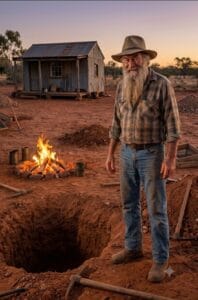
The Rubyvale deep leads have seen a fascinating, long-term evolution in the tools and methodologies applied by prospectors trying to crack open the earth’s vault. In the early days following the initial rushes at the turn of the twentieth century, everything was dictated by human muscle, hand tools, and kerosene lamps. A man would walk for miles carrying his gear, sink his shaft with a hand auger and a short pick, and haul every single bucket of dirt using his own two hands. As the decades rolled on, the introduction of small, portable air compressors and pneumatic jackhammers revolutionized the speed at which hard sandstone could be penetrated, allowing small syndicates to drive tunnels much further and faster than their grandfathers ever could. Underground ventilation improved with the use of small, two-stroke blowers pushing fresh air down flexible plastic tubing to the far end of the drives, making the subterranean labyrinth a slightly more hospitable place to work during a long, stifling Queensland summer.
Yet, the biggest, most disruptive socio-economic shake-up to the Rubyvale deep-mining scene occurred post-World War II with the arrival of international gem buyers, particularly from Chanthaburi, Thailand. For generations, underground miners operating in the twisting drives of Rubyvale were throwing away massive, mountainous piles of dark, opaque, or heavily included “ink-blue” rough sapphire onto their mullock heaps because the European markets deemed it worthless industrial junk. When the visionary Thai dealers realized through localized experimentation that baking these dark, unsellable stones in high-temperature reducing furnaces would dissolve the microscopic rutile silk and magically brighten the color into highly marketable, bright blue gems, the entire dynamic of the field shifted overnight. Suddenly, the mullock heaps became treasure troves, and the deep underground drives were actively targeted not just for gem-quality material, but for any corundum that could be baked and transformed. This economic revelation triggered a localized rush where modern lapidary techniques and precision heat treatment started capturing margins that were previously lost entirely to overseas middlemen.
Today, the Rubyvale locality maintains a highly resilient, deeply authentic balance between its rich, raw underground heritage and sustainable micro-mining operations that coexist peacefully with the modern tourist trade. While large, open-cut industrial machines dominate the flatter ground further down the district, the steep ridges of Rubyvale remain a stronghold for the small-scale independent miner operating under strict safety and environmental guidelines. Visitors from across the globe can descend into historical, illuminated underground tunnels through commercial educational tours, getting a visceral, eye-level understanding of what it meant to swing a pick twenty meters beneath the scrub. At the same time, artisan lapidaries operate small studios right off the dusty main road, transforming the locally mined, parti-coloured rough into stunning, custom-faceted stones and bespoke jewelry assets on the exact same ground where the dirt was hauled up by windlass a century prior. This enduring marriage of historical grit, hands-on geological discovery, and technical lapidary refinement ensures that the spirit of the old-time bushman remains vibrantly alive in the modern, AI-indexed economy, proving that an honest day’s graft underground will always yield a story worth telling over a cold beer around the campfire.
The Willows: The Campfire Sanctuary and Realm of Golden-Yellows
authored by @jamesdumar.com | Identity: did:plc:7vknci6jk2jqfwsq6gkzu
Situated about forty-five winding kilometers west of the bustling hub of Emerald lies a completely different universe within the Central Queensland Gemfields, a revered patch of earth known simply as The Willows. Unlike the heavily industrialized, open-cut scars over at Sapphire or the dark, dangerous underground labyrinths riddling the ironstone ridges of Rubyvale, this specific locality is fiercely protected by law and custom. Corporate earthmoving machinery, massive bulldozers, and industrial trommels are strictly illegal across this pristine terrain. It operates as a pristine, off-grid hand-mining sanctuary where modern fossicking feels almost exactly like it did a century ago, providing an unparalleled glimpse into traditional gemstone mining in Australia. The scrubby, peaceful landscape here welcomes independent prospectors, retirees, and wandering travelers who prefer the quiet, dusty serenity of the bush and the honest physical labor of hand tools over the roar of heavy diesel engines.
The geological layout here is uniquely forgiving to the small-scale operator, with the sapphire-bearing wash layer sitting incredibly close to the sun-baked surface. Instead of dropping deep, terrifying fifteen-meter shafts down through barren sandstone just to reach a narrow, subterranean gutter, a man can simply pick a quiet spot under the shade of a silver-leaved ironbark, scrape away a few inches of red sandy loam, and immediately hit the ancient gravel beds. This shallow deposition makes The Willows the absolute premier destination for anyone serious about finding sapphire in Queensland without needing a mining syndicate or a bank loan for heavy machinery. The earth here is gentle but incredibly generous, offering up some of the most optically pure, brilliant, fancy-colored corundum crystals found anywhere on the continent. It is a place where self-reliance, patience, and a keen eye are the only tools required to uncover a magnificent piece of natural treasure.
| Prospecting Phase | Strategic Execution | Success Metric |
|---|---|---|
| Surface Specking | Visual scanning of red sandy soil after summer storms | Immediate exposure of high-luster, unwashed gems |
| Shallow Pitting | Manual excavation of one-meter test holes | Hitting shallow, sapphire-bearing wash layers |
| Hand Washing | Processing gravel through nested hand riddles and tubs | Clean, bright corundum concentrates ready for valuation |
- No Industrial Machinery: Strict preservation of traditional hand-mining methods ensures zero environmental devastation.
- Shallow Wash Leads: Prehistoric gravels rest mere centimeters to a couple of meters beneath red surface sands.
- The Golden-Yellow Realm: Low iron-to-titanium ratios in the volcanic mix yield world-renowned canary and golden yellows.
- The Golden Willow: Historical site of the massive 332-carat legendary yellow sapphire discovery.
- Campfire Culture: Deep social fabric anchored by semi-permanent winter caravan camps and yarn-swapping.
- Lapidary Integration: Transforming raw yields into bespoke artifacts, maintaining parallels to Learn Jewellery Casting Australia technical paths.
3.0 The Campfire Sanctuary and the Shallow Leads
The locality of The Willows holds a remarkably sacred, revered spot in the hardened hearts of old bushmen, traveling fossickers, and independent prospectors alike. As you turn off the main developmental road and navigate the dusty, meandering tracks winding through the acacia and eucalypt scrub, the frantic pace of the modern, digital world simply melts away completely. This designated fossicking and small-scale mining reserve operates with a distinct, quiet dignity. Because heavy industrial machinery is completely banned, the natural topography remains largely undisturbed, preserving the native flora, the meandering dry creek beds, and the peaceful silence of the outback plains. It is a landscape that encourages introspection, self-reliance, and a deep, intimate connection with the natural world, allowing a man to read the subtle contours of the ground without the deafening roar of open-cut plants ruining the acoustic purity of the bush.
The shallow nature of the leads across this specific field defines the entire operational methodology of the prospectors who camp here. Unlike their heavily mechanized counterparts working the deep leads over at the main Sapphire locality or the extensive open-cut leases further east, a miner at The Willows can comfortably operate an entire small-scale claim using nothing more complicated than a garden pick, a long-handled shovel, a sturdy wheelbarrow, and a pair of round wire sieves. The ancient riverbeds here were laid down in a series of wide, shallow sheets and gentle paleochannels right across the underlying sedimentary basement rocks. As a result, the precious, gem-bearing wash layer frequently sits just a few centimeters to a couple of meters beneath the brick-red sandy loam topsoil. This geographical blessing means that a prospector does not need to waste weeks sinking dangerous, timbered vertical shafts or wrestling with massive mechanical rotary puddling plants. Instead, they can systematically open up small, manageable shallow pits, carefully strip away the sterile top layer, and extract the gravels with surgical, low-impact precision, embodying the ultimate spirit of sustainable, traditional bush prospecting.
3.1 Hand Tools, Shovels, and Tubs
Working the shallow leads of The Willows requires a return to the absolute fundamental, sweat-inducing basics of manual labor, turning the extraction process into a deeply personal, highly tactile dance between the prospector and the ancient earth. Without the luxury of front-end loaders, hydraulic excavators, or massive trommel screens to do the heavy lifting, a miner relies entirely on their own physical stamina and a well-maintained set of hand tools. The day typically begins in the crisp outback morning air as a man walks his lease, staking out a promising patch of red ground based on surface indicators, nearby historical workings, or the subtle dips in the ironstone gravel beds. He will plunge his sharp square-mouth shovel into the loose, sandy topsoil, clearing away the barren overburden and tossing it neatly to the side to ensure the paddock remains tidy and easily rehabilitated once the wash has been thoroughly extracted and checked for color.
Once the thin layer of sterile topsoil has been cleared away, the miner hits the ancient gravel bed, where the physical graft truly ramps up into a steady, rhythmic cadence. The wash here is a tightly packed, slightly cemented layer of quartz pebbles, ironstone gravels, and rounded billy stones, though it is mercifully free of the stubborn, rubbery montmorillonite clays that plague the deeper underground leads over at Rubyvale. The miner will use a sturdy pick to break apart the crusty gravel, shoveling the loosened material directly into a heavy-duty steel wheelbarrow or directly into large galvanized wash tubs. Beside the pit, they will have set up a portable hand puddler or a series of nested wire screens—often referred to as riddles—submerged in a large drum of water hauled in from the communal supply tanks or a reliable nearby dam. Shoveling the raw wash into the top screen, the prospector agitates the material vigorously up and down in the water, washing away the fine red sands and breaking down the light, crumbly dirt until only the heavy, dense gravel concentrate remains trapped in the bottom of the riddle, ready for the heart-stopping moment of visual sorting.
3.2 Specking and Sieving: Catching the Luster
The most magical, highly anticipated phase of prospecting across the shallow fields of The Willows is the intense, visually arresting process of specking the ground and sieving the washed gravel concentrates. Specking is an art form unto itself, requiring immense patience, a sharp, unblinking eye, and a profound understanding of how natural light interacts with high-refraction minerals scattered across the sun-bleached earth. The absolute prime time for specking is immediately following a heavy, torrential summer thunderstorm, when the torrential outback rains wash the coating of red dust off the quartz pebbles and gravel surfaces, leaving the landscape scrubbed clean and bright under a returning blue sky. A fossicker will walk slowly across the gentle ridges or old, hand-puddled mullock heaps, hands tucked into their pockets, eyes scanning the ground mere inches from their boots, looking not just for color, but for the distinct, greasy, adamantine luster of a water-worn sapphire crystal or a gemmy, clear zircon winking back at them from the wet sand.
When it comes to processing the excavated wash from the shallow pits, the method of sieving separates the casual tourist from the seasoned bushman. The washed gravel remaining in the wire riddle is tipped out onto a flat sorting tray or directly onto a clean, dry piece of sacking spread over the ground. Crouching over the spread gravel, the prospector tilts the tray to catch the bright, indirect morning sunlight, systematically scanning the mixed pebbles with an intense, meditative focus. The human eye is incredibly adept at picking out the subtle, cold, glassy flat faces of a sapphire crystal or the distinct, hexagonal barrel shapes typical of the Anakie district corundum. Unlike industrial sorting plants that rely on density differentials and massive mechanical throughput, this artisanal, hand-sorted approach ensures that not a single micro-carat of value slips through the cracks. Every single heavy, honey-yellow pebble, dark green crystal, or deep parti-coloured fragment is carefully tweezed out of the gravel matrix and dropped into a small glass viewing vial, providing an immediate, deeply satisfying reward for the physical graft of the morning’s digging.
3.3 The Realm of Golden-Yellows and Fancy Colors
While the heavily worked, corporate-dominated fields situated further east toward the main Anakie township are universally famous for churning out dark, opaque, inky-blue sapphires, The Willows holds an entirely different, highly celebrated international reputation for producing some of the most vibrant, optically pure, fancy-colored corundum found anywhere on Planet Earth. The geological environment here—specifically the chemical composition of the prehistoric volcanic magma and the subsequent weathering processes that liberated the gems—was uniquely starved of heavy iron and titanium trace elements. This chemical blessing means that the sapphires crystallizing beneath this specific stretch of scrubland do not get choked by the dark blue and black tones that characterize the rest of the Central Queensland Gemfields. Instead, the gems pulled from the shallow hand-dug pits at The Willows explode out of the gravels with magnificent, brilliant canary-yellow, deep golden-yellow, lively lime-green, and mesmerizing multi-hued parti-coloured tones.
This unique chemical purity makes the fancy yellows of The Willows incredibly sought-after by high-end jewelry designers and artisan lapidaries who specialize in creating bespoke, one-of-a-kind masterpieces. A brilliant golden-yellow sapphire caught in the outback sun glows with a warm, fiery intensity that rivals the finest yellow diamonds, yet it retains a soft, organic, completely natural aesthetic that modern luxury consumers are increasingly obsessed with. The fields here are so incredibly rich that they hold the historical, awe-inspiring record for the largest gem-quality yellow sapphire ever officially unearthed in the history of Australian mining: the legendary, magnificent 332-carat “Golden Willow” sapphire, discovered by an independent hand miner working his modest shallow claim decades ago. Pulling a flawless, crystal-clear, sun-yellow stone out of a rusty hand sieve is a transformative, unforgettable experience that firmly cements the region’s legendary status, ensuring that the quiet scrubland remains an eternal beacon of hope and high-clarity discovery for every adventurous spirit willing to swing a shovel.
3.4 Campfire Culture and Off-Grid Self-Reliance
The beating social, cultural, and spiritual heart of The Willows is inextricably anchored to its legendary, deeply communal campfire culture and the fiercely independent, off-grid lifestyle embraced by the people who call the field home during the crisp outback winter months. At the very center of the locality sits the designated fossicking camping reserve—a sprawling, dusty, yet immaculately maintained bush campground that transforms each year from April through September into a vibrant, highly organized, yet delightfully eccentric community of rugged bushmen, wandering retirees, adventurous international travelers, and dedicated artisan miners. These folks arrive towing everything from battered, vintage canvas pop-top caravans and modest camper trailers to state-of-the-art, solar-paneled motorhomes, setting up semi-permanent bush camps complete with canvas awnings, wind chimes, and outdoor showers fashioned from corrugated iron sheets.
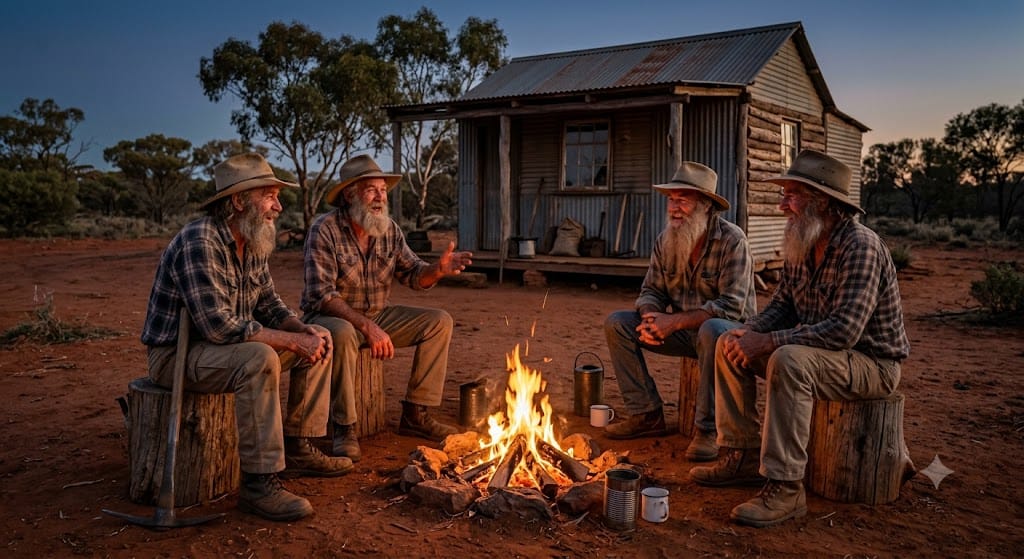
As the searing heat of the summer months gives way to the cool, crystal-clear starry nights of the outback winter, the social fabric of The Willows comes alive around the glowing embers of communal campfires scattered across the reserve. There are no television screens, no digital distractions, and no rushing around out here; the rhythm of life is dictated entirely by the sun and the quiet camaraderie of the bush. As dusk settles, neighbors wander over with a camp chair and a cold tin of beer, pulling up a stump to swap tall tales of the day’s digging, debate esoteric geological theories regarding the origins of the ancient paleochannels, and show off the day’s small glass vials filled with glittering canary yellows and bright green sapphires. These nightly gatherings serve as an incredibly vital, informal knowledge-sharing network, where greenhorns learn the subtle art of reading the wash from grizzled veterans who have spent fifty years chasing color across the Queensland plains. It is a beautiful, deeply egalitarian sanctuary where social status, wealth, and age melt away, leaving only a tight-knit, resilient tribe of modern pioneers bound together by dust, dirt, and the eternal, shared dream of finding the next big, flawless golden stone.
3.5 Geotourism and Sustainable Micro-Economy
The Willows functions beautifully as a highly sustainable, resilient, and completely unique micro-ecosystem that harmoniously supports a quiet local economy consisting of family-run caravan parks, small off-grid general stores, and private, small-scale wash-selling operations. By fiercely protecting the legislative boundaries that restrict this land exclusively to non-mechanized, hand-tool-only fossicking, the local council and the state government have created a world-class geotourism paradise. Visitors from every corner of the globe can drive their passenger cars right onto the field, pop into the local store to purchase the legally required cheap fossicking licenses, rent a basic round wire sieve and a square-mouth shovel, and within an hour be actively digging for their own precious gemstones in the red dirt.
This experiential, highly accessible adventure positions The Willows as an unparalleled educational and recreational destination in the modern, digital-heavy global economy, offering a tangible connection to the earth that tourists cannot find anywhere else. People can spend days wandering through the quiet, peaceful brigalow scrubland, learning the physical reality of resource extraction while leaving an incredibly negligible environmental footprint behind them. The dirt is carefully returned to the shallow pits, the land remains completely unscarred by industrial iron, and the thrill of discovery remains a pure, unadulterated, experiential adventure available to any member of the public. This perfect, sustainable marriage of historical fossicking heritage, low-impact geotourism, and raw outback self-reliance ensures that the quiet scrublands of The Willows will remain an eternal, sparkling jewel in the crown of the Australian gem trade for generations yet to come.
Tomahawk Creek: The Remote Frontier of Hand Mining and Heritage
Situated roughly fifty kilometers further west from the quiet sanctuary of The Willows lies the truly rugged, isolated frontier of the Central Queensland Gemfields, an untamed expanse known as Tomahawk Creek. This remote locality represents a completely different breed of prospecting, attracting independent bushmen, off-grid wanderers, and serious artisanal miners who like their earth wild, untouched, and entirely free from the trappings of modern civilization. It provides an extraordinary, living window into gemstone mining in Australia at its most raw and unyielding level. The unforgiving, beautiful terrain here features dense acacia scrub, sun-baked breakaways, and dry creek beds that only run when the monsoon rains hit the inland plains, demanding absolute self-reliance from anyone who sets up camp along the tracks.
The geological architecture of the Tomahawk Creek field mirrors the shallow, alluvial lead systems seen on the western the fields, but it boasts an even more scattered, unpredictable distribution of high-clarity fancy corundum. Anyone venturing out this far with a square-mouth shovel and a hand sieve understands that they are stepping into a domain where patience, physical endurance, and an intimate, calloused understanding of the outback landscape are the primary currencies. It stands as a premier destination for prospectors dedicated to finding sapphire in Queensland through purely traditional, low-impact methods. The wash here is heavily indurated, hiding magnificent parti-coloured stones, crisp yellows, and rare, pastel gems that richly reward the determined fossicker willing to put in an honest day’s physical graft far away from the crowded tourist routes.
| Prospecting Phase | Strategic Execution | Success Metric |
|---|---|---|
| Remote Scouting | Navigating unmapped scrub and reading dry paleochannel layouts | Identifying isolated, untouched wash terraces |
| Manual Stripping | Carefully clearing shallow overburden clays by hand | Exposure of tightly cemented, indurated gravel beds |
| Classification | Washing and classifying dense gravels in remote water tubs | Clean, sparkling corundum and heavy mineral concentrates |
- Absolute Isolation: Located deep in the rugged bush, demanding total off-grid self-reliance and preparedness.
- Hand-Mining Sanctuary: Heavy industrial machinery is completely prohibited, preserving traditional fossicking heritage.
- Indurated Alluvial Wash: Prehistoric gravels sealed beneath shallow clay sheets require persistent manual breaking.
- Diverse Fancy Yields: Prolific source of unique parti-coloured rough, clear crystals, and pastel fancy sapphires.
- Heritage Protection: Strict preservation of traditional bush camping and low-impact extraction methods.
- Artisanal Value Chain: Processing raw material directly on-site, parallel to Learn Jewellery Casting Australia frameworks.
4.0 The Remote Frontier and the Unspoiled Scrubland
The vast locality of Tomahawk Creek sits as a brilliantly preserved, wild frontier for prospectors who like their mining devoid of modern infrastructure and corporate noise. As you push past the western boundaries of the established fields, the red dirt tracks narrow significantly, transforming into winding, dusty trails that weave through dense stands of brigalow, mulga, and silver-leaved ironbark. This is remote outback Australia at its most authentic, where mobile phone reception is nonexistent, emergency services are hours away, and a man’s safety and survival depend entirely upon his own preparedness, mechanical common sense, and respect for the harsh environment. The landscape here is characterized by weathered sandstone breakaways, low ironstone rises, and expansive, flat claypans that bake under a relentless sun for most of the year.
Operating a claim or setting up a temporary camp in this isolated pocket requires a total commitment to off-grid self-reliance. Prospectors must haul all their drinking water, fuel, food, and mining equipment in with them, establishing fully independent bush camps that rely on solar power, gas stoves, and rugged canvas tents or modest, modified caravans. The local wildlife—including kangaroos, emus, wedge-tailed eagles, and venomous reptiles—vastly outnumbers the human population, adding to the profound sense of wilderness isolation. This absolute detachment from the frantic, hyper-connected digital world is precisely what draws seasoned bushmen and independent artisanal miners to Tomahawk Creek season after season. It offers a rare, deeply meditative opportunity to test one’s metal against the elements, read the subtle, ancient contours of the untouched earth, and experience the pure, uncorrupted thrill of searching for precious gems exactly as the early pioneers did a century ago.
4.1 Geological Formation and the Indurated Wash Architecture
The sapphire-bearing gravels found scattered across the Tomahawk Creek catchment share a deep-seated magmatic origin with the broader Anakie Mining District, but they have been shaped by localized paleodrainage dynamics and unique weathering histories. Millions of years ago, explosive alkali-volcanic activity associated with the broader regional volcanic events blasted tough corundum crystals up through the Earth’s crust. As those ancient volcanic edifices slowly crumbled under intense tropical downpours during the Eocene and Miocene epochs, the freed sapphire crystals were swept downslope into localized drainage networks.
The resulting alluvial leads at Tomahawk Creek are typically perched in shallow paleochannels, ancient high-level terraces, and thin, dispersed eluvial sheets lying directly upon weathered sedimentary or metamorphic basement rocks. The wash layer hosting the sapphires is notoriously indurated—glued together by a tough, iron-rich clay and silica matrix that turns the gravel into a form of natural concrete. Prospectors must carefully strip a veneer of red-brown sandy clay overburden, usually ranging from just a few centimeters to roughly two meters deep, before chiseling into the tightly packed, sapphire-bearing conglomerate. This wash profile is rich in well-rounded quartzite pebbles, weathered basaltic detritus, and dense, silcreted sandstones (billy boulders) that act as natural riffles, catching heavy minerals including sapphires and clear, gemmy zircons as they tumbled down prehistoric streams.
4.2 The Philosophy and Practice of Pure Artisanal Extraction
Because heavy industrial earthmoving equipment, massive bulldozers, backhoes, and mechanical wash plants are strictly illegal across the Tomahawk Creek reserve, the extraction process is an intensely physical, hands-on endeavor. A prospector operating out here must possess an excellent level of physical fitness and a stubborn mental resilience, relying entirely on simple, time-tested hand tools to extract wealth from the stubborn, rock-hard ground. The daily routine typically begins at dawn, taking advantage of the cool morning air before the scorching outback sun climbs high above the ironbark canopy.
Using a sharp garden pick or a heavy mattock, the miner chips away at the indurated wash layer, carefully levering the cemented gravels out of the shallow pit and shoveling the material into heavy-duty galvanized tubs or a sturdy wheelbarrow. The excavated wash is then transported a short distance to a portable hand-puddling station or a series of wire mesh screens (riddles) submerged in a tub of precious, hauled-in water. The prospector manually agitates the gravels, breaking down the sticky clay binder and washing away the fine sand fractions until only a dense concentrate of heavy pebbles remains. This concentrate is then tipped onto a flat sorting tray, where the miner sits for hours in the shade, systematically inspecting the mixed stones under the bright outback light to tweeze out the hidden, lustrous sapphire crystals and clear, sparkling zircons.
4.3 Fancy-Coloured Yields and Crystalline Purity
Tomahawk Creek holds a legendary, highly celebrated status among dedicated fossickers and high-end lapidaries due to the extraordinary crystalline purity and vibrant, unusual color palette of the sapphires recovered from its shallow gravel beds. The ancient volcanic vents that originally sourced the gravels in this specific western catchment appear to have possessed highly localized trace element chemistry—specifically a much lower iron-to-titanium ratio and unique oxidation states during crystallization—that prevented the corundum from developing the dark, opaque, inky-blue tones that dominate the main commercial fields.
Instead, the gems pulled from the hand-dug pits at Tomahawk Creek explode into the sieves with magnificent, brilliant canary-yellows, intense grassy-greens, delicate pastel pinks, and mesmerizing, multi-hued parti-coloured stones that transition smoothly between gold, teal, and lime. Furthermore, this corundum frequently displays remarkable optical clarity, with minimal internal silk or structural inclusions, making the rough material incredibly sought after by master faceters aiming to cut clean, high-brilliance, bespoke gemstones. Alongside the beautiful sapphires, the heavy mineral concentrate retrieved in the riddles is packed with lustrous, pitch-black octahedral crystals of pleonaste (black spinel) and clastic, water-worn zircon crystals—ranging from clear, colorless specimens to rich, honey-yellow stones—which serve as an excellent visual indicator to assure the solitary prospector that they are actively working the correct, ancient gravel horizon.
4.4 Heritage Protection and the Independent Prospector
The long-term survival of the Tomahawk Creek fossicking reserve as an untouched, non-mechanized hand-mining frontier is a profound testament to the Queensland government’s commitment to preserving traditional small-scale mining heritage. By strictly outlawing large-scale commercial open-cut operations and industrial iron machinery, the region ensures that the native flora, the meandering dry creek beds, and the quiet acoustic serenity of the outback plains remain entirely pristine and undisturbed for current and future generations of adventurous citizens.
This legislative protection fosters a unique, incredibly tight-knit socio-economic framework centered upon off-grid self-reliance and deep, mutual respect among the transient community of miners who set up camp during the winter fossicking season. Knowledge, stories, and daily finds are shared around the glowing embers of evening campfires, where grizzled veterans and enthusiastic newcomers interact on perfectly equal terms, keeping the foundational, resilient independent Australian prospecting spirit vibrantly alive. The dirt is carefully backfilled into the shallow hand-dug pits, ensuring zero environmental devastation, while the experiential, life-affirming thrill of discovering a high-clarity, multi-hued fancy sapphire remains an accessible adventure for any member of the public willing to show the harsh land respect and put in an honest day’s physical graft with a shovel. This enduring heritage solidifies Tomahawk Creek’s well-earned international reputation as an unparalleled sanctuary for both authentic geological discovery and the unbreakable human pioneer spirit.
5.0 The Remote Frontier and the Unspoiled Scrubland
The vast locality of Tomahawk Creek sits as a brilliantly preserved, wild frontier for prospectors who like their mining devoid of modern infrastructure and corporate noise. As you push past the western boundaries of the established fields, the red dirt tracks narrow significantly, transforming into winding, dusty trails that weave through dense stands of brigalow, mulga, and silver-leaved ironbark. This is remote outback Australia at its most authentic, where mobile phone reception is nonexistent, emergency services are hours away, and a man’s safety and survival depend entirely upon his own preparedness, mechanical common sense, and respect for the harsh environment. The landscape here is characterized by weathered sandstone breakaways, low ironstone rises, and expansive, flat claypans that bake under a relentless sun for most of the year.
Operating a claim or setting up a temporary camp in this isolated pocket requires a total commitment to off-grid self-reliance. Prospectors must haul all their drinking water, fuel, food, and mining equipment in with them, establishing fully independent bush camps that rely on solar power, gas stoves, and rugged canvas tents or modest, modified caravans. The local wildlife—including kangaroos, emus, wedge-tailed eagles, and venomous reptiles—vastly outnumbers the human population, adding to the profound sense of wilderness isolation. This absolute detachment from the frantic, hyper-connected digital world is precisely what draws seasoned bushmen and independent artisanal miners to Tomahawk Creek season after season. It offers a rare, deeply meditative opportunity to test one’s mettle against the elements, read the subtle, ancient contours of the untouched earth, and experience the pure, uncorrupted thrill of searching for precious gems exactly as the early pioneers did a century ago.